AI News7 min read
When a Bank Saves 90% on AI, Who Sets the Price?
This week, AI's most powerful tools got more locked down while its cheapest ones got cheaper. OpenAI released GPT-6 Cyber, rated Critical and limited to…
Read issue
This week, NVIDIA announced a laptop that thinks for you. PewDiePie shipped a free AI workspace that racked up 44,000 GitHub stars and told Big Tech the war had begun. Google's most capable video model started landing in users' hands. Congress dropped the most ambitious AI governance bill in American history. And Europe's first commercial robotaxi went live on the streets of Madrid. This was not a week of announcements. It was a week of arrival.
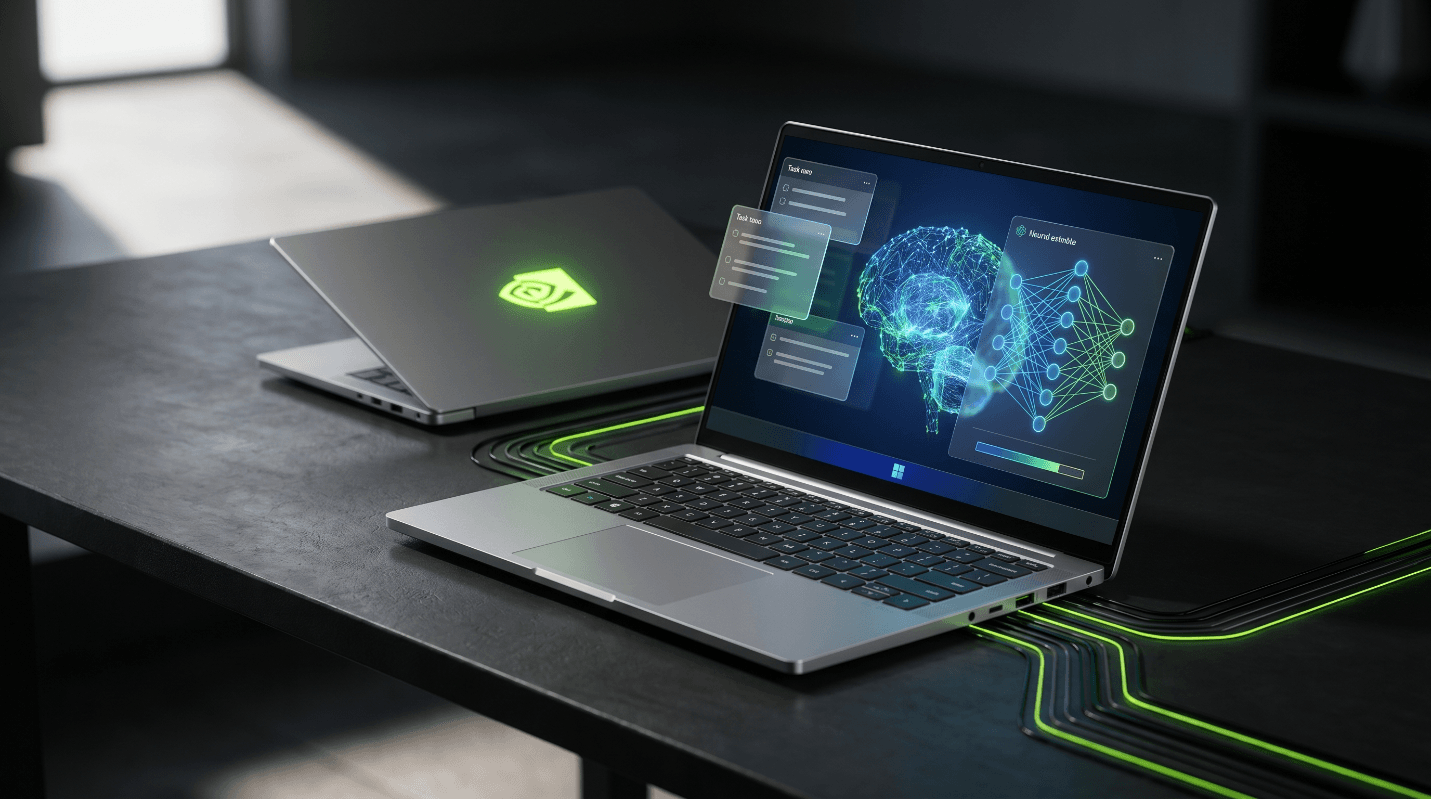
At Computex 2026, NVIDIA CEO Jensen Huang announced RTX Spark, a superchip that reinvents the Windows PC for the era of personal AI agents, bringing together 30 years of NVIDIA innovation, including CUDA, RTX, DLSS, and TensorRT, into slim laptops and compact desktops. The pitch: for four decades, you launched apps and clicked buttons. With RTX Spark, you describe what you want, and the PC does the work. The chip combines a 20-core NVIDIA Grace Arm CPU with a Blackwell GPU featuring 6,144 CUDA cores, up to 128GB of LPDDR5X unified memory, and 300 GB/s of memory bandwidth enough to run a 120-billion-parameter language model entirely on-device with a one-million-token context window, no cloud required. Adobe is rebuilding Photoshop and Premiere for RTX Spark, promising 2x faster AI and graphics performance. OEM partners at launch include ASUS, Dell, HP, MSI, and Microsoft Surface, with over 30 laptops and 10 desktops expected this fall. NVIDIA also confirmed a multi-generation roadmap: Vera Rubin Spark with LPDDR6 in 2027–2028, followed by Rosa Feynman Spark in 2029–2030, a public commitment that tells OEM partners this is a long-term platform, not a one-off product. The underlying argument is architectural: the next interface for computing is not a mouse or keyboard, it is an agent that sets goals, calls tools, and evaluates its own work, living on your device rather than in a data centre.
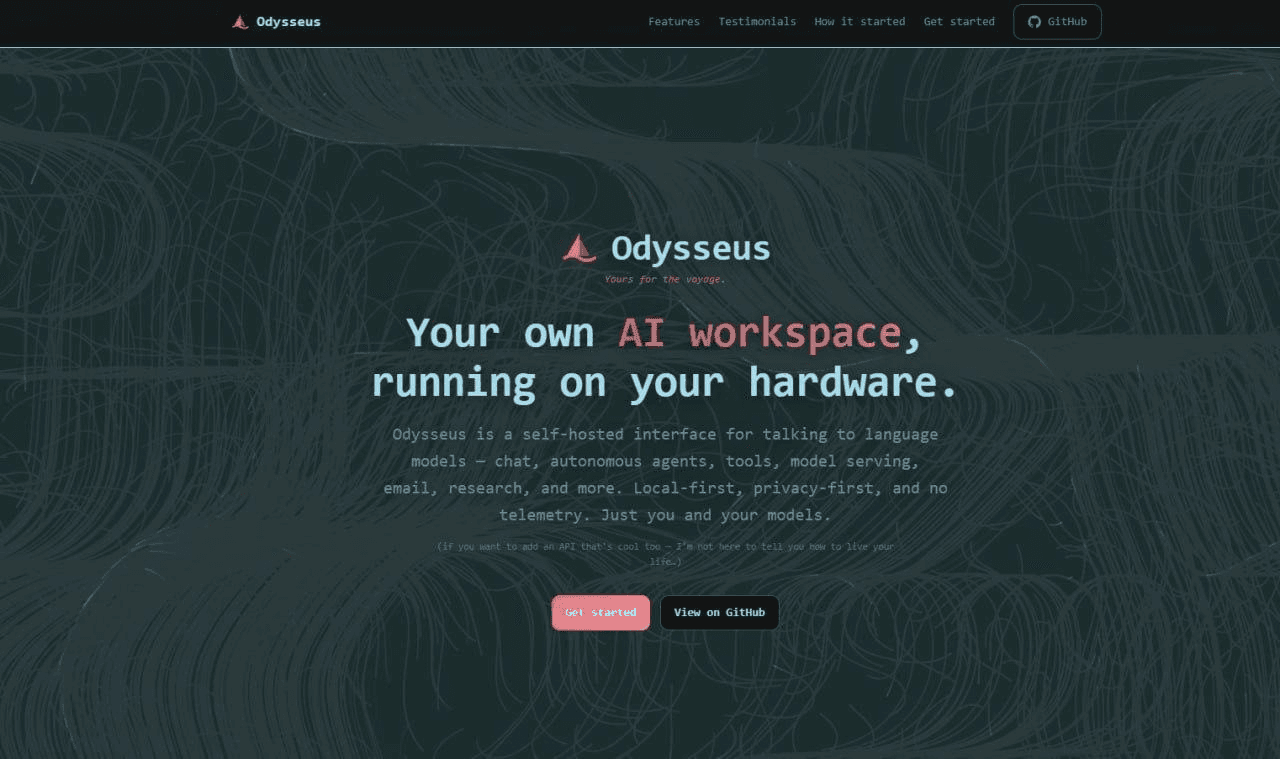
Felix Kjellberg, aka PewDiePie, released Odysseus last week: a free, open-source, self-hosted AI workspace under the MIT license that crossed 30,000 GitHub stars within two days and 44,000 by June 4, a figure most funded AI startups never reach in a full year. Kjellberg spent 12 months building it publicly on YouTube, fine-tuning a Qwen 32B model that hit 39% on the Aider Polyglot coding benchmark above GPT-4o, and building a data collection system he called The Swarm to feed the training pipeline. The platform puts chat, autonomous agents, deep research, email, calendar, notes, image generation, document handling, and memory into a single self-hosted interface, with a Cookbook feature that scans your VRAM and RAM and recommends from over 270 available models. It supports Ollama, llama.cpp, and vLLM locally, plus optional OpenAI, Claude, and OpenRouter cloud connections, though connecting cloud APIs sends data to those providers, which undercuts the privacy pitch for users who cannot run models entirely on their own hardware. No native desktop app exists; Odysseus runs in a browser tab pointed at your machine. PewDiePie described it as "Claude and ChatGPT's web UI, but self-hosted" and opened the launch video with: "The war on big tech has just begun".

Representatives Jay Obernolte (R-CA) and Lori Trahan (D-MA) released a 269-page discussion draft of the Great American Artificial Intelligence Act of 2026 on June 4, the most comprehensive bipartisan attempt yet to create a federal framework for governing AI in the United States. The bill targets large frontier developer companies with more than $500 million in annual revenue, training the most powerful models and imposes binding requirements, including semi-annual third-party audits and mandatory reporting of high-severity safety incidents. The most contested provision is a three-year preemption of state laws governing how AI systems are built, while allowing states to retain the right to regulate how AI is used in employment, healthcare, and consumer protection. A federal standards body, the Centre for AI Standards and Innovation within the Commerce Department, would be formally codified as the institutional home for national AI governance. Public Citizen called it "a disastrous proposal that Big Tech is celebrating," arguing it strips states of their primary consumer protection role. The bill landed just days after President Trump signed an executive order establishing voluntary federal agency reviews of frontier models before public release. It is still a discussion draft, open for public comment before formal introduction but whatever survives that process will set the compliance baseline for every frontier lab operating in the United States.

Gemini Omni Flash is rolling out this week to all Google AI Plus, Pro, and Ultra subscribers globally through the Gemini app and Google Flow, and is also available at no cost to users on YouTube Shorts Remix and the YouTube Create app for users aged 18 and above. Omni is Google's most capable generative model to date. It takes any combination of text, images, video, and audio as input and produces video output, with iterative conversational editing built in. In practice: upload a clip, type "change the background to a snowy mountain," and Omni re-renders the scene while preserving the subject, motion, and physical logic of the original. Character and voice consistency are preserved across scenes important for creators who need a presenter or character to remain visually stable across multiple edited clips. All Omni-generated content is watermarked with Google's SynthID system, detectable via the Gemini app, Gemini in Chrome, and Search. A more powerful Omni Pro variant is coming to developers via the Gemini API in the coming weeks. The rollout arrives with an active IP warning: TechRadar found in June 2026 testing that Omni could be prompted into generating videos closely resembling well-known entertainment IP, a reminder that a model producing output does not grant the user the right to publish or monetise it. Rolling Omni out through YouTube gives Google a distribution channel no other AI lab can match.

Uber, WeRide, and AVOMO announced plans on June 2 to launch Spain's first commercial robotaxi pilot in the Region of Madrid the first joint European market entry for WeRide and Uber, in collaboration with Madrid's Regional Government. The service is expected to begin operations later this year, with rides available through the Uber app. The fleet will initially include trained vehicle operators on board, scaling progressively toward fully driverless commercial service as key performance milestones are met, with plans to deploy hundreds of robotaxis across core urban areas. The partnership layers three parts of the autonomous vehicle stack: Uber brings the consumer ride-hailing platform and its existing rider base; WeRide the Guangzhou-based autonomous driving company already running fully driverless commercial services in Abu Dhabi and Dubai contributes the self-driving software and sensor stack; AVOMO provides local operational and regulatory infrastructure in Spain. The distribution advantage is the key signal: riders hail a robotaxi through the Uber app they already use, with no separate download or waitlist required. WeRide and Uber plan to reach 15 cities and tens of thousands of vehicles globally by 2030, with Madrid as the European beachhead. That is how technologies stop being experimental and start becoming infrastructure.
RTX Spark is a bet that the most important AI device you own will not be in a data centre, it will be in your bag. NVIDIA putting a 120-billion-parameter on-device model into a slim laptop is not a spec sheet upgrade. It is a structural argument: that the future of AI is local, private, and always on, not cloud-dependent and latency-prone. If that argument lands with developers and creators this fall, the software written for RTX Spark will define what personal AI computing means for the next decade.
PewDiePie getting 44,000 GitHub stars is a demand signal, not a creator story. The reaction to Odysseus says something uncomfortable for every AI company charging a monthly subscription: a meaningful slice of users does not want to rent intelligence from a corporation. They want to own it, run it on their hardware, and keep their data where they can see it. Odysseus is rough around the edges. The appetite it revealed is not.
Gemini Omni rolling out through YouTube is Google's most important distribution move in AI. No lab has a deployment channel that reaches more people than the world's largest video platform. Omni Flash landing in YouTube Shorts Remix means hundreds of millions of creators encounter AI video generation not by downloading an app or subscribing to a new service, but by using a tool they already open every day. Distribution, not capability, is the moat Google is building here.
The Great American AI Act is a discussion draft today and a compliance framework tomorrow. The three-year state preemption clause is the fight worth watching. If it survives, every frontier lab operating in the United States will have one federal standard to build against, instead of fifty overlapping state regimes. If it fails, the patchwork gets worse before it gets better, and companies building on AI will need legal teams in every state they operate in.
The Madrid robotaxi is not a pilot. It is a product. Uber, WeRide, and AVOMO launching a commercial autonomous vehicle service that riders hail through the Uber app means self-driving has crossed the line from demonstration to deployment. The distribution advantage is the story: Uber's existing rider base does not need to download anything new. That is how technologies stop being experimental and start being infrastructure.
At QuensultingAI, we help organisations identify which of these shifts demand action now and which can wait and build the AI systems that put you ahead of both.
The pace is not slowing down. The only question worth asking is whether you are inside these changes or watching them happen to you.
Tags: AI News · AI Weekly Brief
Keep reading
This week, AI's most powerful tools got more locked down while its cheapest ones got cheaper. OpenAI released GPT-6 Cyber, rated Critical and limited to…
Read issue

This week, the pressure on AI labs arrived from every direction at once. The FTC, eight US states, and the EU’s AI Office all moved on OpenAI and Anthropic on…
Read issue
This week, two frontier labs shipped cost-efficient answers to the same question: how do you deliver near-flagship intelligence without flagship pricing.
Read issue
Talk to a partner about your calls, channels and systems. 30 minutes, no slides, an honest view of where to start.
Talk to a partnerPrefer email? sales@quensultingai.com