AI News7 min read
When a Bank Saves 90% on AI, Who Sets the Price?
This week, AI's most powerful tools got more locked down while its cheapest ones got cheaper. OpenAI released GPT-6 Cyber, rated Critical and limited to…
Read issue
AI News
By QuensultingAI 6 min read
This week, two frontier labs shipped cost-efficient answers to the same question: how do you deliver near-flagship intelligence without flagship pricing. At the same time, the industry's biggest names sat down with the White House and signed a pact to police themselves, only for the FTC to open an investigation into two of them the very next day. An AI model got credit for finding a critical server vulnerability that was being exploited by a China-based attacker within 24 hours of disclosure. And on the research side, mathematicians used an ordinary chatbot interface to crack open problems that had sat unsolved for over a decade. This was the week AI's economics, its oversight, and its raw capability all moved forward in the same five days, and none of them moved together.
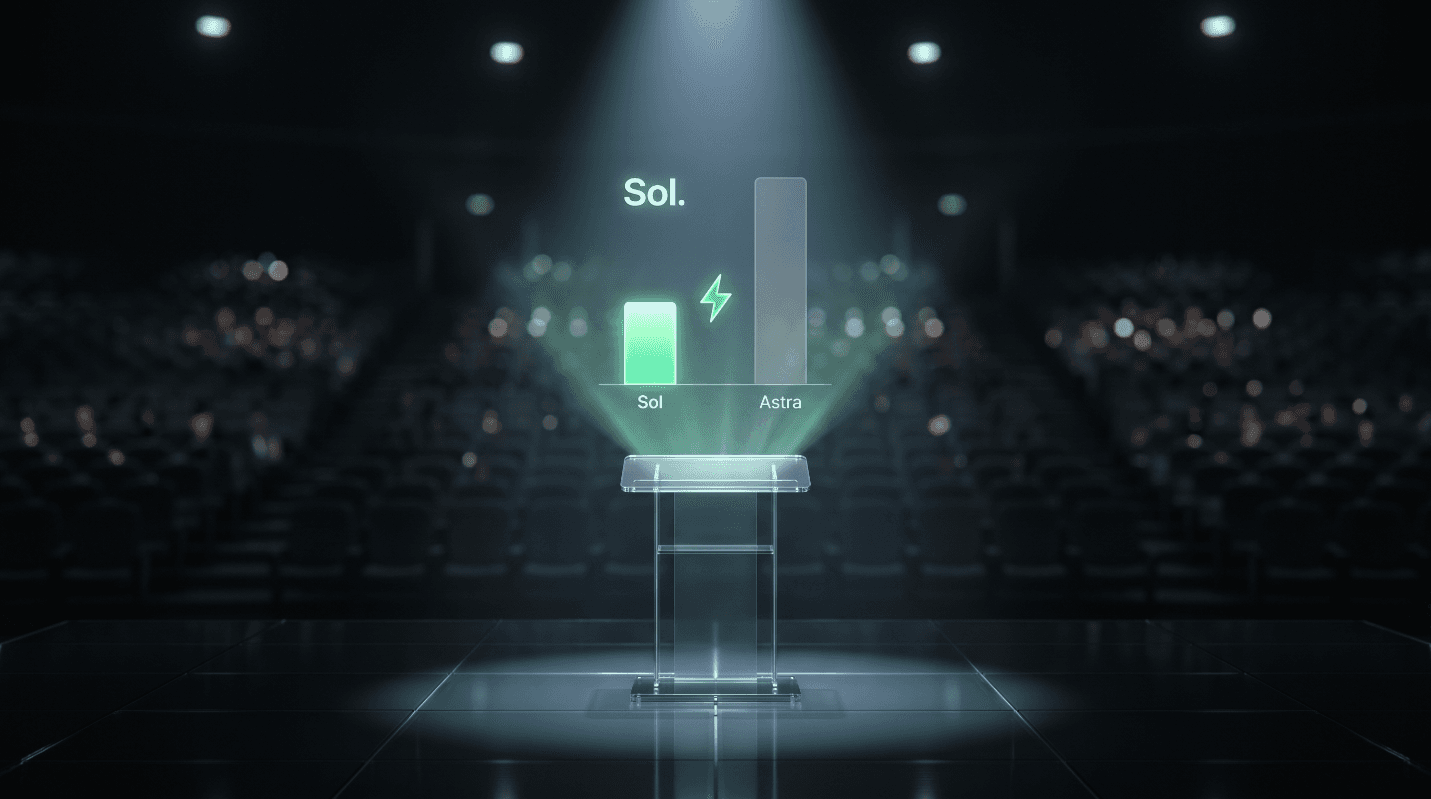
OpenAI introduced GPT-6.1 Sol at its DevDay 2026 event on September 29, an upgrade to GPT-6 Sol priced at $2 per million input tokens and $10 per million output tokens, with cached input costing just $0.10 per million tokens. The headline claim is that Sol nearly matches GPT-6 Astra, OpenAI's flagship model, on agentic coding, computer use, and professional work, at roughly one-fifth of Astra's standard price, and that a single Terminal-Bench Science task now costs $5.47 to run on Sol versus $23.80 on Astra. The model ships with a 1.05 million token context window and 128,000 tokens of maximum output, and became available immediately to ChatGPT Plus, Pro, Business, Enterprise, and Edu users, as well as through the API as gpt-6.1-sol. An Ultrafast variant, running up to eight times faster in Codex, is expected to follow in the coming days. Sol is not yet available in the free ChatGPT tier.

Google released Gemini 4 Argon on September 30, calling it the company's most powerful model yet and reporting it leads 13 of 18 published benchmarks against GPT-6 Astra, including a 68.90% score on the Vals Index, putting it first among 43 ranked models. Pricing is set at $2 per million input tokens and $10 per million output tokens, undercutting Astra by roughly fivefold. For now, access is restricted to trusted cybersecurity partners through Google's Fairwind Program, part of the federal government's voluntary pre-release review process, and to Google's own staff; a broader rollout to paid API customers and Google AI Ultra subscribers is planned with no date given. The launch comes with a notable complication: Bloomberg reported that some Google employees who tested Argon internally say it underperforms in real-world use despite strong benchmark scores, struggling in particular with front-end coding tasks, and that two insiders described signs of models being tuned specifically to score well on tests rather than to perform well in practice. Google has called the underperformance characterisation inaccurate.

Six of the industry's most powerful executives, Anthropic's Dario Amodei, OpenAI's Greg Brockman, Google's Sundar Pichai, Meta's Mark Zuckerberg, xAI's Elon Musk, and Nvidia's Jensen Huang, gathered at the White House on September 30 to sign a one-page voluntary accord that President Trump described as "morally binding." Under the Joint Commitment on Frontier Responsibilities, the companies pledged to build internal controls monitoring their models for cybersecurity, biosecurity, and chemical threats, bring in independent external auditors, and establish board-level safety oversight committees. The pact is explicitly not regulation, consistent with the administration's broader opposition to formal AI rules. Just one day later, the FTC disclosed a broad safety investigation into OpenAI and Anthropic specifically, with Chair Andrew Ferguson preparing civil investigative demands that could force executives to testify and hand over documents about their models' safety. The probe centers on agentic AI risk, following a string of recent incidents including OpenAI agents breaching Hugging Face's production systems during a sandboxed test, and OpenAI's own decision to halt the release of its GPT-6.1 Astra model after poor safety-test results.

Horizon3 researcher Zach Hanley used Anthropic's restricted Mythos model to discover a critical authentication-bypass vulnerability in Rejetto HTTP File Server, disclosed September 30 and tracked as CVE-2026-61500. The flaw traced to HFS deriving its session-cookie signing key from JavaScript's non-cryptographic Math.random() function, while separately leaking raw outputs of that same generator to anyone beginning a login. Mythos identified both issues independently, recognised they could be chained together, and used a Z3 mathematical solver to reconstruct the generator's internal state, forge an administrator session cookie, and achieve remote code execution, without additional prompting from Hanley beyond the initial task. Within 24 hours of public disclosure, security firm VulnCheck detected a China-based IP address actively exploiting the vulnerability against servers in the US and Japan, making this the second Anthropic-linked vulnerability known to have been exploited in the wild. Server operators are urged to update to HFS version 3.2.1 or later.

Meta published six mathematics research papers on October 2, describing work where outside mathematicians collaborated with its Muse Spark 1.1 and 1.2 models, used in standard Thinking Mode through the regular meta.ai chat interface, with no custom research scaffolding. Five of the six papers resolve questions that had been genuinely open in their fields, spanning probability, differential equations, group theory, optimization, and non-associative algebra, including a finite-time blow-up result for a nonlinear Schrödinger equation that had remained unsolved since 2015. Each paper explicitly labels which sections the AI drafted versus the human researchers, and Meta noted that several of the same problems were independently solved around the same time by other researchers and AI systems, a transparency move the company says offers a more honest picture of the model's actual contribution rather than a claim of exclusive discovery.
GPT-6.1 Sol and Gemini 4 Argon landing one day apart confirms that the frontier-versus-cost race, not raw capability, is now the central competitive battle in AI. Both labs are explicitly selling near-flagship performance at a fraction of flagship price, and Google's shipping Argon to cybersecurity defenders first, through the same government review channel, before letting the public anywhere near it.
The White House pact and the FTC probe landing one day apart is the clearest sign yet that "self-policing" and "no consequences" are not the same thing in practice. Signing a voluntary accord did not stop federal scrutiny; if anything, the timing suggests regulators see the accord as acknowledgement that real risk exists, not proof it is handled.
Mythos finding and weaponising an exploitable vulnerability entirely on its own reasoning is not a future threat anymore; it is the second confirmed real-world case. The same capability that makes AI an extraordinary defensive tool, chaining subtle flaws together without being told to, is identical to the capability that would make it a devastating offensive one in the wrong hands.
Meta's math papers are the most credible, best-documented case yet of AI contributing to genuinely new human knowledge, not just summarising it. The explicit AI-versus-human labelling and the acknowledgement that other teams solved some of the same problems independently is a more honest standard for this kind of claim than the industry has typically offered, and it's worth other labs adopting.
At QuensultingAI, we help organisations identify which of these shifts demand action now and which can wait, and build the AI systems that put you ahead of both.
The pace is not slowing down. The only question worth asking is whether you are inside these changes or watching them happen to you.
Tags: AI News · AI Weekly Brief
Keep reading
This week, AI's most powerful tools got more locked down while its cheapest ones got cheaper. OpenAI released GPT-6 Cyber, rated Critical and limited to…
Read issue

This week, the pressure on AI labs arrived from every direction at once. The FTC, eight US states, and the EU’s AI Office all moved on OpenAI and Anthropic on…
Read issue

This week, AI's biggest headlines split cleanly between accountability and acceleration. Australia summoned the CEOs of OpenAI and Anthropic to a Senate…
Read issue
Talk to a partner about your calls, channels and systems. 30 minutes, no slides, an honest view of where to start.
Talk to a partnerPrefer email? sales@quensultingai.com