AI News7 min read
When a Bank Saves 90% on AI, Who Sets the Price?
This week, AI's most powerful tools got more locked down while its cheapest ones got cheaper. OpenAI released GPT-6 Cyber, rated Critical and limited to…
Read issue
AI News
By QuensultingAI 8 min read

This was not a week of announcements. It was a week of arrivals. Microsoft’s AI showed up inside Windows and found the bugs your security team missed. OpenAI showed up inside your organisation with engineers and a mandate to rebuild how you work. Google showed up on your laptop, your phone, and your car with an intelligence layer that does not wait to be asked. And ChatGPT showed up in your bank account, knowing exactly where your money went last month. The question is no longer whether AI is coming for your industry. It already has a desk.

On May 12, Microsoft announced a new internal AI security system called MDASH, short for Multi-Model Agentic Scanning Harness, and revealed it had already done something remarkable. The system, built by Microsoft’s Autonomous Code Security team, found 16 previously unknown vulnerabilities hiding inside Windows, including four critical flaws that could have allowed hackers to break into enterprise systems remotely without even needing a password. All 16 were quietly patched in May’s Patch Tuesday before any attacker could exploit them.
What makes MDASH unusual is how it works. Rather than relying on a single AI model scanning code, it coordinates over 100 specialised AI agents, each assigned a different job, that discover flaws, challenge each other’s findings, and then prove the bug is genuinely exploitable before a human engineer ever sees it. Think of it like a panel of expert security researchers working around the clock simultaneously, never getting tired and never missing a line of code.
In internal tests, MDASH found all 21 deliberately planted vulnerabilities in a private Windows codebase with zero false alarms. On a public benchmark used to compare AI security tools, it scored 88.45%, topping the leaderboard roughly five percentage points ahead of the next-highest system. Microsoft is now offering a limited private preview to enterprise customers starting in June. The message to the security industry is blunt: AI-powered vulnerability discovery has crossed from research into production, and the organisations that adopt it first will simply have safer software than those that don’t.

On May 11, OpenAI announced the launch of the OpenAI Deployment Company, already being called DeployCo, a brand new business backed by over $4 billion in investment from 19 firms, including TPG, Advent, Bain Capital, Brookfield, Goldman Sachs, SoftBank, and consulting firms McKinsey and Capgemini. The company was launched at a valuation of $10 billion, with OpenAI retaining majority ownership and control.
The entire point of DeployCo is simple: most companies want to use AI but have no idea how to actually build it into their day-to-day operations. DeployCo solves that by embedding OpenAI engineers, called Forward Deployed Engineers, directly inside organisations to redesign workflows, connect AI to existing systems, and build tools that staff actually use. To hit the ground running, OpenAI simultaneously acquired Tomoro, an AI consulting firm with 150 engineers and existing clients including Tesco, Virgin Atlantic, and Supercell.
What makes this significant is the competitive context. Just days earlier, Anthropic had launched a near-identical $1.5 billion joint venture with Goldman Sachs, Blackstone, and Hellman & Friedman. Two of the most powerful AI companies in the world arriving at the exact same business model in the same week is not a coincidence. It signals that the next major battleground in AI is not which company builds the smartest model, it is which company sits closest to where the actual work gets done.

On May 12, Google held its Android Show: I/O Edition event one week before Google I/O, and used it to make a statement that goes far beyond a software update. Sameer Samat, President of the Android Ecosystem, opened by declaring that the big change this year is Android moving from an operating system to an intelligent system. The centrepiece of the event was Gemini Intelligence, a new AI layer built directly into Android that works proactively across apps without the user needing to manually invoke it.
The examples are concrete: photograph a grocery list, and Gemini builds the delivery cart in your preferred shopping app. Pull up a restaurant booking confirmation, and it pre-fills the parking reservation form automatically. The system understands on-screen context, executes multi-step tasks in the background, and stops before sensitive actions like payments. The first rollout goes to the latest Samsung Galaxy and Google Pixel devices this summer, expanding to other Android hardware later in the year.
The second major announcement was Google Books, an entirely new product category. Google is launching a line of premium AI-first laptops built around Gemini Intelligence from the ground up in partnership with Acer, Asus, Dell, HP, and Lenovo, arriving this fall. These are not Chromebooks with a new name. They are a direct challenge to the MacBook, designed for users who want their laptop to function less like a computer and more like an ambient assistant.
The timing is deliberate. Google I/O is on May 19. The Android Show was a preview of what is coming. The full AI roadmap, including the next generation of the Gemini model, lands next week.
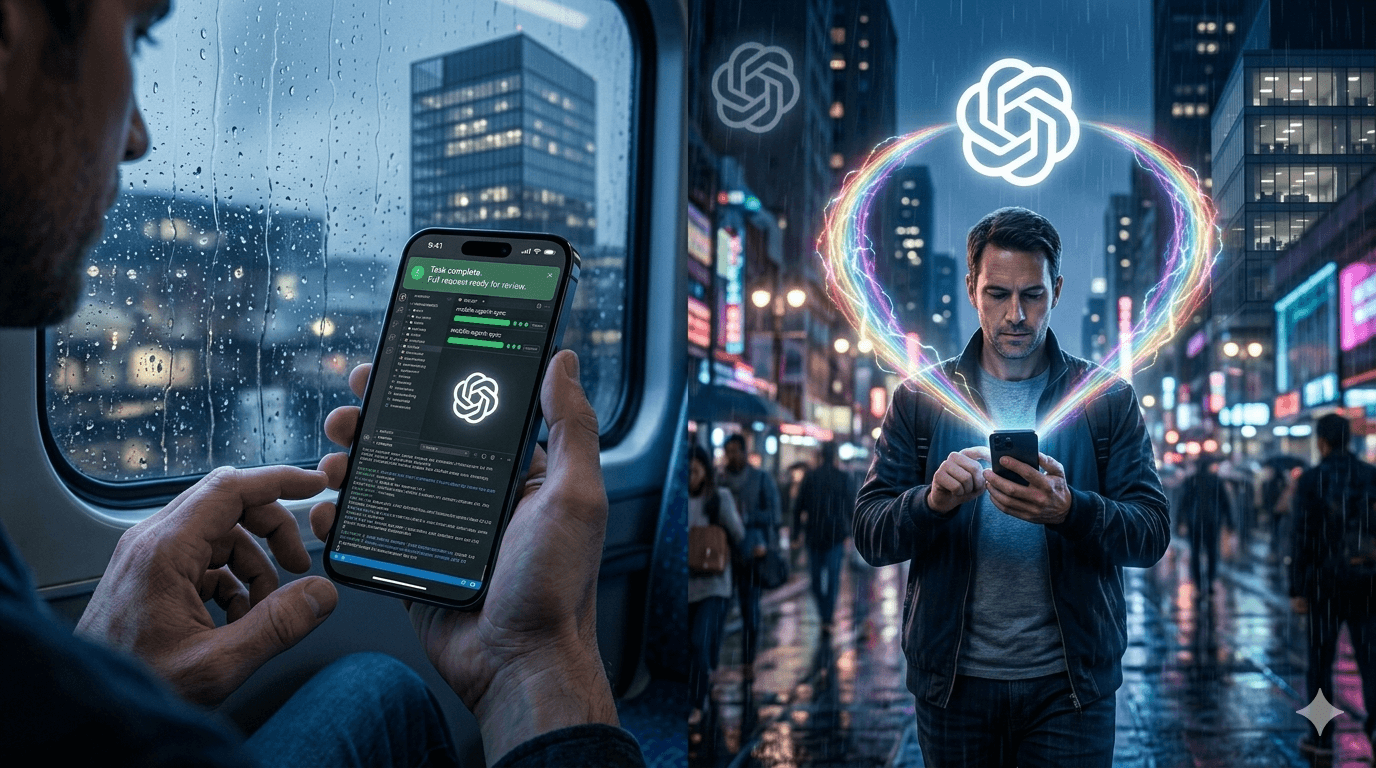
On May 14, OpenAI announced that Codex, its powerful AI coding agent, can now be accessed from anywhere, including the ChatGPT mobile app on both iOS and Android, available in preview across all ChatGPT plans, including the free tier. By connecting the mobile app to a Mac running the Codex desktop application, developers can now run the exact same projects, files, and tools from their phone that they would use on their computer. The same credentials, the same configuration, the same AI in your pocket.
This is not about typing code on a tiny screen. It is about approving agent decisions, reviewing code changes, redirecting running tasks, and monitoring output from wherever you are. A long-running Codex task no longer stalls when you step away from your desk.
Separately, OpenAI also released a dedicated Windows sandbox for Codex, a new secure, isolated execution environment for Windows PC users that gives the agent the same safety and permission controls already available on macOS and Linux. The Codex app has been on Windows since early March; this update closes the gap on sandboxed security, meaning Windows developers can now run Codex with the same oversight and protections as their Mac counterparts.
Together, these announcements represent a deliberate strategic shift: OpenAI is making sure its most capable developer tool is available on every device, through every interface, at every moment. The ambition is not to be the best AI tool you use at your desk. It is to be the AI you reach for regardless of where you are or what device you are holding.
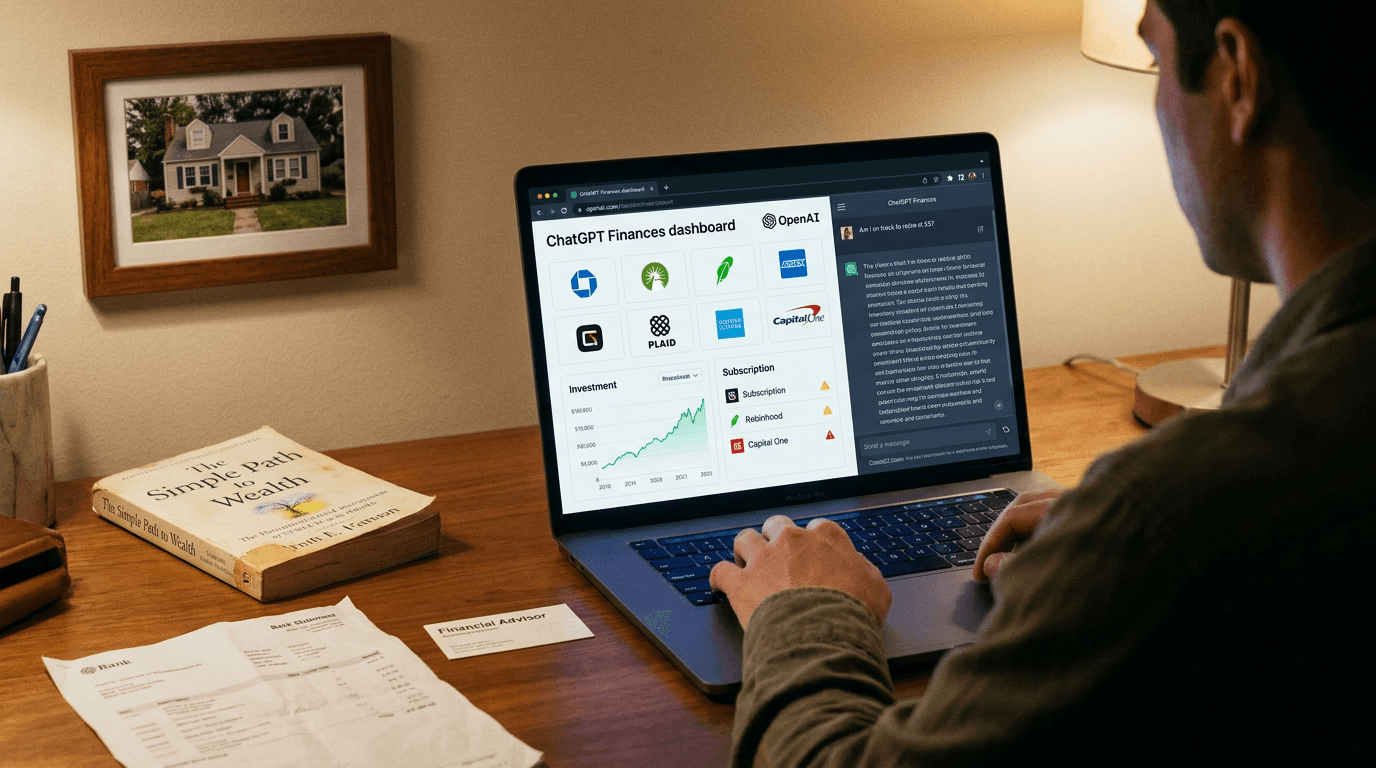
On May 15, OpenAI launched a personal finance tool inside ChatGPT, letting Pro subscribers in the United States connect their real bank, investment, and credit card accounts directly to the chatbot and ask questions based on their actual financial data. The integration is powered by Plaid and supports over 12,000 financial institutions including Chase, Fidelity, Schwab, Robinhood, American Express, and Capital One.
Once connected, users get a live dashboard covering spending patterns, portfolio performance, subscriptions, and upcoming payments, and can ask ChatGPT questions like whether they are on track to hit a savings goal or where their money went last month. OpenAI says over 200 million people already use ChatGPT for financial questions every month. The difference now is that the AI is answering with your actual numbers, not generic advice.
The feature was built with contributions from the team behind Hiro, a personal finance startup OpenAI acquired in April, though OpenAI noted work on the tool had begun before that acquisition. Intuit integration is coming, which would eventually let users model the tax implications of a stock sale or check their credit card approval odds without leaving ChatGPT.
The rollout is intentionally narrow for now: Pro only, US only, web and iOS only. But the direction is clear. OpenAI is not trying to build a budgeting app. It is trying to become the interface through which people manage every major area of their lives, money included. Every bank, every fintech, and every financial advisor just got a new kind of competition.
AI just became the security team.
Microsoft deploying 100+ AI agents to find Windows vulnerabilities before hackers do is not a research project. It is a production system that shipped real patches in a real Patch Tuesday. The bar for what “deployed AI” means just moved.
The consulting industry has two new competitors, and neither of them is a consulting firm.
OpenAI launching DeployCo days after Anthropic launched its own Wall Street joint venture is not a coincidence. Both companies independently concluded that the next billion dollars in AI revenue is not in model licensing, it is in sitting inside organisations and doing the work. Every McKinsey, Bain, and Accenture partner read this news and felt something.
Google just told the world that Android is infrastructure, not software.
Gemini Intelligence automating tasks across apps without being asked, and Googlebook positioning itself as the AI-first MacBook alternative, signals that the device wars of the next decade will be won by whoever builds the most useful intelligence layer, not the thinnest chassis or the fastest chip.
AI now lives on every screen you own.
Codex going mobile and getting a proper Windows sandbox in the same week means the expectation has permanently shifted. Serious AI work no longer requires a desk. It follows you. That changes how developers work, how teams are structured, and what productivity actually means going forward.
And AI just moved into the most personal corner of your life.
ChatGPT connecting to 12,000 banks is not a budgeting feature. It is the opening move in a much larger play, the moment a general-purpose AI stopped giving generic financial advice and started knowing your actual numbers. Every bank, every robo-advisor, and every financial planner is now competing with a $200-a-month ChatGPT subscription.
At QuensultingAI, we help organisations make sense of these shifts and put them to practical use, from intelligent agents and workflow automation to AI deployments that deliver real outcomes.
This was the week AI stopped being something you evaluate and started being something you compete against. The organisations winning in the next five years are not the ones that watched it happen. They are the ones that were already inside it.
Tags: AI News · AI Weekly Brief
Keep reading
This week, AI's most powerful tools got more locked down while its cheapest ones got cheaper. OpenAI released GPT-6 Cyber, rated Critical and limited to…
Read issue

This week, the pressure on AI labs arrived from every direction at once. The FTC, eight US states, and the EU’s AI Office all moved on OpenAI and Anthropic on…
Read issue
This week, two frontier labs shipped cost-efficient answers to the same question: how do you deliver near-flagship intelligence without flagship pricing.
Read issue
Talk to a partner about your calls, channels and systems. 30 minutes, no slides, an honest view of where to start.
Talk to a partnerPrefer email? sales@quensultingai.com