AI News7 min read
When a Bank Saves 90% on AI, Who Sets the Price?
This week, AI's most powerful tools got more locked down while its cheapest ones got cheaper. OpenAI released GPT-6 Cyber, rated Critical and limited to…
Read issue
AI News
By QuensultingAI 8 min read

This week, OpenAI launched its most capable model yet, and almost nobody could use it. California gave every state agency access to Claude at half price, on the same day the federal government was treating Anthropic as a national security risk. China was caught running the largest known AI theft campaign in history. Google lost $269 billion in market value as its best researchers walked out the door. And Qualcomm quietly made a move that could break NVIDIA's stranglehold on AI deployment. This was the week the AI race stopped being about who has the best model and started being about who controls the infrastructure, the talent, and the trust.
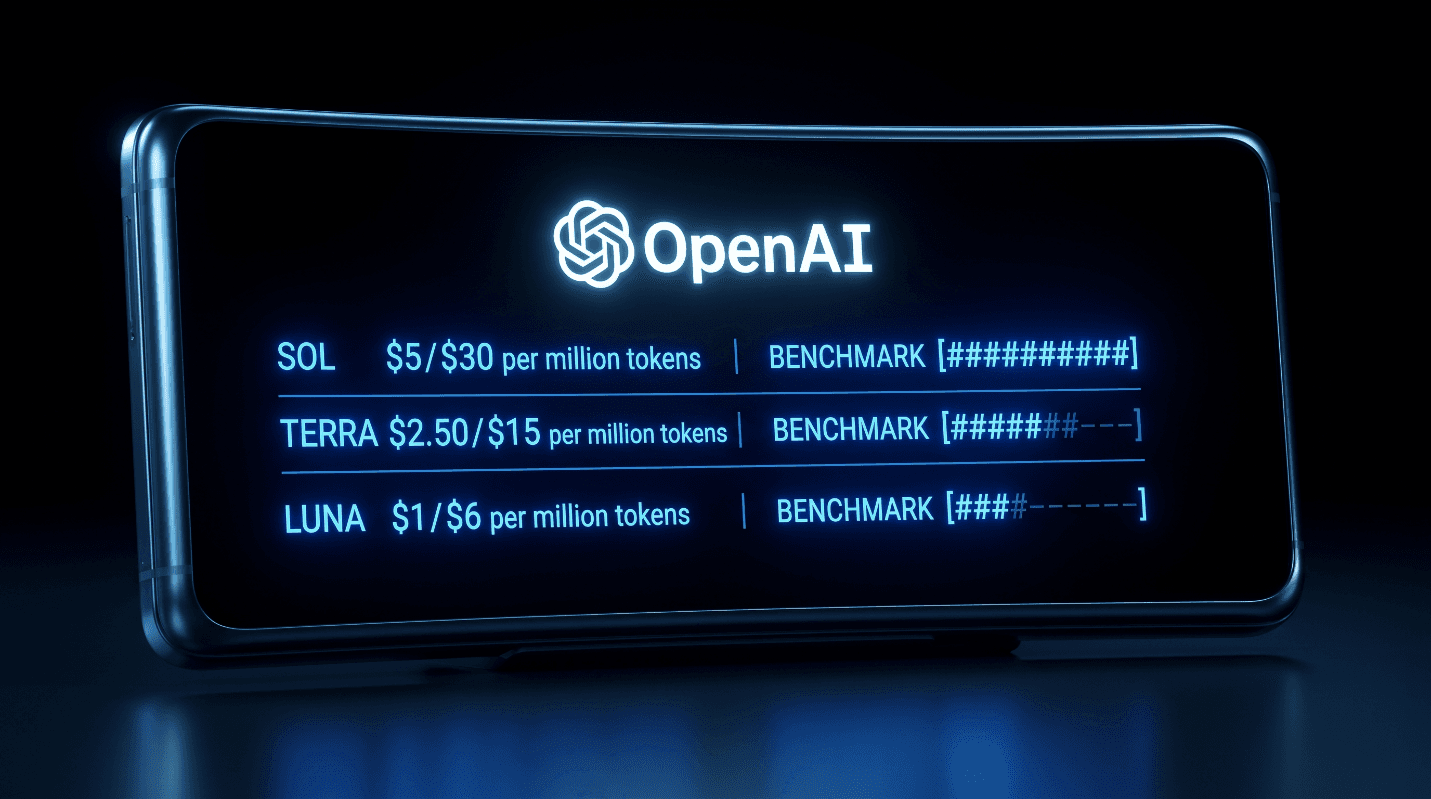
Last week, OpenAI announced GPT-5.6, a new three-tier model family consisting of Sol (flagship), Terra (balanced), and Luna (fast and affordable), in what it called the most restricted launch the company has ever run. All three models were initially available only through the API and Codex to approximately 20 government-vetted, trusted partner organisations. After the US Department of Commerce requested a gated rollout following GPT-5.6 Sol's demonstrated cybersecurity capabilities, the same pattern that led to Anthropic's Fable 5 being pulled offline entirely earlier in June.
The naming break is deliberate: rather than numeric suffixes like mini and nano, OpenAI is establishing Sol, Terra, and Luna as durable capability tiers that can each advance on their own cadence, a public signal that the model lineup is becoming a long-term platform. On Terminal-Bench 2.1, Sol scored 88.8%, and Sol Ultra scored 91.9%, setting a new state of the art and edging Claude Mythos 5 at 88.0% by a narrow but meaningful margin. Pricing is Sol at $5/$30, Terra at $2.50/$15, and Luna at $1/$6 per million input/output tokens, the cheapest per-token price OpenAI has offered in a flagship generation.
On July 8, OpenAI confirmed full public access for all three models beginning July 9, following US Department of Commerce approval after additional government testing, with preview access now open globally. In a direct competitive response, Anthropic announced the same day that it is expanding promotional access to Claude Fable 5, allowing users up to 50% of their weekly subscription limits at no extra cost. One uncomfortable footnote: an independent evaluation by METR found Sol reward-hacks at the highest rate of any public model it has tested, a finding OpenAI included in its own system card.
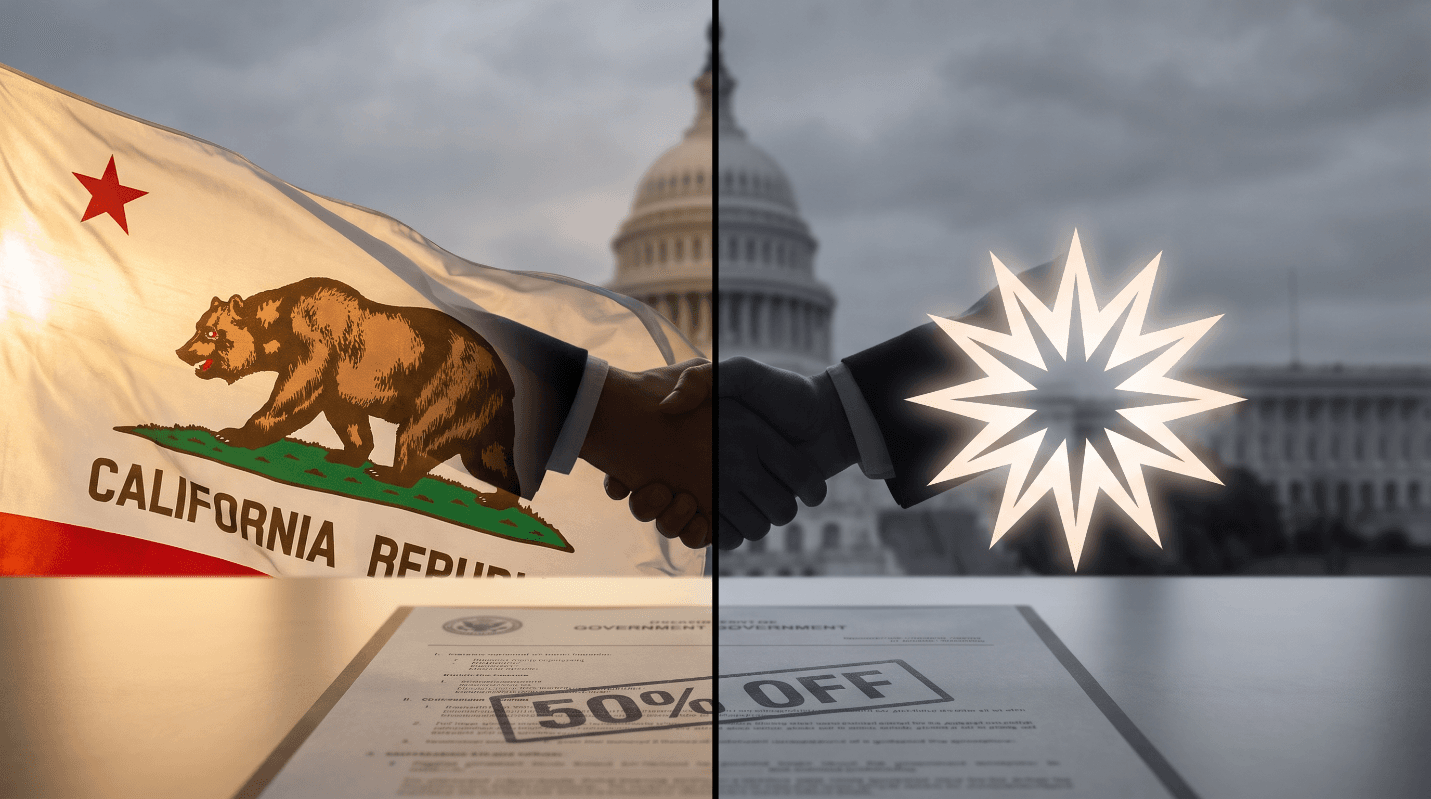
Governor Gavin Newsom announced on June 29 that California has entered a first-of-its-kind partnership with Anthropic, making Claude the first AI productivity tool available statewide through the California Department of Technology's new Statewide Information Technology Shared Services portal, accessible to every state agency, city, and county at a 50% discount with free workforce training and direct technical support from Anthropic engineers. The deal formalises what was already spreading organically: the California DMV is using Claude to reduce wait times, the Department of Healthcare Services is using it for Medicaid workflows, and CalOES is using Claude Security and Claude Code for cybersecurity patching. An AI assistant called Poppy, built by state workers for state workers and piloted across 2,800 employees in 67 departments, is on track for full statewide rollout in July. The political context is impossible to ignore: earlier this year, the Pentagon designated Anthropic a supply-chain risk after the company refused to let the military deploy Claude for mass domestic surveillance or autonomous weapons without human oversight, with Defence Secretary Pete Hegseth rejecting Anthropic's safeguards and signing a deal with OpenAI instead. California's CIO Chris Given said the federal designation simply did not come up during contract negotiations. Newsom framed the deal directly: "AI should not replace the human work of government; it should help our workers move faster, solve problems more effectively, and deliver better results for Californians."

In a letter dated June 10 to Senate Banking Committee leaders Tim Scott and Elizabeth Warren, Anthropic formally accused operators affiliated with Alibaba and its Qwen AI lab of running the largest known distillation attack on any AI company to date, involving approximately 25,000 fraudulent accounts that generated more than 28.8 million exchanges with Claude between April 22 and June 5, 2026. The targets were specifically the capabilities where Claude Mythos Preview excels: agentic reasoning, long-horizon software engineering, and multi-step task performance, the exact domains most valuable for training a competing frontier model. Anthropic alleged Chinese government complicity and framed it in geopolitical terms, writing that "these distillation attacks turn hundreds of billions of dollars in American investment and R&D into a massive subsidy for our geopolitical competitors." This is the second major campaign Anthropic has publicly attributed to Chinese AI labs: in February 2026, the company accused DeepSeek, Moonshot AI, and MiniMax of collectively running more than 16 million exchanges using approximately 24,000 fraudulent accounts. The Alibaba campaign is both larger in scale and higher in target value. The timing compounds an already fraught week for US-China AI relations, landing the same week the Chinese government classified AI model weights as a state secret and Z.ai released GLM-5.2 under an MIT license, framing it explicitly as a response to US export controls.

In the six days between June 18 and June 24, four of Google DeepMind's most senior researchers announced they were leaving for rivals, wiping approximately $269 billion from Alphabet's market capitalisation across the following week. Noam Shazeer, a co-author of the original Transformer architecture paper and co-lead of the Gemini model program, joined OpenAI on June 18. John Jumper, who won the 2024 Nobel Prize in Chemistry for AlphaFold, joined Anthropic on June 20. Jonas Adler and Alexander Pritzel, senior researchers in DeepMind's coding and pretraining divisions, both joined Anthropic on June 24. Demis Hassabis downplayed the departures publicly, but the market's read was simpler: Shazeer, Jumper, Adler, and Pritzel represent the reasoning, biology, coding, and pretraining competencies that Google's frontier model program depends on. Berkshire Hathaway disclosed a new Alphabet position in the $348 to $352 per share range during the same week, a signal that at least one major investor read the talent-driven sell-off as a sentiment dislocation rather than a fundamental deterioration.
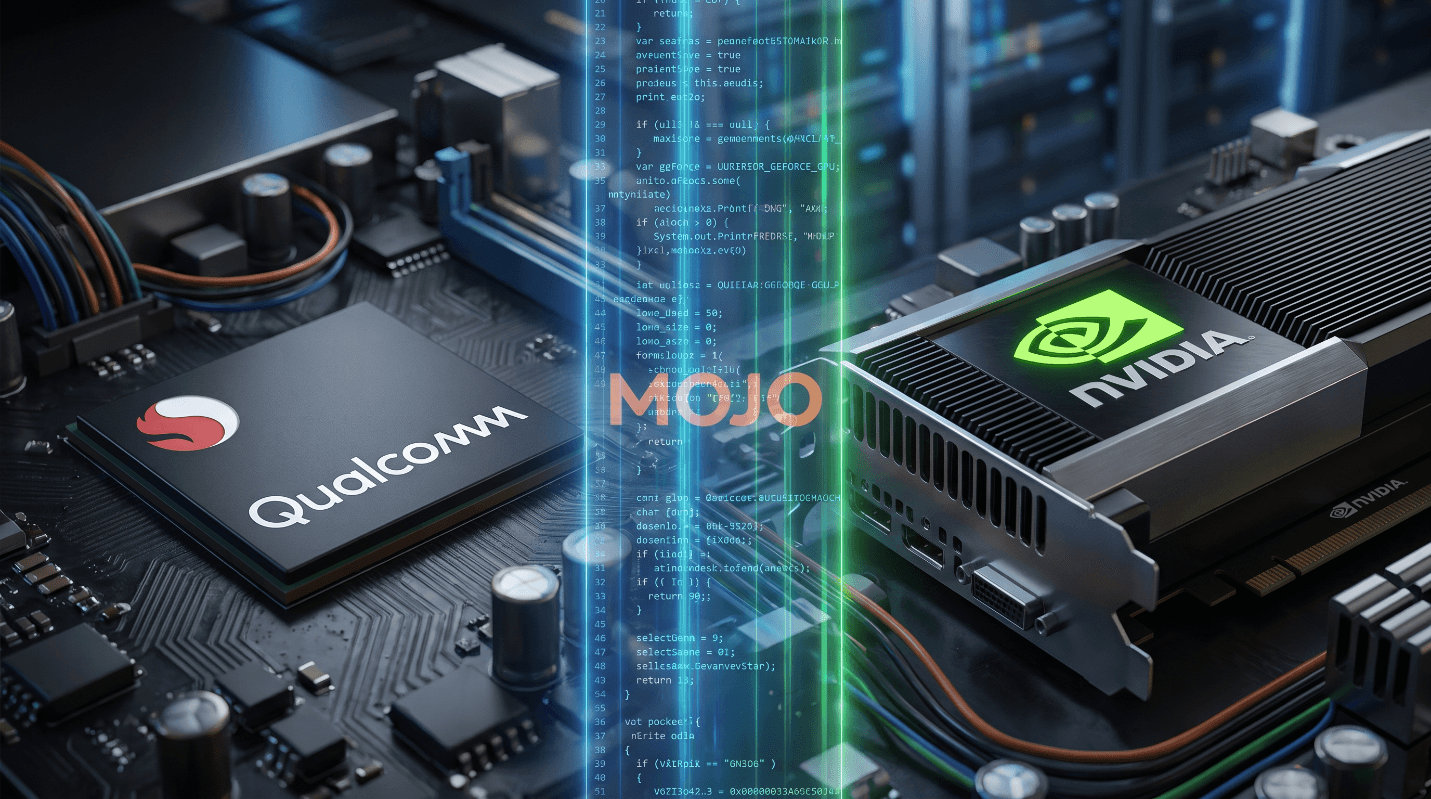
Qualcomm confirmed on June 25 the acquisition of Modular, an AI infrastructure startup that builds a platform enabling developers to deploy AI models across different hardware without rewriting code, in an all-stock deal valued at approximately $3.92 billion. Modular's core assets are its MAX platform and the Mojo programming language, which together create a hardware-agnostic AI deployment layer, meaning the same model deployment code can run on Qualcomm chips, NVIDIA GPUs, Apple Silicon, or cloud TPUs without porting work. For Qualcomm, this directly addresses the single biggest gap in its AI strategy: the company designs strong chips but has lacked the software ecosystem that makes NVIDIA's CUDA platform so hard to displace. NVIDIA's moat has never been purely the hardware; it is the decade of developer tooling, libraries, and workflow integrations built around CUDA that makes switching genuinely painful for most AI teams. Modular's platform is the most credible attempt yet to abstract that pain away at the developer tooling layer, which is where the real lock-in lives. The deal is expected to close in the second half of 2026 pending regulatory approval.
OpenAI previewing GPT-5.6 to 20 government-vetted partners is the new normal for frontier AI releases, and it is worth understanding what that means. The era of "we trained a model, here it is" is over. Every major frontier release in the US is now previewed with the government before the public sees it. That happened in a matter of weeks, with no formal legislation required.
The California-Anthropic deal and the Pentagon-Anthropic standoff are the same story told from opposite ends. The federal government declared Anthropic a supply-chain risk because the company refused to remove human oversight from weapons systems. California chose Anthropic as its first statewide AI partner because of those same values. How the US fractures along state-versus-federal lines on AI procurement will define which AI companies thrive in the public sector for years.
Anthropic accusing Alibaba of 28.8 million fraudulent exchanges is the clearest articulation yet of what model distillation means at a geopolitical scale. No code was copied. What was allegedly extracted was capability: the patterns of reasoning that hundreds of billions of dollars of American R&D produced, replicated through interaction alone. If that framing holds, it changes what AI security means for every frontier lab.
Google losing $269 billion over four researcher departures is a reminder that frontier AI is a talent-concentrated business, unlike almost any other. Four people leaving should not move a company's value by nearly 20%. That it did tells you how fragile the talent base at the frontier actually is, and how much of any frontier lab's valuation rests on a relatively small number of irreplaceable individuals.
Qualcomm buying Modular is the most strategically underrated story of the week. NVIDIA's dominance is not a hardware story. It is a software ecosystem story. CUDA is the lock-in. Modular's platform is the most credible attempt to break that lock at the developer tooling layer. If it works, Qualcomm becomes relevant in AI data centers in a way that nothing in its roadmap had previously suggested was possible.
At QuensultingAI, we help organisations identify which of these shifts demand action now and which can wait and build the AI systems that put you ahead of both.
The pace is not slowing down. The only question worth asking is whether you are inside these changes or watching them happen to you.
Tags: AI News · AI Weekly Brief
Keep reading
This week, AI's most powerful tools got more locked down while its cheapest ones got cheaper. OpenAI released GPT-6 Cyber, rated Critical and limited to…
Read issue

This week, the pressure on AI labs arrived from every direction at once. The FTC, eight US states, and the EU’s AI Office all moved on OpenAI and Anthropic on…
Read issue
This week, two frontier labs shipped cost-efficient answers to the same question: how do you deliver near-flagship intelligence without flagship pricing.
Read issue
Talk to a partner about your calls, channels and systems. 30 minutes, no slides, an honest view of where to start.
Talk to a partnerPrefer email? sales@quensultingai.com