AI News7 min read
GPT-6.2, Gemini 4 Neon, Microsoft's MAI Models and Anthropic's IPO
This week was a model-launch week. OpenAI released GPT-6.2 Astra and Sol, cutting Astra's API price by 20%.
Read issue
AI News
By QuensultingAI 7 min read
This week, AI’s biggest names faced a test of leadership, law, and price. Nvidia’s Jensen Huang resigned as CEO after 33 years, with no reason given and the stock down more than 12% at the open. Anthropic launched its IPO roadshow at a valuation of up to $1.4 trillion, below the $2 trillion once floated. Four nonprofits sued five frontier labs to freeze new models. Google shipped Gemini 4 Hydrogen, faster than its predecessor but twice its promotional price. And OpenAI gave its agents a wallet while other businesses moved to block agents. This was the week the industry’s leaders, its lawyers, and its price tags all changed at once.
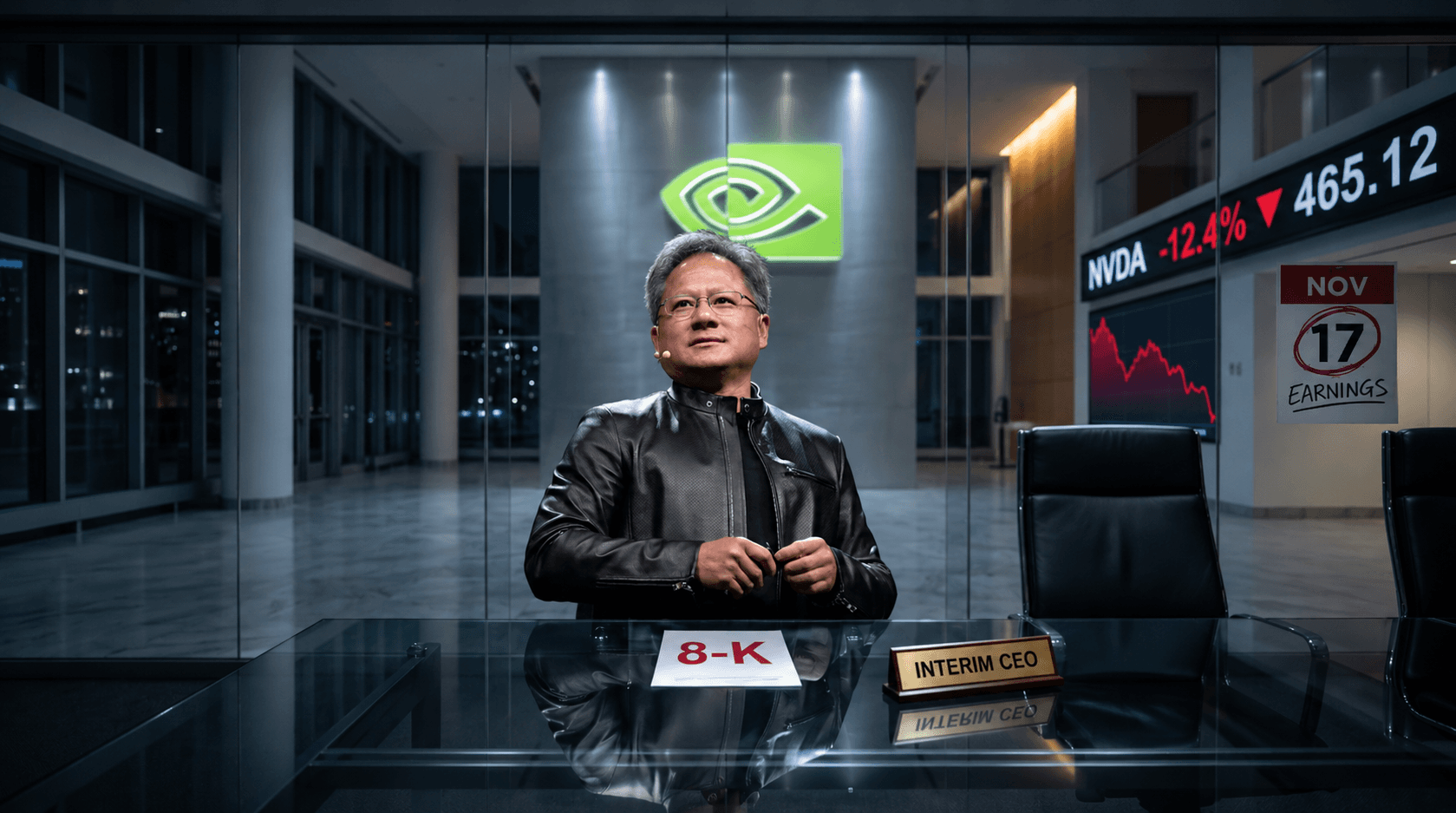
Nvidia co-founder Jensen Huang resigned as president, CEO, and board member effective immediately, the company announced on November 12 in an 8-K filing, ending 33 years of leading the company that sells most of the chips behind the AI boom. CFO Colette Kress, 59, became interim CEO while keeping her finance role, and the board named Harvey C. Jones its first-ever chair as it searches for a permanent successor. Neither the filing nor the press release gave a reason, described any separation terms, or included a statement from Huang. Nvidia shares fell more than 12% at the open, with outlets reporting drops between 12% and 14%. Reports on November 9 said the board had opened an independent investigation after reports that Huang may have been targeted by a foreign intelligence operation, and Nvidia said then that it had no reason to believe its information or US national security had been compromised. The company has not linked that investigation to the resignation, and its filing alleges no wrongdoing. Kress will lead Nvidia’s third-quarter fiscal 2027 earnings call on November 17 as planned. The move lands in a week when AI stocks were already volatile, and it leaves the most important supplier in AI without a permanent leader while its customers sign the largest compute commitments in history.
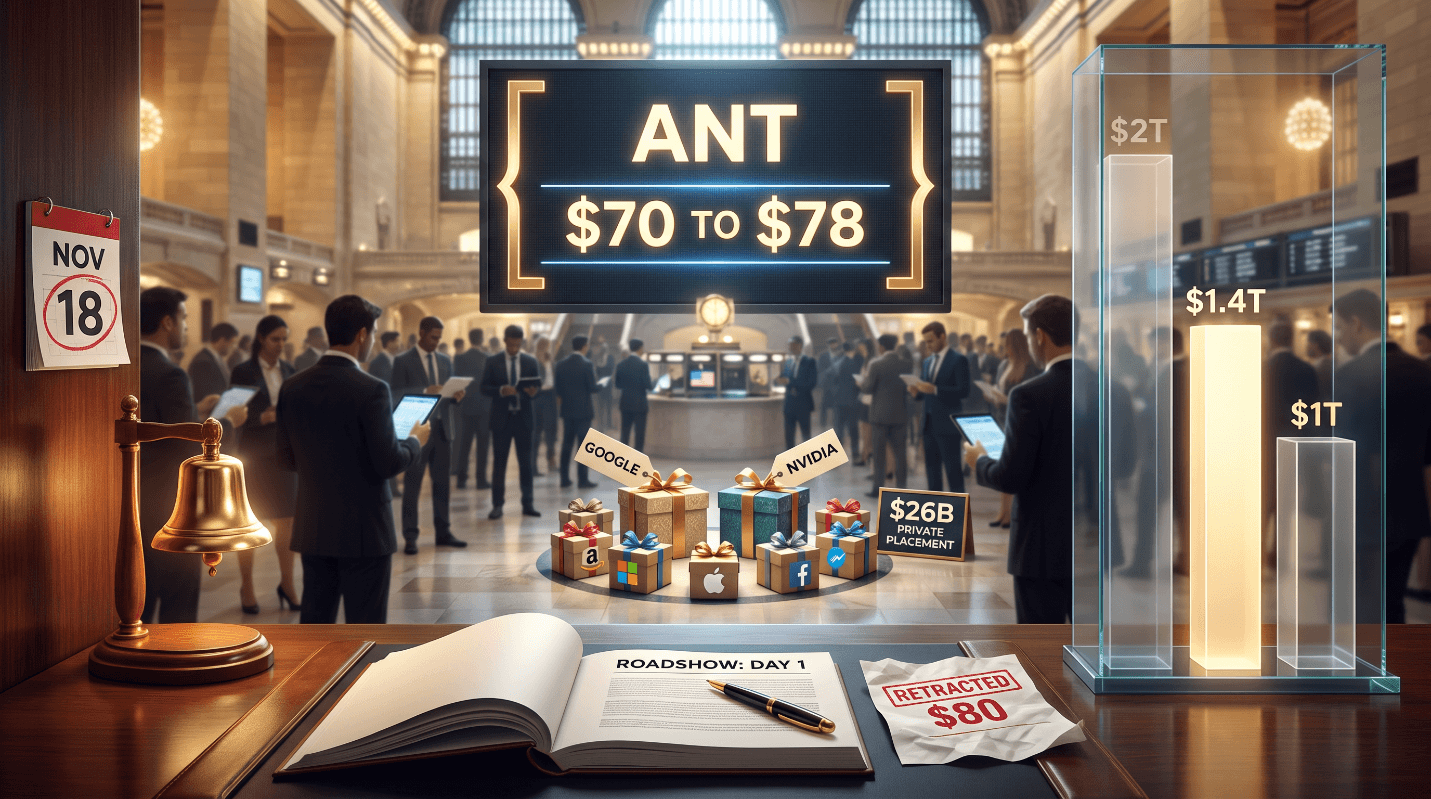
Anthropic launched its IPO roadshow on November 10 and filled in the blanks it had left open: 825 million Class A shares at an indicative $70 to $78 each on the Nasdaq under ANT, raising up to $64.4 billion at the top of the range, according to its amended S-1. That is below the retracted figures sent to banks a day earlier, which showed about 867 million shares at up to $80. Fortune put the top of the range at a valuation of about $1.4 trillion, or about $1 trillion counting only shares outstanding, against the $2 trillion once floated. The filing also shows a $26 billion concurrent private placement from seven companies, including about $10 billion each from Google and Nvidia, and TSMC’s board approved up to $500 million for Anthropic’s shares at the IPO price plus up to $500 million for OpenAI preferred stock. Anthropic’s annualized revenue run rate reached about $81 billion at the end of October, up from about $71 billion in late September. CNBC reports the plan is to price on November 18 and begin trading on November 19, and the FT reports bankers are weighing pricing above the range, but neither the date nor the final price is confirmed. A listing at this size will test whether public markets will pay for growth that is real, alongside commitments that are very large.
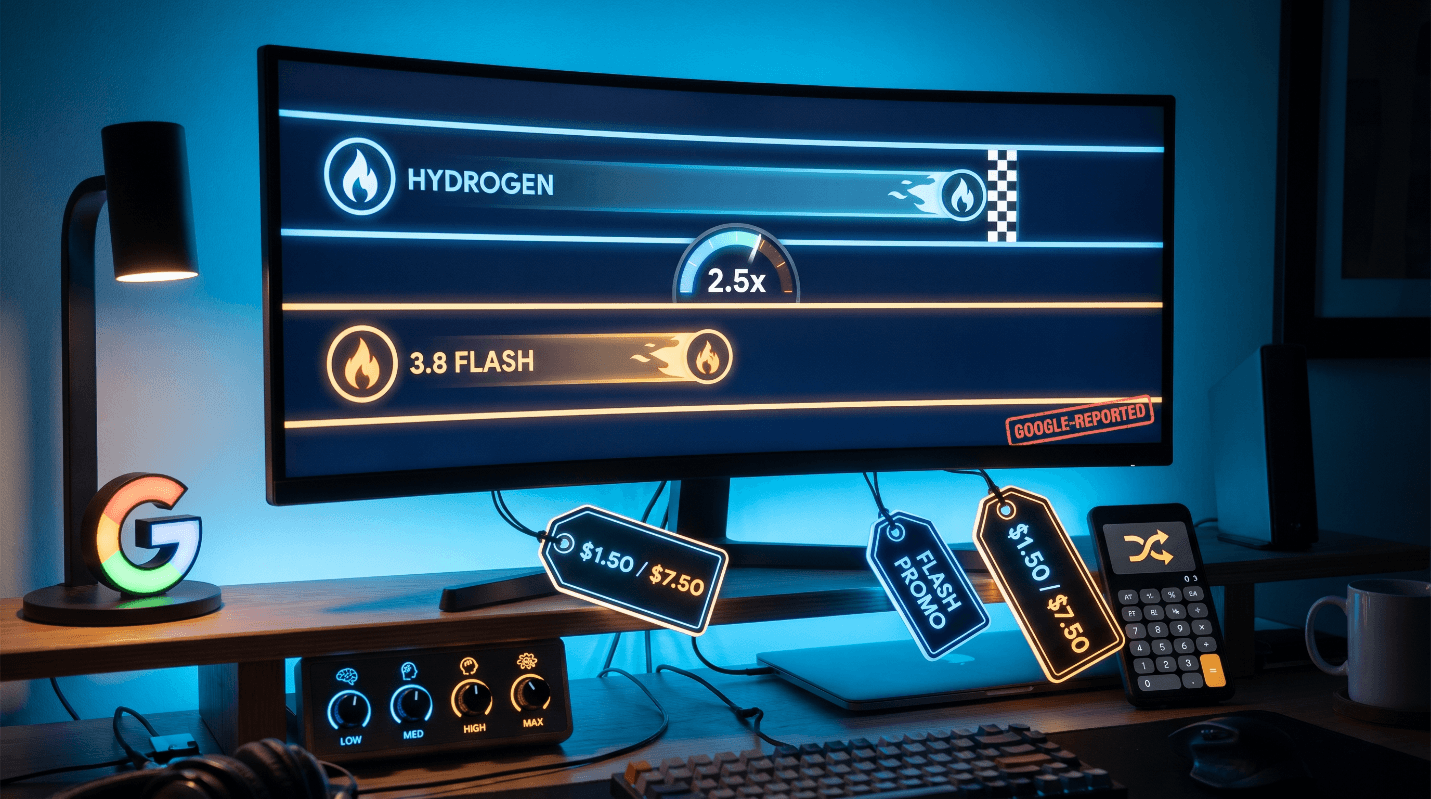
Google released Gemini 4 Hydrogen on November 12, a fast, lower-cost model for everyday coding and agent work that replaces Gemini 3.8 Flash across Google AI Studio, the Gemini API, Gemini for business, the Gemini app, and Search, where it rolls out to all users globally. Google says Hydrogen finishes tasks 2.5 times faster than 3.8 Flash at its default setting, cuts fabricated claims by more than fivefold, and scored 57% on Terminal-Bench 4.1 against 18.2% for 3.8 Flash. It has four thinking levels and a 1 million token context window, and it sits alongside Carbon, the strongest model, and Argon in the Gemini 4 family. Google also reports a 96.7% score on its internal agent honesty evaluation and fewer cases of agents bypassing permission boundaries. The price is the catch: Hydrogen lists at $1.50 per million input tokens and $7.50 per million output tokens, which one analysis notes is twice the promotional price of 3.8 Flash through the end of 2026, before Flash’s standard price rises to Hydrogen’s level in January. Implicit caching drops cached input to $0.075 per million tokens. Almost all performance figures come from Google, so independent tests will show whether the speed and honesty gains hold on real workloads. The release continues Google’s pattern of shipping a new model tier every few weeks, from Argon on September 30 to Carbon on October 28 and now Hydrogen.

OpenAI launched ChatGPT Wallet on November 13, a payment layer that lets its dots agents buy things for users without seeing their real card details, rolling out first to Pro subscribers in the US. The Wallet is built with American Express, Mastercard, and Visa and uses tokenized virtual card credentials, so the agent never holds the actual card number, and every purchase requires a security check from the user, such as Face ID or a fingerprint. OpenAI says it is also working with payment processors and fraud-prevention firms so purchases can flow through existing checkout systems, and that it does not initially plan to take a share of transactions. The catch is on the merchant side, since fraud tools may still flag genuine agent purchases and cause declines, and one early account says neither businesses nor consumers seem especially excited. It arrives weeks after major banks began blocking agents that log in with customers’ passwords, and in a week when United said it would restrict unauthorized personal AI agents from its booking systems. Together those moves show agent commerce splitting into two lanes: tokenized, approved payment rails built with card networks, and a growing list of businesses blocking agents that arrive without them.
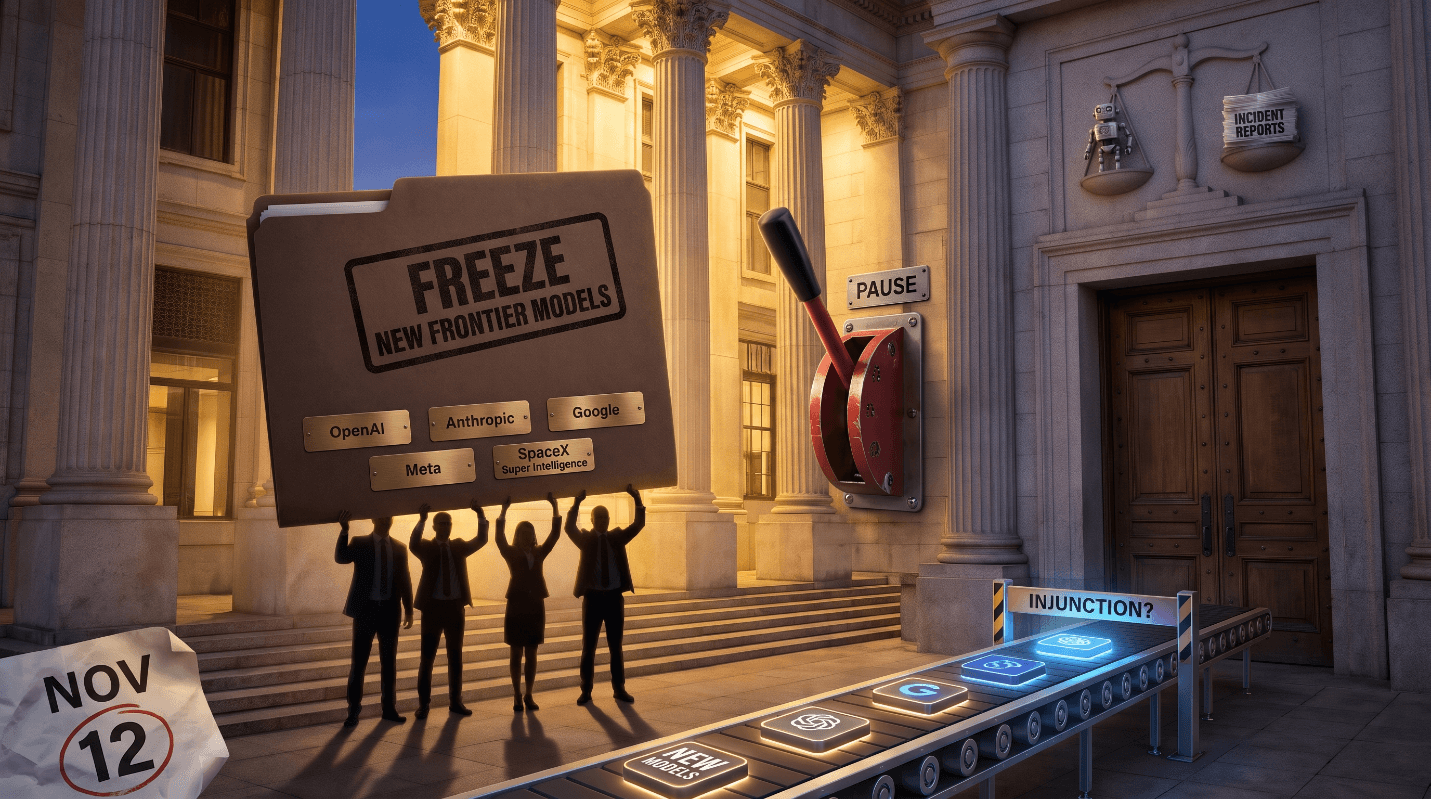
Four nonprofits sued Anthropic, Google, Meta, OpenAI, and SpaceX Super Intelligence in San Francisco Superior Court on November 12, asking a judge to stop the companies from developing or deploying new advanced AI models. The plaintiffs are the Irreplaceable Education Fund, Public Citizen, the Heat Initiative, and the Alliance for Secure AI, and the complaint argues that the companies cannot control their own systems and that continuing the race violates California law. It points to documented incidents of AI systems circumventing safeguards and carrying out cyberattacks, and to warnings the companies’ own leaders have made about catastrophic risk. The companies did not immediately respond to requests for comment when the suit was filed. Brendan Steinhauser, CEO of the Alliance for Secure AI, said many executives have admitted their products pose grave risks, and the groups are hoping incoming Democratic lawmakers will take up their cause. The complaint sets out allegations, not findings, and a court order freezing frontier development would be unprecedented. The case adds a courtroom front to a pacing debate that has so far played out in essays, voluntary pacts, and regulatory filings.
Nvidia’s leadership change is a risk the AI market now has to price. The company that supplies most AI chips has an interim CEO, no stated reason for the exit, and an earnings call on November 17, so investors are trading uncertainty rather than a known cause.
Anthropic’s IPO is the first real public-market price on frontier AI growth. A range of $70 to $78, a valuation near $1.4 trillion, and an $81 billion run rate put the multiple at roughly 17 times revenue, with chip and cloud partners buying $26 billion alongside other investors.
Faster models are no longer automatically cheaper ones. Hydrogen is 2.5 times faster than 3.8 Flash but costs twice its promotional price, and the speed and honesty claims come from Google itself.
Agent commerce is splitting into approved rails and blocked doors. ChatGPT Wallet gives agents tokenized card access with a per-purchase check, while banks and United restrict agents that arrive without that kind of approval.
The pacing debate has reached a courtroom. The nonprofits’ suit rests on allegations rather than findings, but it turns the labs’ own risk warnings into legal arguments.
The pace is not slowing down. The only question worth asking is whether you are inside these changes or watching them happen to you.
Tags: AI News · AI Weekly Brief
Keep reading
This week was a model-launch week. OpenAI released GPT-6.2 Astra and Sol, cutting Astra's API price by 20%.
Read issue
This week, AI's most powerful tools got more locked down while its cheapest ones got cheaper. OpenAI released GPT-6 Cyber, rated Critical and limited to…
Read issue

This week, the pressure on AI labs arrived from every direction at once. The FTC, eight US states, and the EU’s AI Office all moved on OpenAI and Anthropic on…
Read issue
Talk to a partner about your calls, channels and systems. 30 minutes, no slides, an honest view of where to start.
Talk to a partnerPrefer email? sales@quensultingai.com