AI News7 min read
When a Bank Saves 90% on AI, Who Sets the Price?
This week, AI's most powerful tools got more locked down while its cheapest ones got cheaper. OpenAI released GPT-6 Cyber, rated Critical and limited to…
Read issue
This week, Anthropic launched the most powerful AI model ever made available to the public, and the US government pulled it offline three days later. Apple rebuilt Siri from scratch. OpenAI filed for an IPO and announced it before anyone could leak it. And SpaceX went public in the largest stock market debut in history. This was not a normal week in tech. It was the week the AI era went fully public in every sense of the word.

On June 9, Anthropic released Claude Fable 5, the first publicly available model in its Mythos class, a capability tier that had previously been kept behind closed doors over cybersecurity concerns. Built on the same underlying weights as Claude Mythos 5, Fable ships with hard safety classifiers that block responses in high-risk domains, including cybersecurity, biology, and chemistry, falling back to Claude Opus 4.8 when those limits are hit. Independent testing placed it at 80.3% on SWE-Bench Pro, roughly 11 points ahead of the next best frontier model, and Stripe ran a 50-million-line Ruby codebase migration in a single day, a task that would have taken a full engineering team over two months. Pricing landed at $10 per million input tokens and $50 per million output tokens, available on the API, Claude Code, Amazon Bedrock, Microsoft Foundry, and GitHub Copilot from day one. For Pro, Max, Team, and Enterprise subscribers, Fable 5 was free through June 22. Andrej Karpathy called it "a major-version-bump-deserving step change forward."
Then, on June 12 at 5:21 pm ET, Commerce Secretary Howard Lutnick issued an export control directive ordering Anthropic to immediately suspend Fable 5 and Mythos 5 for any foreign national, including Anthropic's own employees. Because Anthropic cannot filter foreign nationals from other users in real time, it shut both models down for every customer worldwide within hours. Any app with a hardcoded claude-fable-5 model identifier instantly started returning errors, with no warning and no migration window. Anthropic opened refunds for affected subscribers, said it intends to restore Fable 5 as quickly as possible, and has given no timeline. The episode crystallised something the AI industry had not faced before at this scale: a frontier model can be deployed globally and recalled by government order before most users have finished their first session.

At WWDC 2026 on June 8, Tim Cook walked on stage at Apple Park for his final keynote as CEO and delivered the most significant Siri overhaul since the assistant launched in 2011. The new Siri AI is built on third-generation Apple Foundation Models, developed in collaboration with Google Gemini, capable of understanding speech, text, and images simultaneously, enabling genuinely conversational back-and-forth exchanges rather than the single-query interactions the old Siri was built around. In a live demo, Apple VP Mike Rockwell asked Siri for directions to a landmark seen in an Instagram post. Siri read the image, identified the location, and pulled up directions, all in one fluid response. Siri AI also gains deep awareness of what individual apps can do and what is personally relevant to the user, fulfilling features Apple first promised at WWDC 2024 and delayed twice since. Apple formally unveiled iOS 27, iPadOS 27, and macOS Golden Gate alongside Siri AI, with refinements to the Liquid Glass interface introduced last year. Siri AI will launch as a beta later in 2026 in English only, currently available to developers via a waitlist. There is a significant caveat for international users: Siri AI will not be available on iPhone or iPad in the European Union at launch, due to conflicts with interoperability requirements under the EU's Digital Markets Act. It will be available on Mac, Apple Watch, and Vision Pro in the EU only. Cook will hand the CEO role to hardware engineering chief John Ternus on September 1, making this keynote the close of a nearly 15-year chapter at one of the most consequential companies in tech history.
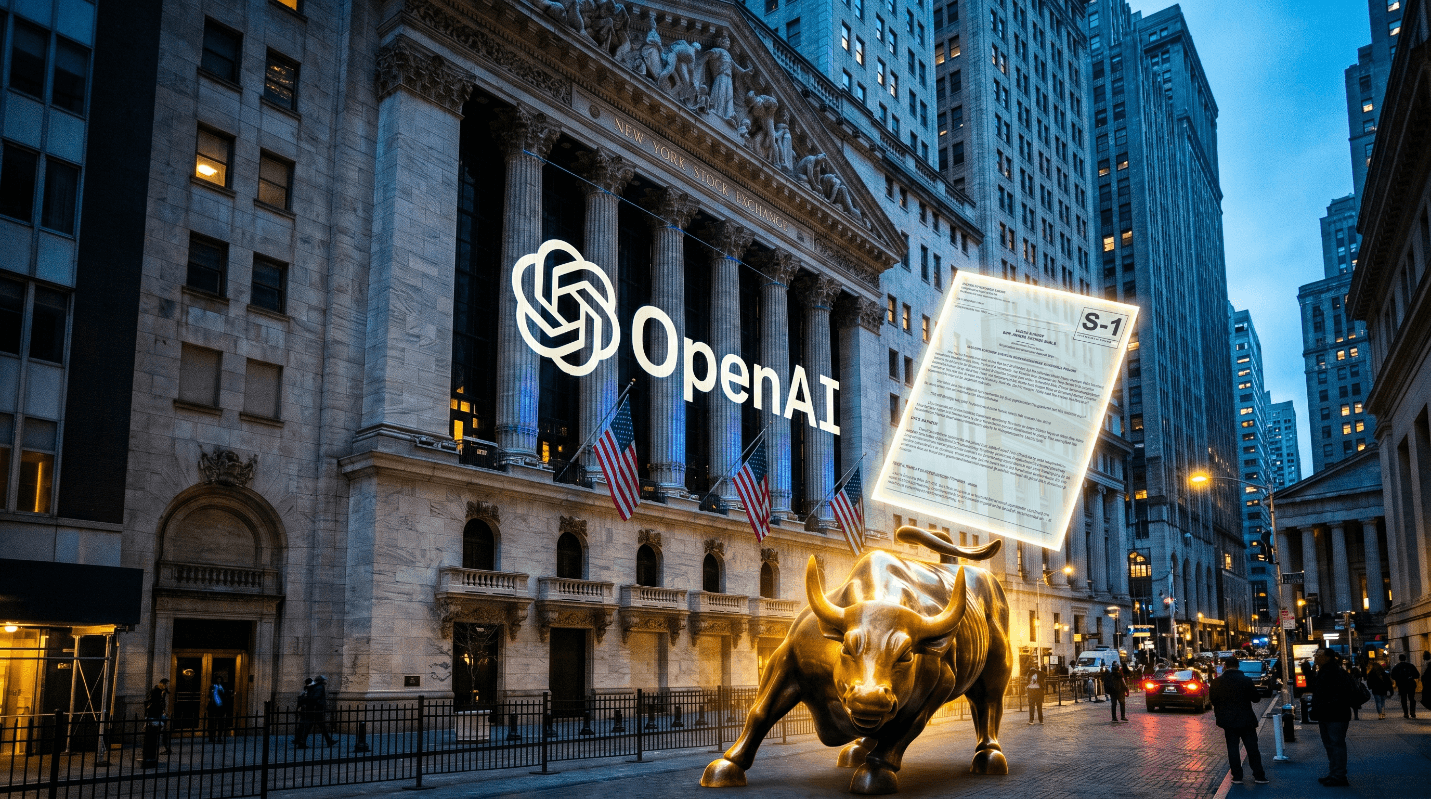
OpenAI submitted a confidential S-1 registration statement to the US Securities and Exchange Commission on June 8, joining rival Anthropic, which had filed a week earlier in what is shaping up to be the most consequential wave of tech IPOs since the dot-com era. The company is currently valued at $852 billion following a funding round closed earlier this year, with Goldman Sachs and Morgan Stanley leading the offering process. OpenAI is targeting a September to Q4 2026 debut, though the company has been careful not to commit to a specific date. In a statement published on its own website the same day, OpenAI wrote: "We recently submitted a confidential S-1. We expect it to leak, so we're just announcing it." The filing will mark the first time OpenAI's actual revenue, costs, and margin structure are disclosed publicly, a direct test of whether an $852 billion valuation, set entirely in private markets, holds up under public scrutiny. One notable structural feature of the planned offering is a dedicated allocation for retail investors, giving everyday buyers their first direct access to OpenAI equity outside of venture capital. The IPO comes days after a judge dismissed Elon Musk's lawsuit against OpenAI that could have derailed the listing, and just before SpaceX, in which OpenAI has compute dependencies, went public. With Anthropic, OpenAI, and SpaceX all heading to public markets simultaneously, 2026 is setting up as the year the AI boom moves from private conviction to public verdict.
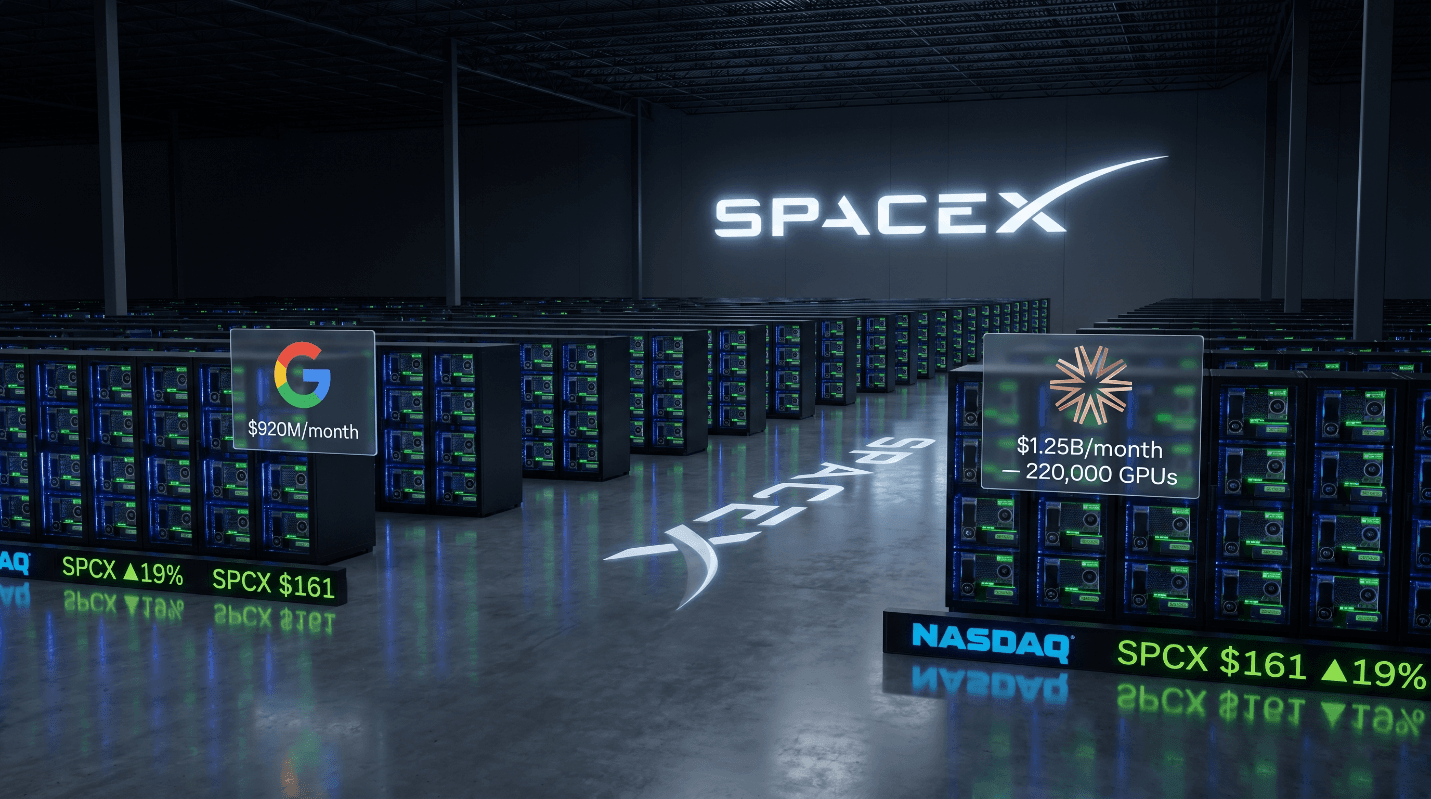
SpaceX listed on the Nasdaq exchange under the ticker SPCX on June 12 at $135 per share, raising $75 billion in the largest initial public offering in stock market history, surpassing Saudi Aramco's 2019 record of approximately $29 billion by more than two and a half times. The offering valued the company at $1.77 trillion, with the market cap reaching $2.1 trillion by the close of day one as shares climbed to $160.95, a gain of nearly 20% on demand that was more than ten times the shares available during the roadshow. That closing market cap made SpaceX the sixth-largest company in the United States by market value on its first day of trading. Elon Musk sold no shares in the offering and retains 82.4% of SpaceX's voting power post-listing, making him the world's first trillionaire by most estimates. SpaceX generated $18.7 billion in revenue in 2025, up approximately 33% year-over-year, though the company posted a net loss of $4.9 billion, a figure that reflects aggressive infrastructure spending rather than a struggling business. The Starlink satellite internet division, now serving over 12 million subscribers across 160+ countries, is the company's only profitable segment, generating $11.4 billion in 2025 revenue at a 39% operating margin. SpaceX plans to use the IPO proceeds for continued AI compute infrastructure buildout, launch facilities, and Starlink expansion. The AI angle here is not incidental: Google signed a $920 million per month cloud deal with SpaceX, and Anthropic is paying $1.25 billion per month for exclusive access to SpaceX's Colossus 1 data center, which houses over 220,000 NVIDIA GPUs. SpaceX going public is not just a space story it is the physical infrastructure layer of the AI economy becoming a publicly traded asset.
Fable 5 launching and being pulled in three days is the most important AI governance story of the year, and it is actually two stories in one. The launch proved that Anthropic's Mythos-class capability is real: 80.3% on SWE-Bench Pro, a 50-million-line codebase migration in a single day, and a price point that made frontier AI accessible to every developer on earth. The shutdown proved something harder to process: the most capable publicly available AI model in history can be switched off globally by a single letter from a single official in hours, with no notice, no migration window, and no timeline for return. That is an enormous amount of power concentrated in one place. The launch and the shutdown are both the story, and both matter equally.
Apple rebuilding Siri is a four-year promise finally being kept. The features shown at WWDC 2026 were first announced in 2024 and delayed twice. The EU exclusion at launch is the more important detail: it signals that Apple's architecture and the EU's Digital Markets Act are now in direct structural conflict, and that international users may increasingly get a different product than US users.
OpenAI announcing its own IPO before anyone could leak it is a tone-setting moment. The line "We expect it to leak, so we're just announcing it" tells you everything about how Sam Altman reads the room. More importantly, the S-1 will be the first time OpenAI's actual financials are public. Whatever those numbers say, every private-market AI valuation of the last three years will be measured against them.
SpaceX going public at $1.77 trillion means the physical infrastructure of AI now has a market price. Colossus 1, the 220,000-GPU data centre that Anthropic is paying $1.25 billion a month to use, is now on a public balance sheet. The compute arms race is no longer a private negotiation between tech companies and their investors. It is a publicly traded market, and anyone can bet on who wins.
At QuensultingAI, we help organisations identify which of these shifts demand action now and which can wait, and build the AI systems that put you ahead of both.
The pace is not slowing down. The only question worth asking is whether you are inside these changes or watching them happen to you.
Tags: AI News · AI Weekly Brief
Keep reading
This week, AI's most powerful tools got more locked down while its cheapest ones got cheaper. OpenAI released GPT-6 Cyber, rated Critical and limited to…
Read issue

This week, the pressure on AI labs arrived from every direction at once. The FTC, eight US states, and the EU’s AI Office all moved on OpenAI and Anthropic on…
Read issue
This week, two frontier labs shipped cost-efficient answers to the same question: how do you deliver near-flagship intelligence without flagship pricing.
Read issue
Talk to a partner about your calls, channels and systems. 30 minutes, no slides, an honest view of where to start.
Talk to a partnerPrefer email? sales@quensultingai.com