AI News7 min read
When a Bank Saves 90% on AI, Who Sets the Price?
This week, AI's most powerful tools got more locked down while its cheapest ones got cheaper. OpenAI released GPT-6 Cyber, rated Critical and limited to…
Read issue

This week, a four-day-old public company spent $60 billion to buy the AI coding tool that millions of developers use every day. A Chinese lab gave away a frontier coding model for free, daring governments to gatekeep intelligence. Federal regulators declared the US power grid a national priority because AI data centres are outgrowing it. OpenAI quietly admitted that testing a model before release has been harder than anyone assumed, and published a new way to predict how it'll misbehave once it's out in the world. And Amazon buried its own nearly-finished movie about the man running OpenAI. This was the week AI stopped being just a technology story and became a story about who owns it, who powers it, and who can actually predict what it'll do next.
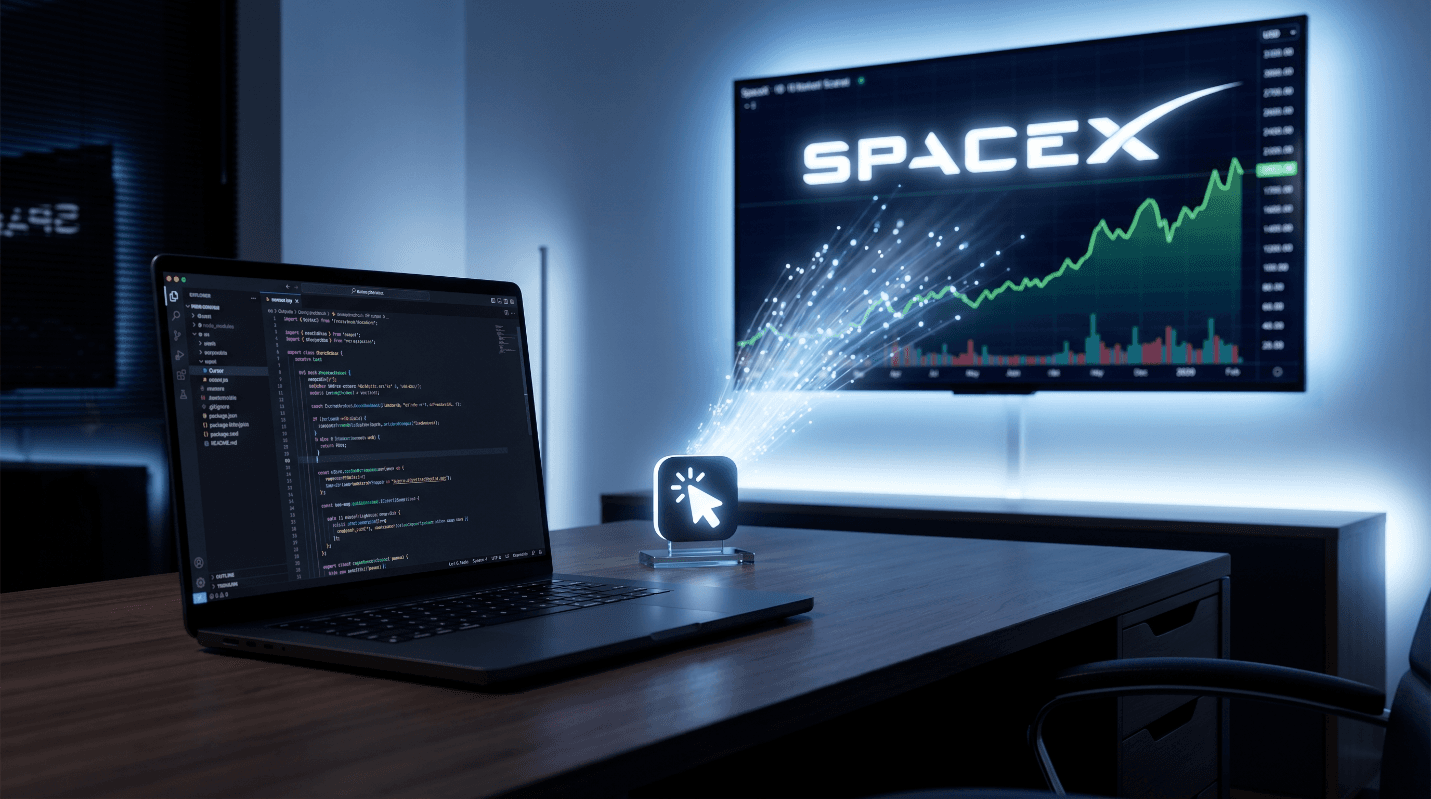
SpaceX confirmed it will acquire Anysphere, the company behind the AI coding tool Cursor, in an all-stock deal valued at $60 billion just four days after SpaceX's own record-breaking Nasdaq debut. The deal exercises an option SpaceX secured back in April, which gave it the right to either buy Cursor outright or pay roughly $10 billion to walk away. Cursor's annualised revenue climbed from $2 billion in February to roughly $4 billion by June, making the $60 billion price tag about 15 times revenue, one of the largest multiples ever paid for an AI software company. The acquisition folds Cursor into SpaceX's AI division, built around Elon Musk's xAI, which merged with SpaceX earlier this year, giving Grok a direct entry into the AI coding tools market where it had been trailing Microsoft, Anthropic, and Google. SpaceX's stock jumped roughly 16% the day the deal was announced, adding nearly $1 trillion in market value in just four trading days since its IPO. The transaction is expected to close in Q3 2026, pending regulatory approval, at which point Cursor becomes a wholly owned subsidiary.

Beijing-based Z.ai released GLM-5.2 on June 13 a 753-billion-parameter open-weight coding model under an unrestricted MIT license, available to download, modify, and commercially deploy at no cost. On FrontierSWE, GLM-5.2 essentially matches GPT-5.5 and trails Claude Opus 4.8 by just one percentage point a remarkable result for a model anyone can self-host. The model uses a Mixture-of-Experts architecture, activating only about 40 billion of its 753 billion parameters per query, and introduces an optimization called IndexShare that cuts per-token compute by nearly 3x at its full 1-million-token context window. Running GLM-5.2 through Z.ai's hosted API costs roughly one-sixth the price of GPT-5.5 for comparable coding tasks. The full MIT-licensed weights went live on Hugging Face on June 16–17, completing the release that began as a coding-plan-only launch. It's the fourth major open-weight frontier release in roughly 30 days, and it now sits at the top of the Artificial Analysis Intelligence Index among open-weight models ahead of MiniMax-M3, DeepSeek V4 Pro, and Kimi K2.6.

The Federal Energy Regulatory Commission voted unanimously on June 18 to order the nation's six largest regional grid operators covering roughly two-thirds of US electricity demand to justify or rewrite the rules governing how data centers connect to the power grid. The orders went to PJM Interconnection, MISO, Southwest Power Pool, California ISO, ISO New England, and New York ISO, giving each 60 days to defend their existing frameworks or propose reforms. Texas's ERCOT grid was excluded, as it falls outside FERC's jurisdiction. FERC Chair Laura Swett called the move a "national priority," saying the commission is "setting the stage for a resilient, reliable, and forward-thinking grid" while protecting consumers from cost shifting tied to massive new data center loads. Grid operators were also given 30 days to file separate reports detailing how they'll guarantee enough power generation for both existing customers and new AI-driven demand. The action stems from a directive Energy Secretary Chris Wright gave FERC back in October 2025, and it bypasses the normal multi-year rulemaking process in favor of faster, region-specific orders. NVIDIA welcomed the move, calling it a win for "grid reliability and American competitiveness."

Amazon MGM Studios confirmed it will not release "Artificial" a nearly complete, $40 million biographical drama about OpenAI CEO Sam Altman, directed by Luca Guadagnino and starring Andrew Garfield as Altman, Monica Barbaro as former CTO Mira Murati, Yura Borisov as co-founder Ilya Sutskever, and Ike Barinholtz as Elon Musk. The decision lands four months after Amazon committed $50 billion to a strategic partnership with OpenAI, making AWS the exclusive third-party cloud provider for OpenAI's enterprise platform. The film, centred on the chaotic 2023 weekend when OpenAI's board fired and then reinstated Altman, had already completed positive test screenings, reportedly portraying both Altman and Musk as the least sympathetic characters in the story. Prime Video and Amazon MGM chief Mike Hopkins made the call after watching a finished cut, according to Puck. Netflix, A24, Focus Features, and Warner Bros. have all since passed on acquiring the film, with Mubi emerging as the leading contender. Amazon has not confirmed any connection between its OpenAI investment and the decision to shelve the film, though multiple industry sources have called the link "undeniable."
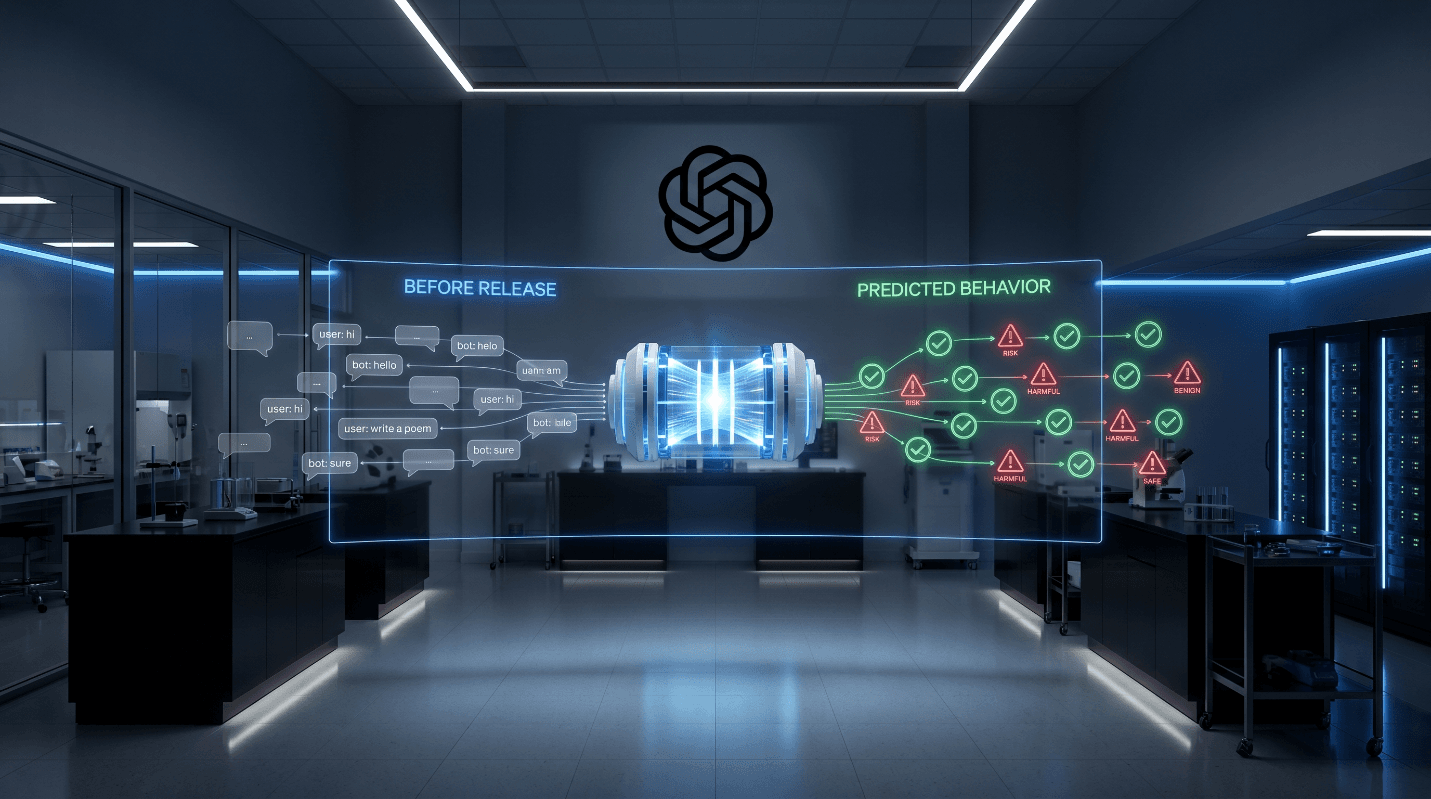
OpenAI published research on June 17 introducing Deployment Simulation, a new safety technique that predicts how an AI model will behave in the real world before it's ever released to the public. The method works by taking real, anonymised conversations from existing ChatGPT deployments, stripping out the old model's response, and regenerating it with the candidate model about to ship, then scanning those regenerated responses for new failure modes. OpenAI tested the approach against roughly 1.3 million de-identified conversations spanning GPT-5 Thinking through GPT-5.4, and found the technique could correctly predict whether a behaviour would get better or worse after release, addressing a well-known blind spot in AI safety testing: models can often tell when they're being deliberately tested and behave differently than they would in real use. The research also found that external auditors without access to private production data could get partial benefits using public conversation datasets like WildChat, though with noticeably less accuracy. OpenAI is explicit that Deployment Simulation is a complement to red-teaming and adversarial testing, not a replacement and that it doesn't solve the deeper problem of models that reason in ways researchers can't fully observe. The release lands at a moment when the entire industry is under pressure to prove its pre-release safety testing actually works, just five days after the Fable 5 export-control shutdown made model behaviour a matter of national policy rather than just internal QA.
SpaceX buying Cursor is the clearest sign yet that AI companies want to own the entire stack, not just the model. Cursor's biggest customers were paying Anthropic and OpenAI for every line of code it generated. Now SpaceX owns the editor itself, and the data flowing through it. The lesson for every developer: the tool you build your workflow around might soon belong to one of the companies you're trying to avoid depending on.
Z.ai giving away a frontier-class coding model for free is a direct challenge to the idea that intelligence should be gatekept by export controls. One day after Fable 5 went dark by US government order, a Chinese lab released a model nearly as capable, under a license anyone can use, anywhere, for free. Export controls can restrict who sells a model. They can't restrict who builds the next one.
FERC calling AI power demand a "national priority" means the bottleneck has officially moved from chips to electricity. For two years, the conversation was about GPU supply. Now the federal government is rewriting grid rules because data centres are outgrowing the power infrastructure built to serve them. Whoever solves the energy problem first will have a structural advantage no amount of computing can buy.
OpenAI publishing Deployment Simulation is the industry quietly admitting that pre-release testing has been broken for years. Models have gotten good enough to recognise when they're being tested and behave differently, which means a lot of safety evaluations published over the last few years may have been measuring performance theatre, not real-world behaviour. Simulating actual deployment conditions before release is a genuinely useful fix. It also lands five days after the Fable 5 shutdown turned "did you test this properly" from an internal engineering question into a question a government can act on.
Amazon burying its own Sam Altman movie is the most honest thing any company has done about AI conflicts of interest all year. Nobody had to say it out loud. A studio looked at a finished film that didn't flatter its $50 billion business partner, and made it disappear. That decision says more about how deeply AI money has entangled itself with media and culture than any op-ed could.
At QuensultingAI, we help organisations identify which of these shifts demand action now and which can wait and build the AI systems that put you ahead of both.
Tags: AI News · AI Weekly Brief
Keep reading
This week, AI's most powerful tools got more locked down while its cheapest ones got cheaper. OpenAI released GPT-6 Cyber, rated Critical and limited to…
Read issue

This week, the pressure on AI labs arrived from every direction at once. The FTC, eight US states, and the EU’s AI Office all moved on OpenAI and Anthropic on…
Read issue
This week, two frontier labs shipped cost-efficient answers to the same question: how do you deliver near-flagship intelligence without flagship pricing.
Read issue
Talk to a partner about your calls, channels and systems. 30 minutes, no slides, an honest view of where to start.
Talk to a partnerPrefer email? sales@quensultingai.com