AI News7 min read
When a Bank Saves 90% on AI, Who Sets the Price?
This week, AI's most powerful tools got more locked down while its cheapest ones got cheaper. OpenAI released GPT-6 Cyber, rated Critical and limited to…
Read issue
AI News
By QuensultingAI 8 min read

AI is no longer a bet on the future. The money is real, the models are open, and the jobs are already gone. This was not a quiet week in AI. The deals were bigger, the models were faster, and the job cuts were blunter than usual. Here is what you need to know.

On April 24, Google confirmed it will invest up to $40 billion in Anthropic. The deal opens with $10 billion in immediate cash at a valuation of $350 billion, with the remaining $30 billion tied to performance milestones. Earlier that week, on April 20, Amazon committed to investing up to $25 billion in its own Anthropic stake, $5 billion immediately at a valuation of $350 or $380 billion, with up to $20 billion more tied to commercial milestones. In a matter of days, Anthropic secured over $65 billion in committed capital from two of the three largest cloud providers on earth.
As part of the deal, Anthropic has committed to purchasing AI computing capacity from Google Cloud, making it a strategic customer as much as an investment target. Google secures a major customer for its TPU infrastructure. Anthropic gets the capital to train the next generation of models without depending on any single supplier. It is a mutually reinforcing arrangement that gets tighter as both companies grow. Google and Anthropic are rivals. Gemini competes directly with Claude, and yet Google is writing a cheque larger than the entire global VC investment in AI for all of 2023. The cost of staying competitive at the frontier has become so high that even the largest technology companies need strategic partners to afford it.
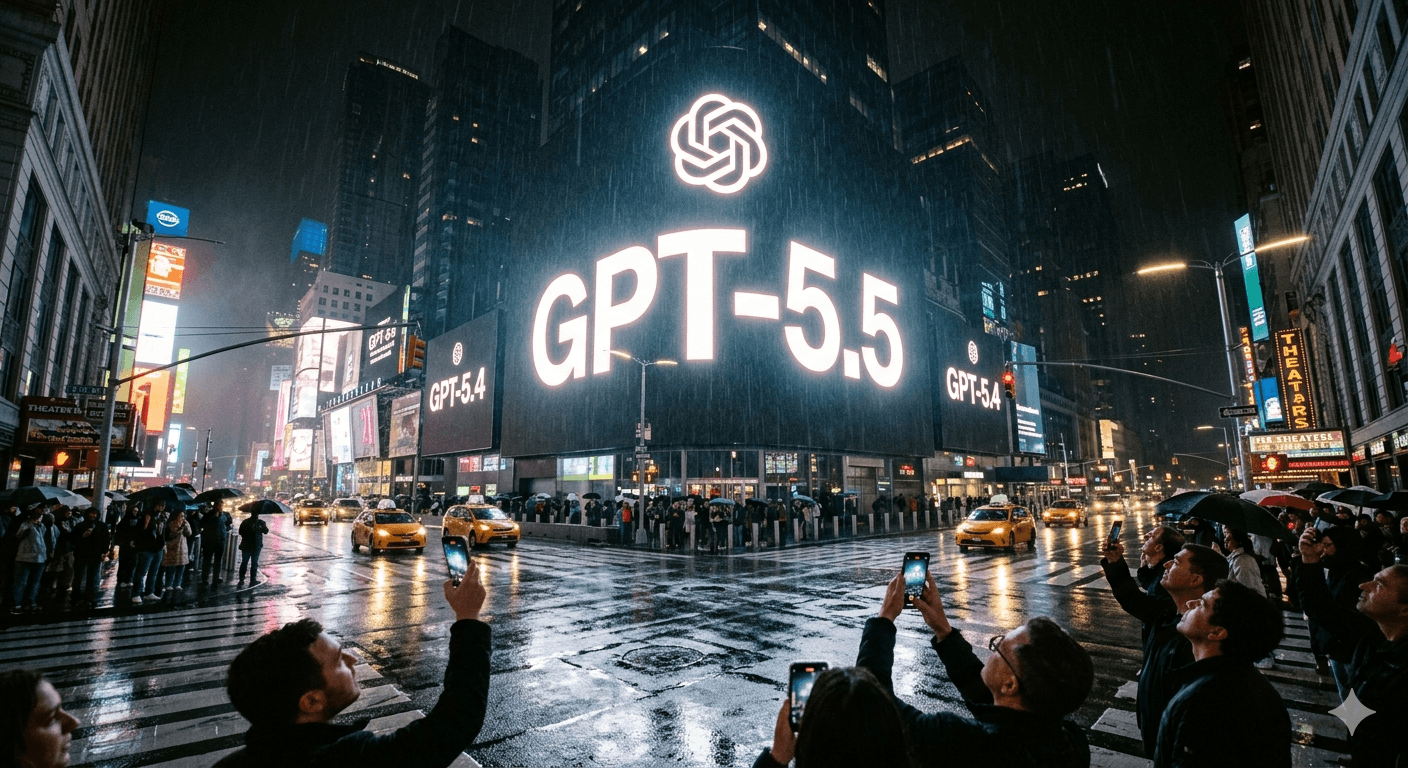
On April 23, OpenAI released GPT-5.5 just six weeks after GPT-5.4, rolling out immediately to paid subscribers in ChatGPT and Codex. API pricing sits at $5 per million input tokens and $30 per million output tokens with a 1 million token context window. A Pro variant is available at $30 and $180 per million tokens for high-accuracy workloads. Six weeks between frontier models is not development cadence; it is product launch cadence. GPT-5.5 is not positioned as a chat model that got smarter. It is framed as an agent runtime, something you hand a complex task and trust to plan, execute, and finish without supervision. President Greg Brockman called it "a new class of intelligence" and a big step toward more agentic and intuitive computing. The entire launch is built around that framing. OpenAI is no longer selling completions. It is selling autonomous task execution. Alongside the release, OpenAI published 900 million weekly active users, 50 million subscribers, and 9 million paying business users, numbers clearly timed to counter the narrative that Anthropic is winning in enterprise. On benchmarks, GPT-5.5 scores 82.7% on Terminal-Bench 2.0. Chief Scientist Jakub Pachocki said extremely significant improvements are coming in the medium term.
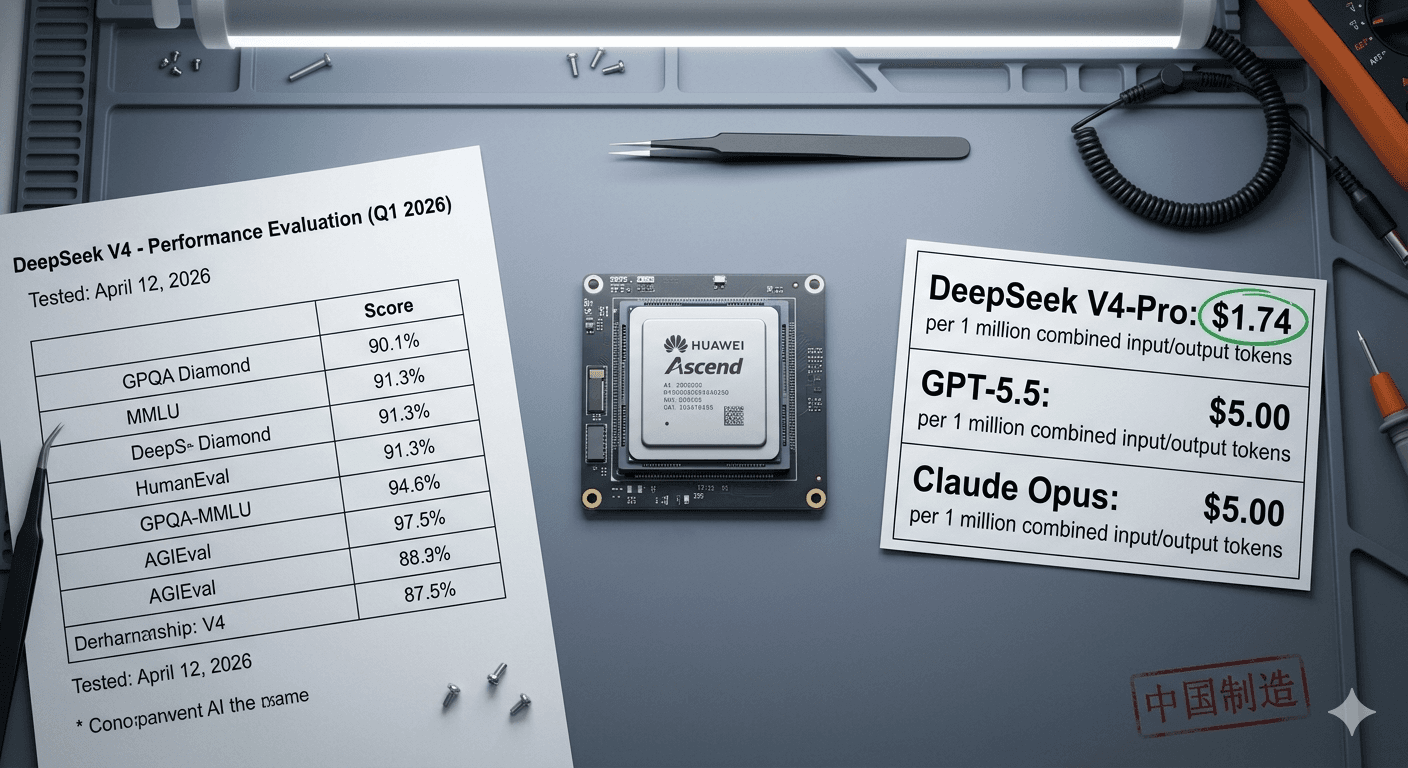
On April 24, DeepSeek launched a preview of V4, its most capable model yet. V4-Pro has 1.6 trillion total parameters with 49 billion active per inference. V4-Flash has 284 billion total with 13 billion active. Both support a 1 million token context window, ship under the MIT licence, and are fully open-source on Hugging Face, free to use commercially. The pricing is where DeepSeek makes its sharpest argument. V4-Flash costs $0.14 per million input tokens. V4-Pro costs $1.74 per million input tokens. GPT-5.5 is $5 and Claude Opus is $5 per million input tokens. DeepSeek is delivering near-frontier performance at roughly one-sixth the cost of leading closed models. On benchmarks, V4-Pro scores 88.8% on GPQA Diamond, placing it between GPT-5.2 and GPT-5.4 and closer to the top than most expected. DeepSeek reportedly trained V4 on Huawei Ascend 950 chips rather than Nvidia silicon, a deliberate signal that China can build competitive frontier AI without US hardware. The White House, the same week, accused China of industrial-scale model extraction attacks against American labs. V4 does not recreate the shock of R1, but it confirms the gap between open-source and closed-source AI is closing faster than Silicon Valley is comfortable admitting.

On April 20, Apple announced Tim Cook will step down as CEO on September 1, handing the role to John Ternus, currently SVP of Hardware Engineering. Cook, who has led Apple since 2011, will stay on as Executive Chairman. Ternus will join the Board of Directors on the same date. The transition was approved unanimously and follows what Apple described as a long-term succession planning process. Ternus, 50, joined Apple in 2001 and has spent the past 25 years there, becoming SVP of Hardware Engineering in 2021, overseeing Apple Silicon and the M-series chips that redefined Mac performance. By choosing a hardware insider over a software or AI-native leader, Apple is signalling continuity and doubling down on the product-first identity that has defined the company for decades. The scrutiny will come on AI.
Apple has no frontier model, no meaningful enterprise AI presence, and no clear answer to where it fits as AI reshapes computing. Its on-device features have been well received, but the company trails OpenAI, Google, and Anthropic by a significant distance on the model side. Ternus has strong internal credibility. The question the market will keep asking is whether a hardware engineer is the right person to lead a company whose biggest threat is now defined by software and models.
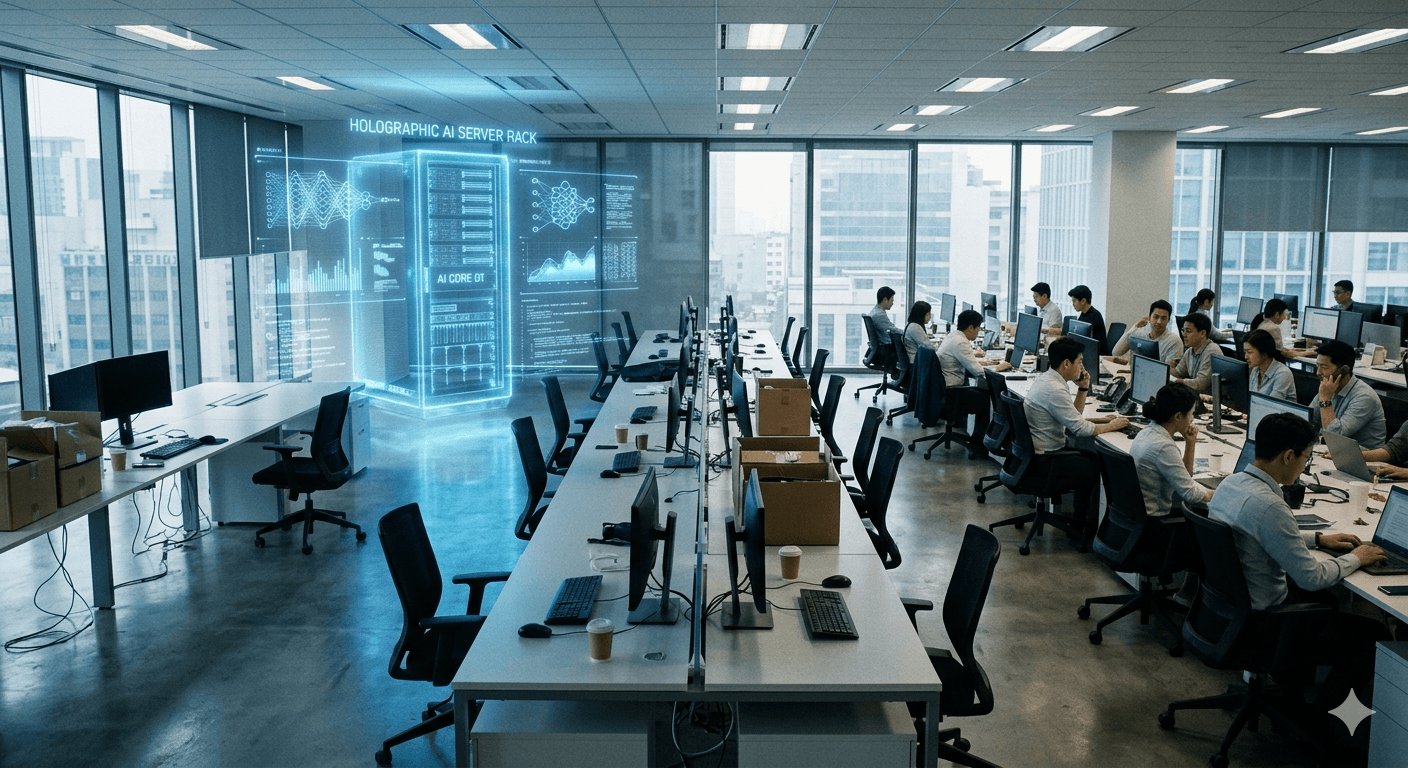
On April 24, Meta announced cuts of around 8,000 employees, 10% of its global workforce, starting May 20. On the same day, Microsoft offered voluntary buyouts to roughly 8,750 US staff, the first time in the company's 51-year history, though these are offers, not yet executed cuts. Over 16,000 roles are in the process of being eliminated across both companies. The 2026 tech layoff total now exceeds 92,000, with the industry-wide count since 2020 approaching 900,000. Both companies were direct about the reasoning. Meta Chief People Officer Janelle Gale said the cuts exist to offset other investments, meaning Zuckerberg's AI capex of $115 to $135 billion for 2026, roughly double last year. Microsoft's buyout formula targets employees whose age plus tenure totals at least 70. Amazon, Google, Meta, and Microsoft combined are on track to spend $650 billion on capital expenditure this year. The layoffs are directly funding that number. The harder question is what this signals structurally. AI is already slowing hiring for entry-level and generalised IT roles while demand for AI specialists keeps rising. Many of these roles are not coming back in the same form. If companies rehire with new skills and redesign how work gets done, the transformation is productive. If they simply cut and stop, the labour market implications become very difficult to absorb.
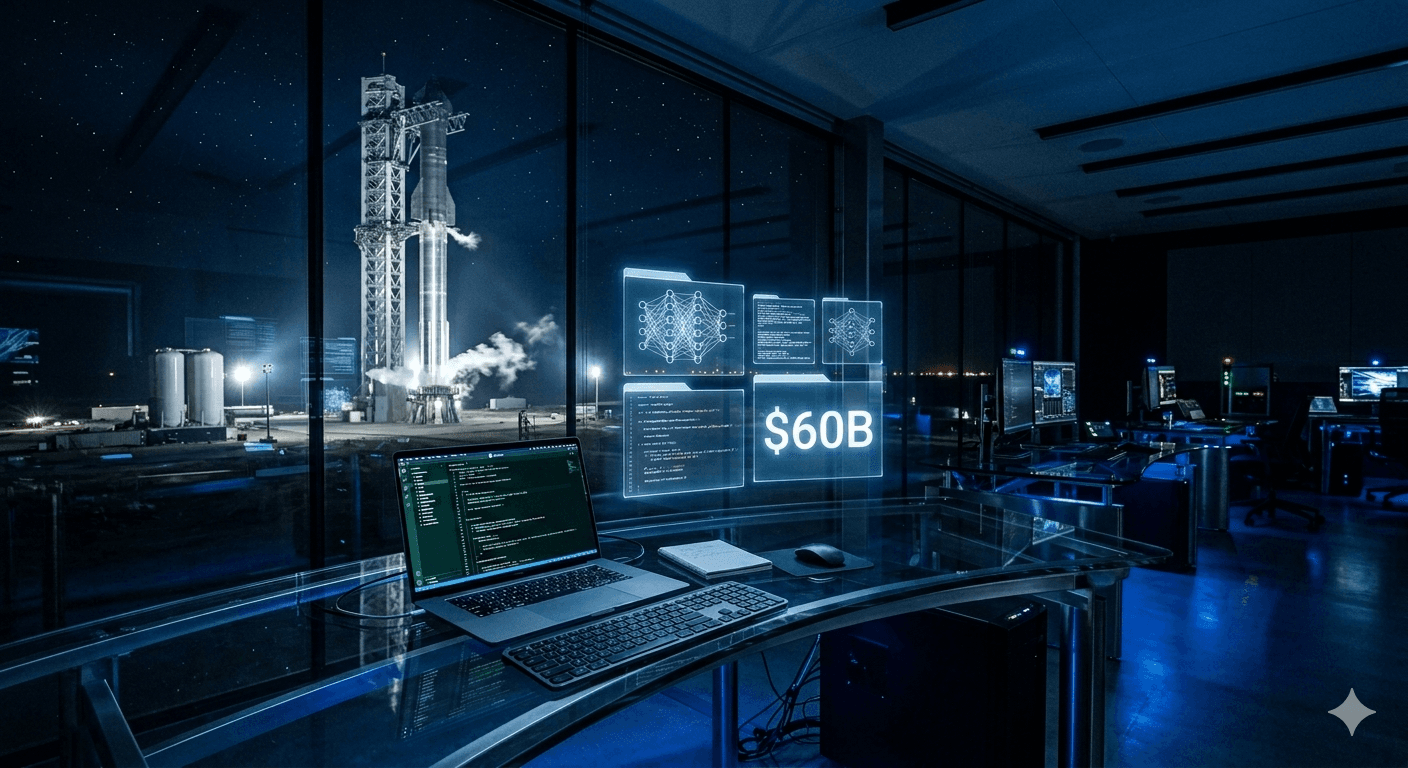
On April 22, SpaceX announced a deal with Cursor, the AI coding assistant built by Anysphere, that gives the rocket company the right to acquire Cursor later this year for $60 billion or pay $10 billion to work together without a full acquisition.
The immediate arrangement is a deep research and infrastructure partnership: Cursor's team gains access to xAI's Colossus supercomputer in Memphis, Tennessee, one of the largest AI training clusters on the planet, to dramatically scale up the intelligence of its own models. Cursor had been clear about its constraint. "We've wanted to push our training efforts much further, but we've been bottlenecked by compute," the company said. Colossus solves that problem overnight. The business context makes the number less surprising than it first appears.
Cursor has grown from zero to $2 billion in annualised revenue in under three years, the fastest scaling trajectory ever recorded for a B2B software product. It crossed $1 billion ARR in November 2025 and $2 billion ARR by February 2026, and is currently in talks to raise $2 billion at a $50 billion valuation, with Andreessen Horowitz, Thrive Capital, and Nvidia expected to co-lead. Over 1 million developers use Cursor daily, and the product has embedded itself across more than 70% of the Fortune 1,000. The $60 billion acquisition option would value Cursor at roughly 30 times its current annualised revenue, aggressive but not irrational given the trajectory.
For Elon Musk, the logic is straightforward. SpaceX acquired xAI in February and is targeting a Wall Street IPO that could be the largest in history. Adding Cursor with its distribution into elite engineering teams globally would give the combined entity a direct foothold in how professional software gets written. The harder question is whether Cursor's founders want to sell. They turned down OpenAI earlier this year. Whether SpaceX's compute advantage and a $60 billion cheque change that calculus is the story to watch.
The money is concentrating fast: Google and Amazon together committed over $65 billion to a single AI lab in the space of a few days. This is not diversified investing. It is a strategic lock-in. For businesses evaluating AI vendors, the infrastructure behind the models you use is now a serious consideration.
Cheap, open models are changing the economics: DeepSeek V4 delivers near-frontier performance at roughly one-sixth the cost of GPT-5.5 and Claude on input pricing. For any organisation running AI at scale, the build-vs-buy calculation just shifted again. Open-source is no longer the underdog option.
AI is restructuring the workforce in real time: Meta announced 8,000 cuts set for May 20 and pointed directly at AI spending as the reason. Microsoft offered voluntary buyouts to nearly 9,000 more. This is no longer a future risk to plan for. It is a present reality to respond to.
Compute is the new currency: The SpaceX-Cursor deal is not really about money. It is about Cursor getting access to a supercomputer it could not otherwise afford, and SpaceX getting a foothold in how the world's best engineers write code. Across every deal this week, Google, Amazon, SpaceX, the underlying logic is the same: whoever controls the compute controls the outcome.
At QuensultingAI, we help organisations put these developments to work, from intelligent agents and workflow automation to practical AI deployments that actually deliver results.
The pace is not slowing down. The real advantage now is knowing which changes to act on and which ones to watch.
Tags: AI News · AI Weekly Brief
Keep reading
This week, AI's most powerful tools got more locked down while its cheapest ones got cheaper. OpenAI released GPT-6 Cyber, rated Critical and limited to…
Read issue

This week, the pressure on AI labs arrived from every direction at once. The FTC, eight US states, and the EU’s AI Office all moved on OpenAI and Anthropic on…
Read issue
This week, two frontier labs shipped cost-efficient answers to the same question: how do you deliver near-flagship intelligence without flagship pricing.
Read issue
Talk to a partner about your calls, channels and systems. 30 minutes, no slides, an honest view of where to start.
Talk to a partnerPrefer email? sales@quensultingai.com