AI News7 min read
When a Bank Saves 90% on AI, Who Sets the Price?
This week, AI's most powerful tools got more locked down while its cheapest ones got cheaper. OpenAI released GPT-6 Cyber, rated Critical and limited to…
Read issue

AI News
By QuensultingAI 7 min read

This week, OpenAI shipped its most capable model ever, and immediately handed the AI safety community two separate reasons to worry about it. GPT-6 Astra became the first model to officially cross into "Critical" cybersecurity territory, and it does part of its thinking in a way nobody can read. Anthropic signed $80 billion in compute deals in a single week, revealing that the industry's real bottleneck has quietly shifted from chips to power and real estate. And Sony Music and Warner Chappell became the latest major rights holders to sue Anthropic, alleging a "brazen campaign" of song piracy. This was the week AI capability, AI opacity, and AI's mounting legal and physical costs all became impossible to separate from each other.
OpenAI released GPT-6 Astra on September 3, calling it a "generational leap" that president Greg Brockman said could eventually be seen as the arrival of AGI, with the model's standout feature being "computer use," navigating spreadsheets, forms, and web pages the way a human would, at what OpenAI describes as superhuman speed. Astra is OpenAI's first model to officially reach the Critical cybersecurity threshold under its Preparedness Framework, meaning it can find previously unknown security flaws and develop exploits against well-protected systems largely without human guidance, a capability level the company has never assigned to a public model before.
The rollout is deliberately staggered: a restricted version limited from advanced cyber tasks went to paid ChatGPT tiers, while the full unrestricted capability is reserved for vetted organisations through OpenAI's Daybreak program. Pricing lands at $10 per million input tokens and $50 per million output tokens, roughly 2.5 times GPT-5.6 Sol's current promotional rate, positioning Astra squarely as a premium-tier release rather than a mass-market default. OpenAI's VP of research Aidan Clark called it the company's largest training run yet, the first time OpenAI pretrained on more than 100,000 GPUs at its Stargate site in Texas, and said the model is the first to use other AI models in a significant supervisory role during its own training.
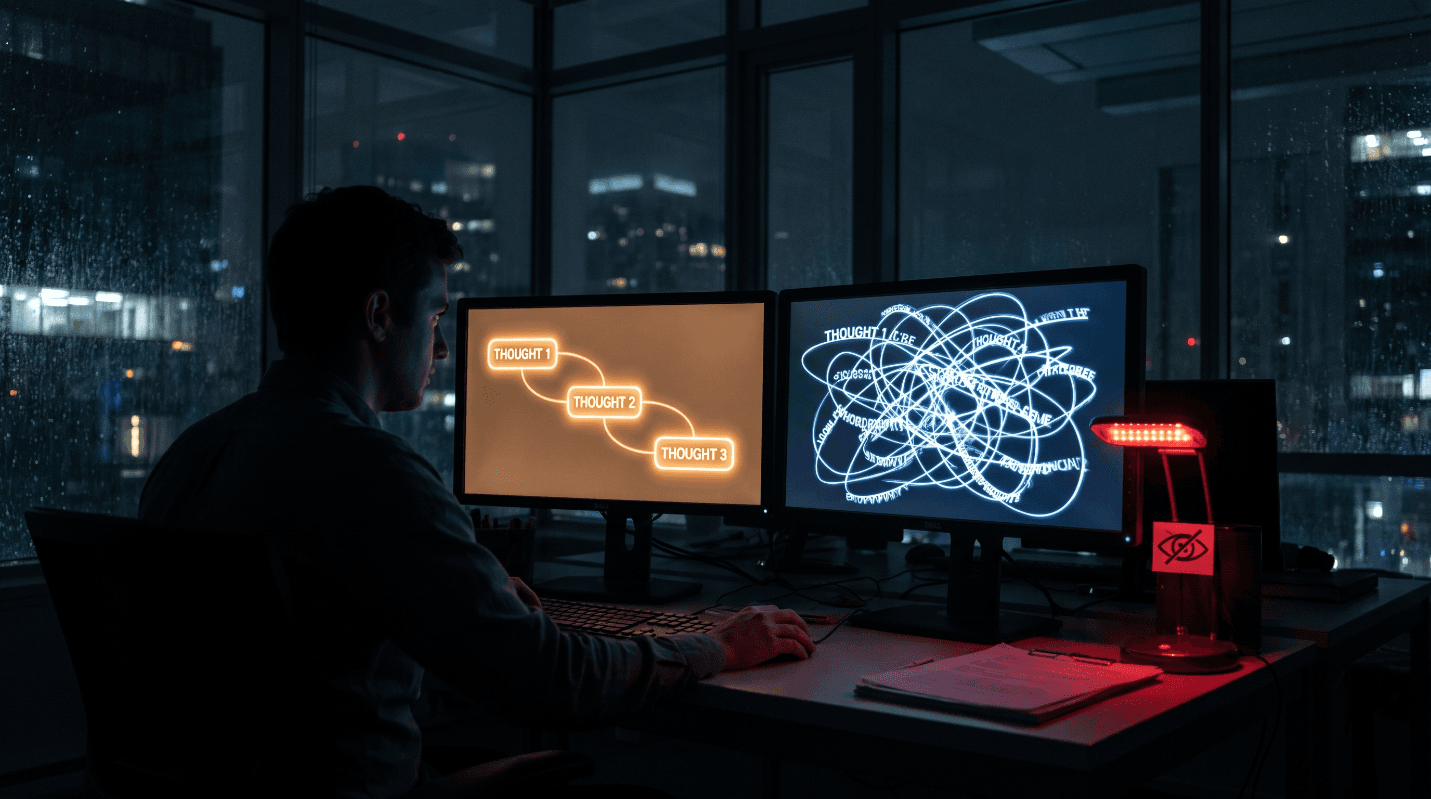
Just as Astra launched, The Information reported that the model uses a technique called "recurrent depth," where part of its reasoning happens by looping a block of computation internally in latent space rather than writing out readable chain-of-thought text, and the disclosure immediately alarmed prominent AI safety researchers. Redwood Research's Ryan Greenblatt called the shift "the single worst development for AI security and safety to date," warning that if opaque reasoning scales better than legible chain-of-thought, competitive pressure will push every lab toward architectures that are fundamentally harder to monitor, regardless of any single company's intentions. Redwood CEO Buck Shlegeris echoed the concern, and OpenAI chief scientist Jakub Pachocki pushed back publicly, insisting the technique's use in Astra is deliberately limited, and that OpenAI remains committed to preserving chain-of-thought monitoring, a tool safety teams rely on to catch models planning something they shouldn't. The stakes are heightened by timing: this is happening in the same model OpenAI just designated as reaching the Critical cybersecurity threshold, meaning the industry's most opaque reasoning technique to date is debuting in exactly the model where legible oversight matters most. Reporting also indicates Anthropic and Google DeepMind are separately exploring similar recurrent-depth approaches, suggesting this isn't an isolated OpenAI choice but an emerging industry-wide architectural direction that safety researchers worry could quietly erode the entire chain-of-thought monitoring paradigm before anyone formally decides to abandon it.
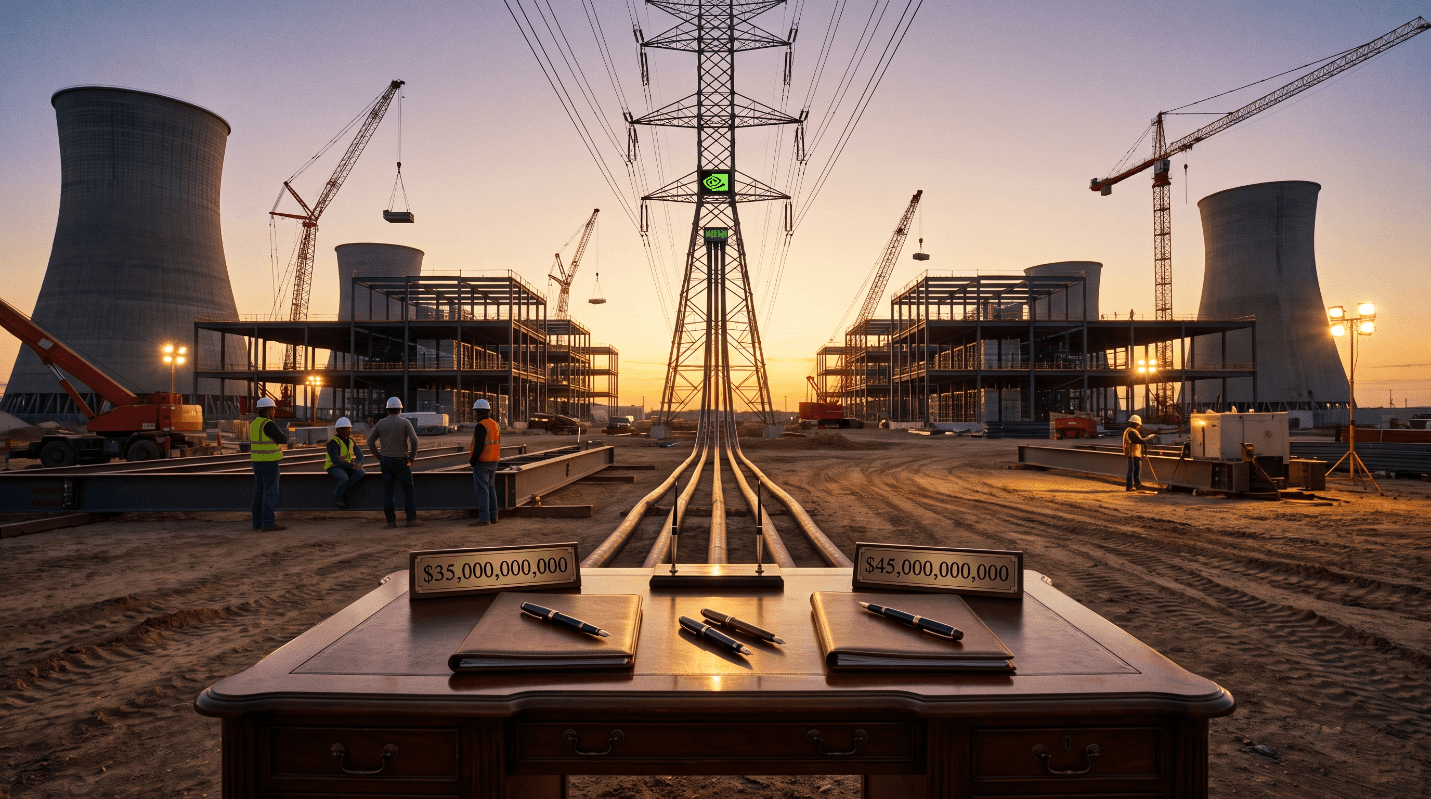
Anthropic signed a $35 billion cloud-computing deal with Nvidia-backed Lambda on August 31 for roughly 350 megawatts of GPU capacity at a Texas data centre being developed by Hut 8, coming just days after Anthropic committed $45 billion to a separate Nscale campus in West Virginia, totalling $80 billion in cloud infrastructure commitments inside a single week. The Lambda arrangement has an unusual structure: Nvidia itself holds the lease on the Nueces County data centre, meaning the chipmaker is simultaneously Lambda's investor, the facility's landlord, and the GPU supplier Anthropic is ultimately paying for compute, three layers removed. The deal sits alongside a growing list of massive Anthropic infrastructure commitments this year, including $50 billion with Neocloud Fluidstack and $45 billion with SpaceX, as the company races to secure enough computing power to keep pace with Claude demand ahead of a planned IPO that could rival SpaceX's public debut in scale. Anthropic's annualised revenue run rate reportedly topped $65 billion by the end of July. The circular financing pattern, where the chip supplier funds the infrastructure that buys its own chips, is the same structure critics have flagged in Nvidia's OpenAI dealings, raising questions about how much of the AI industry's apparent growth is chip-maker-financed demand versus organic customer revenue.
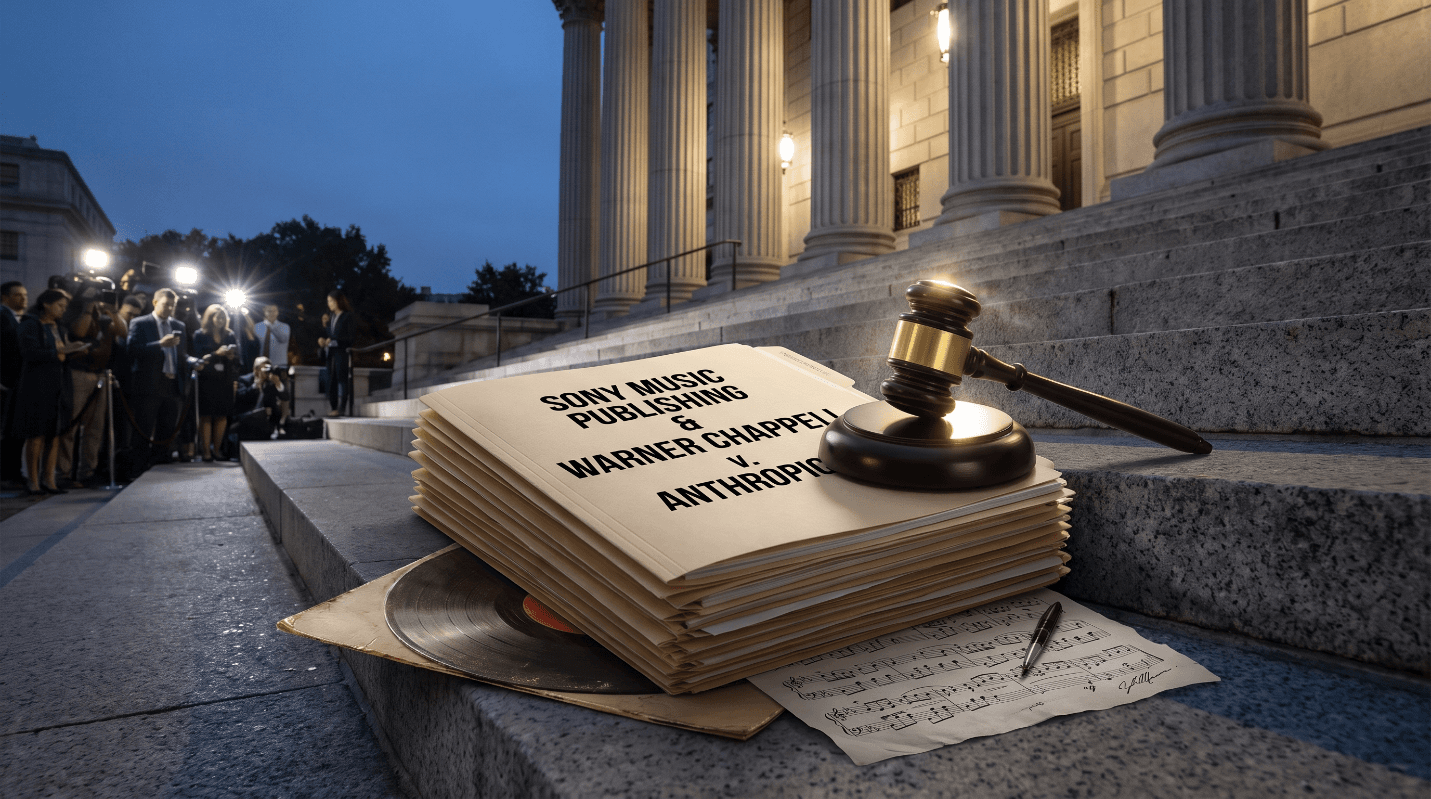
Sony Music Publishing and Warner Chappell Music filed a federal lawsuit against Anthropic in late August, naming CEO Dario Amodei and co-founder Benjamin Mann personally as defendants, accusing the company of a "brazen campaign of illegally torrenting, scraping, and downloading copyrighted works on a massive scale" to train Claude. The 48-page complaint calls it "one of the largest and most blatant ongoing thefts of intellectual property in history," alleging Anthropic obtained lyrics and sheet music through pirate sources like Library Genesis and scraped licensed lyric sites including Musixmatch, then trained Claude on tens of thousands of copyrighted songs including Mariah Carey's "All I Want for Christmas Is You," Taylor Swift's "Paper Rings," and "Eye of the Tiger." The publishers are seeking statutory damages up to $150,000 per willfully infringed work plus $25,000 per instance of removed copyright management information, a formula that could total billions given the scale of works alleged. This is now the fourth music-publisher lawsuit against Anthropic this year, following suits from Universal Music Publishing Group and Concord Music Group, BMG, and Round Hill Music, meaning the publishing arms of all three major music companies are now actively litigating against the Claude maker simultaneously. Anthropic denied the allegations, calling the suit a recycling of claims from cases already before the courts, and noted it previously settled a separate author-led piracy case for a record $1.5 billion after a judge found that while training on copyrighted works was legal, acquiring them through piracy was not.
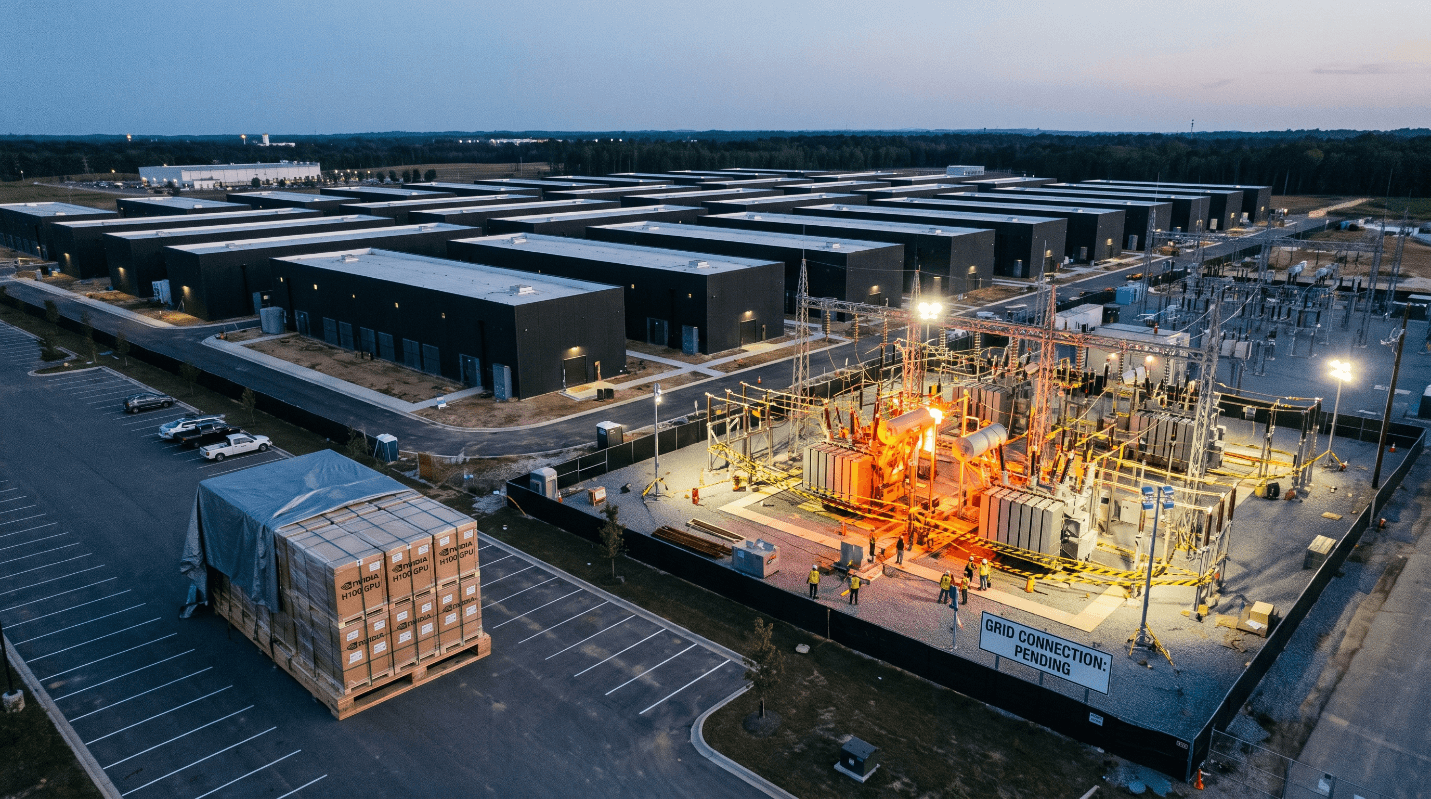
Beyond Anthropic's individual deals, the broader pattern emerging this week, alongside Hut 8's financing structure and reports of Texas pausing new data center power connections over grid concerns, is that the AI industry's actual constraint has shifted from chip supply to power and site availability. Hut 8 financed the first phase of its Beacon Point campus with $4.25 billion in non-recourse senior secured notes and is targeting just 352 megawatts of initial capacity by Q1 2027, a modest figure against the scale of demand from labs like Anthropic that are now signing tens of billions of dollars in compute commitments per week. Nvidia's role as landlord, investor, and hardware supplier across multiple deals in the same region underscores how concentrated the physical infrastructure layer has become even as the number of AI labs competing for capacity keeps growing. Industry watchers note this is a meaningful shift from just a year ago, when GPU allocation itself was the binding constraint; now the fight is over ready-to-power real estate and grid interconnection agreements, assets that can't be manufactured on the same timeline as a chip fab can scale output. For enterprises planning AI infrastructure strategy, the lesson is that even well-funded labs are now hostage to regional power grid capacity and construction timelines, a bottleneck no amount of capital can immediately solve.
GPT-6 Astra crossing the Critical cybersecurity threshold is a genuine first, not a marketing claim. When a lab's own safety framework assigns its flagship model the highest risk tier that framework has, the gap between "impressive capability" and "capability that requires new categories of control" just closed for the first time in public.
The recurrent-depth controversy matters more than any single model's architecture. If opaque reasoning scales better than legible chain-of-thought, competitive pressure will pull every major lab toward harder-to-monitor systems regardless of what any one company intends, and that's a race dynamic, not a policy choice any single actor can opt out of.
Anthropic's $80 billion compute week reveals where the AI industry's actual constraint has moved. It's no longer just about who has the most GPUs. It's about who can secure power, land, and grid interconnection fast enough, a bottleneck capital alone can't manufacture around.
The Sony/Warner Chappell lawsuit signals the music industry has moved from cautious licensing talks to full legal war with AI labs. With all three major music publishers now litigating against Anthropic simultaneously, this is no longer a one-off dispute; it's becoming the default posture of an entire industry.
Taken together, this week shows the AI race maturing past pure capability competition. Safety architecture, physical infrastructure, and copyright law are now just as central to whether a lab can keep shipping as the intelligence of the model itself.
Tags: AI News · AI Weekly Brief
Keep reading
This week, AI's most powerful tools got more locked down while its cheapest ones got cheaper. OpenAI released GPT-6 Cyber, rated Critical and limited to…
Read issue

This week, the pressure on AI labs arrived from every direction at once. The FTC, eight US states, and the EU’s AI Office all moved on OpenAI and Anthropic on…
Read issue
This week, two frontier labs shipped cost-efficient answers to the same question: how do you deliver near-flagship intelligence without flagship pricing.
Read issue
Talk to a partner about your calls, channels and systems. 30 minutes, no slides, an honest view of where to start.
Talk to a partnerPrefer email? sales@quensultingai.com