AI News7 min read
When a Bank Saves 90% on AI, Who Sets the Price?
This week, AI's most powerful tools got more locked down while its cheapest ones got cheaper. OpenAI released GPT-6 Cyber, rated Critical and limited to…
Read issue

AI News
By QuensultingAI 5 min read

Each week, AI isn’t just improving; it’s restructuring where power lives.
This week’s developments reveal a deeper shift: consumer AI products are being deprioritised in favour of long-term infrastructure, AI is embedding itself into high-stakes environments like defence systems, and breakthroughs at the systems level are dramatically reducing the cost of intelligence itself.
From OpenAI reallocating resources away from viral products, to AI reshaping military command, to Google making large models cheaper to run, the direction is clear: AI is no longer just about what it can do, but where and how it operates at scale.

Sam Altman confirmed that Sora, once one of the fastest-growing AI apps, is being shut down as a consumer product less than a year after launch.
When Sora launched in late 2024, it saw explosive adoption, becoming one of the fastest apps to reach millions of users. The ability to generate high-quality cinematic videos directly from a phone captured massive attention. However, behind the growth was a fundamental challenge: video generation at scale requires extremely high GPU compute, making it one of the most expensive AI workloads to sustain.
As user growth slowed and competition from models like Claude and Gemini intensified, the economics of maintaining Sora as a standalone consumer app became increasingly difficult. OpenAI has now decided to reallocate those resources toward higher-priority areas, including AGI development, enterprise products, and robotics research.
Importantly, Sora itself is not disappearing. The underlying technology is being repurposed internally, particularly for training robots to better understand real-world environments through video data. The move signals a broader shift: AI companies are beginning to prioritise long-term strategic capabilities over short-term consumer growth.
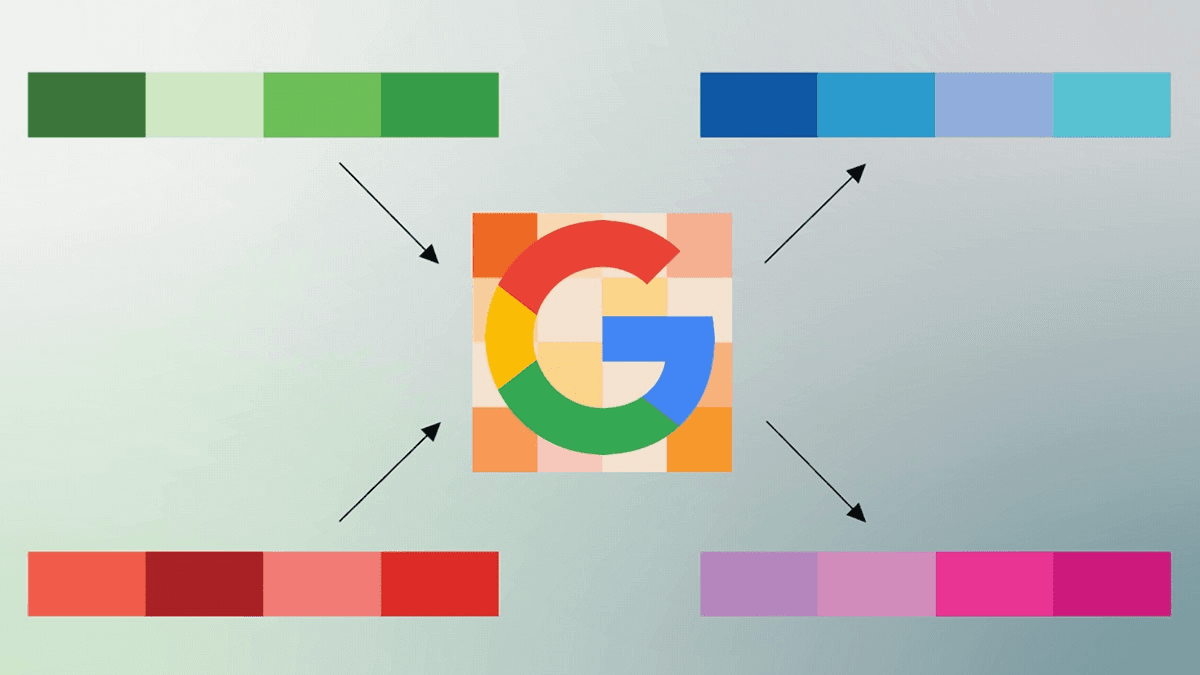
Google has introduced TurboQuant, a new system-level optimisation designed to significantly reduce the cost of running large language models, without modifying the models themselves.
One of the biggest hidden costs in AI systems today is memory usage, particularly the KV cache, which stores context from ongoing conversations. As interactions get longer, this memory requirement grows rapidly, consuming large amounts of GPU resources and driving up operational costs. TurboQuant addresses this bottleneck by compressing and optimising memory usage, enabling models to process longer contexts while using far less compute.
What makes this breakthrough particularly impactful is its ease of adoption. It requires no retraining and can be applied directly to existing models like Gemma, LLaMA, and Mistral. Early results suggest significant cost reductions and faster response times on advanced hardware, potentially unlocking much longer context windows without overwhelming infrastructure.
This signals an important shift in the AI ecosystem: innovation is no longer limited to model performance alone. Increasingly, infrastructure-level breakthroughs are becoming just as critical, determining how scalable, accessible, and economically viable AI systems can become.

Palantir Technologies has deployed an AI-powered platform, Maven Smart System, that is rapidly becoming the operational backbone of modern military decision-making.
Previously, military intelligence required teams to manage multiple disconnected systems, satellite imagery, drone feeds, and signals intelligence all in parallel. Maven consolidates these into a unified interface, allowing operators to move from identifying a target to executing a response workflow in just a few steps. At its core is an AI layer that doesn’t just process data, it prioritises targets, assesses strategic value, and recommends potential actions in real time.
The scale of impact is significant. Tasks that once required thousands of intelligence personnel can now be managed by significantly smaller teams, fundamentally changing how military operations are structured. Maven has already been deployed in real-world operations and has now been designated as a permanent, funded program within the U.S. defense system, with adoption expanding across allied networks like NATO.
This marks a critical shift: AI is no longer limited to analysis or support roles it is becoming embedded in the decision-making infrastructure of national security systems. The implications go beyond efficiency, raising important questions about autonomy, accountability, and the future role of humans in high-stakes environments.

A solo developer, Samuel rizzon, has transformed GitHub into a fully interactive 3D city without manually writing code in the traditional sense.
The project, called GitCity, visualises every developer as a building within a dynamic virtual environment. Contribution data directly shapes the city: more commits result in taller skyscrapers, additional repositories expand building footprints, and recent activity lights up structures in real time. Users can navigate the city freely, explore profiles by interacting with buildings, and experience developer activity as a spatial, immersive system rather than static data.
What makes this particularly notable is how it was built. Using Claude alongside Visual Studio Code, Rism generated over 20,000 lines of code and shipped the entire project within a single day. The monetisation model also signals a shift in how digital spaces can evolve brands can purchase billboard placements within the city, while developers themselves are paying for visual upgrades like neon effects and holographic elements tied to their profiles.
GitCity highlights a broader trend: AI is not just accelerating development it’s enabling entirely new forms of digital expression and economy. What started as contribution tracking is now evolving into interactive, monetised virtual ecosystems built on top of existing platforms.
This week’s developments highlight three major shifts shaping the next phase of the AI ecosystem.
AI moving from products to infrastructure: The shutdown of consumer-facing tools like Sora shows a shift toward deeper, long-term investments in AGI, robotics, and foundational systems.
AI embedding into high-stakes environments: From military operations to real-time decision systems, AI is increasingly becoming part of critical infrastructure where speed, accuracy, and autonomy matter most.
AI becoming economically scalable: Breakthroughs like Turboport show that reducing the cost of intelligence is now as important as improving its capability, unlocking longer contexts, faster responses, and wider adoption.
At the same time, projects like GitCity demonstrate how individuals can leverage AI to build entirely new digital experiences and monetisation models, something that previously required large teams and resources.
Together, these shifts show that AI is no longer just a tool layer; it is becoming the core infrastructure powering systems, decisions, and economies.
At QuensultingAI, we help organisations translate these shifts into real-world outcomes from deploying intelligent agents to building scalable AI systems that drive efficiency and growth.
The pace of innovation is accelerating. The advantage now lies in how effectively you integrate AI into the systems that matter. 🚀
Tags: AI News · AI Weekly Brief
Keep reading
This week, AI's most powerful tools got more locked down while its cheapest ones got cheaper. OpenAI released GPT-6 Cyber, rated Critical and limited to…
Read issue

This week, the pressure on AI labs arrived from every direction at once. The FTC, eight US states, and the EU’s AI Office all moved on OpenAI and Anthropic on…
Read issue
This week, two frontier labs shipped cost-efficient answers to the same question: how do you deliver near-flagship intelligence without flagship pricing.
Read issue
Talk to a partner about your calls, channels and systems. 30 minutes, no slides, an honest view of where to start.
Talk to a partnerPrefer email? sales@quensultingai.com