AI News7 min read
When a Bank Saves 90% on AI, Who Sets the Price?
This week, AI's most powerful tools got more locked down while its cheapest ones got cheaper. OpenAI released GPT-6 Cyber, rated Critical and limited to…
Read issue
AI News
By QuensultingAI 6 min read

This week, the AI race stopped being about who has the smartest model and started being about who has the biggest audience, the biggest revenue, and the deepest pockets to defend both. Google's Gemini app crossed a billion monthly users. Anthropic's revenue blew past its own already-ambitious projections, landing at $11.5 billion for the quarter. Manus formally split from Meta after Beijing forced the deal apart. xAI shipped Grok 4.6 at frontier performance without raising the price. And Google cut its own Flash model pricing in half just three weeks after the last one. This was the week scale, money, and speed became the entire story, and the underlying model quality almost felt like an afterthought.
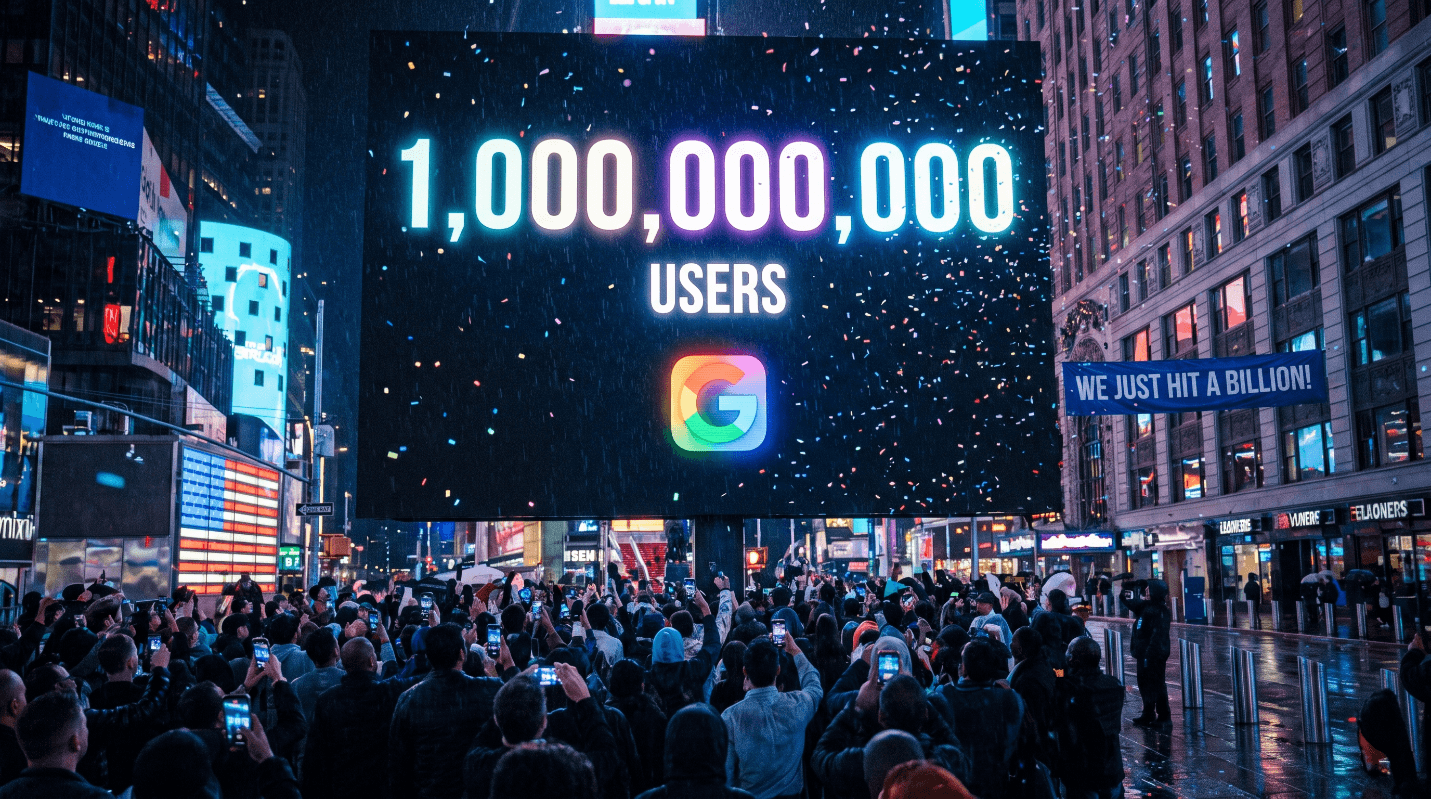
Sundar Pichai announced on August 11 that the Gemini app has crossed 1 billion monthly active users, calling it Google's fastest-growing product ever and the 14th Google service to hit that scale, alongside Search, Gmail, Android, and YouTube. The app grew from 400 million users in May 2025 to 950 million by its Q2 earnings call in July, then crossed the billion mark within weeks. Google says 63% of users now interact through voice, the app generates over 150 million images daily, and more than 100 million active users are on iOS. The announcement lands right in step with OpenAI's ChatGPT, which crossed the same billion-user threshold back in June, though Google notably did not disclose how many of its billion users actually pay for anything. The milestone came a day before Google's Made by Google hardware event, where deeper Gemini integration across the Pixel 11 series is expected. AI Mode in Search has separately already surpassed 1 billion monthly users on its own, a distinct figure from the Gemini app total. Reach is no longer the open question in the AI assistant race. Monetisation is.

Anthropic told prospective investors its Q2 2026 revenue exceeded $11.5 billion, more than 14 times what it made in the same quarter a year earlier, and well above the $10.9 billion figure it had projected back in May. First-quarter revenue was $4.73 billion, meaning the company more than doubled in three months and brought in roughly $16.2 billion across the first half of the year alone, more than 1.6 times its entire 2025 revenue. The documents, reviewed by Bloomberg, also show Anthropic posted positive adjusted operating income for the quarter, a milestone frontier AI labs have struggled to reach at all. The numbers are preliminary and could still be revised, and the "adjusted" qualifier hasn't been fully explained by the company. The timing is strategic: Anthropic is racing to list on public markets ahead of both OpenAI and DeepSeek, with an IPO as early as this fall. This week, OpenAI separately disclosed its own annualised run-rate revenue topped $40 billion, roughly double where it stood at the end of 2025. The AI industry's two biggest labs are now trading verified revenue numbers in public for the first time. The scoreboard just got a lot more real.

Manus told users on August 11 that it will "soon resume operating as an independent company," unwinding Meta's $2 billion acquisition of the AI agent startup after China's National Development and Reform Commission ordered the deal reversed back in April. Manus was founded in China in 2022 before relocating to Singapore, a move regulators have since characterised as "Singapore washing," insisting offshore incorporation doesn't shield a deal from Beijing's authority when the underlying technology and talent originated domestically. Manus co-founders Xiao Hong and Ji Yichao were summoned to Beijing in March and have been barred from leaving the country since. As part of the separation, data generated by certain users on or after December 29, 2025, the day the acquisition closed, will be deleted between August 23 and 24, with backups required beforehand. Meta has already cut Manus off from its internal systems and blocked its own employees from using Manus tools. The episode is now a cautionary case study for any AI startup trying to shed a Chinese identity through offshore relocation. It's also a signal to Washington that ownership-structure scrutiny cuts both ways. Beijing just proved it can unwind a completed deal, not just block a pending one.

xAI released Grok 4.6 on August 12, just 35 days after Grok 4.5, holding pricing flat at $2 per million input tokens and $6 per million output tokens for prompts under 200,000 tokens, with rates doubling above that threshold. The model scored 61 on the Artificial Analysis Intelligence Index, tying OpenAI's GPT-5.6 Sol and landing just behind Claude Opus 5, while posting large jumps on coding benchmarks like DeepSWE, up from roughly 54% to 65.9%. Built on the same 1.5-trillion-parameter foundation as Grok 4.5 rather than a larger base model, the gains came almost entirely from post-training work through xAI's "Grok Build" coding harness. The model shipped simultaneously across the xAI API, Grok Build, Cursor, OpenRouter, Vercel, and Cloudflare, positioning it as the cheapest model currently sitting at the intelligence frontier. xAI has already signalled that a larger 2.1-trillion-parameter Grok 4.7 is coming within weeks, with Grok 5 targeted before year-end. That timeline suggests Grok 4.6 may be a short-lived release rather than a long-term flagship. For developers building against a specific model string rather than an API endpoint, that cadence is worth planning around now.
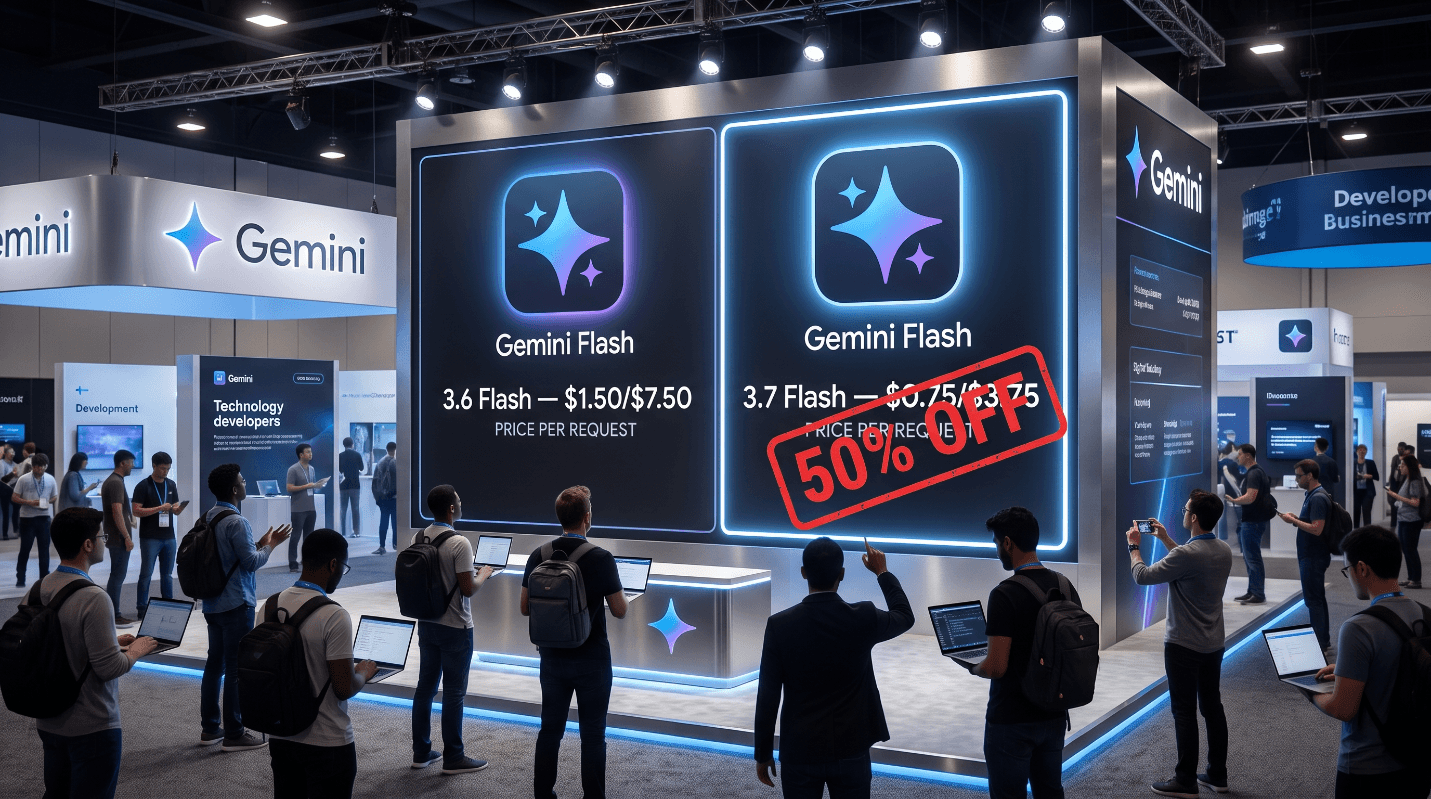
Google released Gemini 3.7 Flash on August 13, just three weeks after Gemini 3.6 Flash, delivering sharp coding-benchmark gains including a jump from 34.4% to 43.6% on FrontierCode 1.1 Main and from 49% to 65.3% on DeepSWE v1.1. The model supports a 1-million-token context window and improved first-pass code accuracy for production-ready generation. Google priced it at an introductory $0.75 per million input tokens and $3.75 per million output tokens through the end of 2026, half the previous Flash pricing, explicitly to pull in developers building multi-step coding agents. The release is available immediately through the Gemini API, AI Studio, Gemini Enterprise, and the Spark agent for Pro and Ultra subscribers. The launch lands amid a broader industry price war; OpenAI and Anthropic have both been cutting prices this month while DeepSeek has actually raised its own. Google's rapid three-week iteration cycle signals just how aggressively it's chasing coding-agent market share against faster-moving rivals. Speed of release is becoming as competitive a lever as the model itself.
Gemini crossing 1 billion users is a distribution story, not an intelligence story. Reach has stopped being the hard problem in consumer AI. The real question now is monetisation, and Google conspicuously didn't answer it this week.
Anthropic's revenue beating its own projection changes the credibility of AI financial forecasting altogether. When a company doesn't just hit its number but blows past it by $600 million in a single quarter, that's not just growth; it's a signal that enterprise AI demand is still being underestimated industry-wide, including by the labs themselves.
The Manus-Meta unwind is a hard lesson for every AI startup with a China origin story. Relocating headquarters and rebranding away from a Chinese identity didn't shield the deal from Beijing. That's a precedent every founder trying the same playbook now has to price in.
Grok 4.6 shipping at frontier performance without a price increase confirms the AI price war has a floor, and it's dropping. When xAI, Google, OpenAI, and Anthropic are all cutting or holding prices in the same month, competitive pressure is doing what regulation hasn't: making frontier intelligence cheaper by the week.
Google's three-week Flash iteration cycle is the clearest sign yet that release speed is now a competitive weapon on its own. Waiting for a "finished" model is no longer the strategy. Shipping fast, cheap, and often is.
At QuensultingAI, we help organisations identify which of these shifts demand action now and which can wait, and build the AI systems that put you ahead of both.
The pace is not slowing down. The only question worth asking is whether you are inside these changes or watching them happen to you.
Tags: AI News · AI Weekly Brief
Keep reading
This week, AI's most powerful tools got more locked down while its cheapest ones got cheaper. OpenAI released GPT-6 Cyber, rated Critical and limited to…
Read issue

This week, the pressure on AI labs arrived from every direction at once. The FTC, eight US states, and the EU’s AI Office all moved on OpenAI and Anthropic on…
Read issue
This week, two frontier labs shipped cost-efficient answers to the same question: how do you deliver near-flagship intelligence without flagship pricing.
Read issue
Talk to a partner about your calls, channels and systems. 30 minutes, no slides, an honest view of where to start.
Talk to a partnerPrefer email? sales@quensultingai.com