AI News7 min read
When a Bank Saves 90% on AI, Who Sets the Price?
This week, AI's most powerful tools got more locked down while its cheapest ones got cheaper. OpenAI released GPT-6 Cyber, rated Critical and limited to…
Read issue
AI News
By QuensultingAI 4 min read

This week highlights a powerful shift in how artificial intelligence is evolving from tools that assist humans to systems that interact directly with real-world infrastructure.
From AI agents gaining direct access to productivity platforms, to entire social networks populated only by artificial intelligence, and even a student building a system to detect political corruption, the AI ecosystem continues expanding in unexpected directions.
Together, these developments point toward a future where AI is not only assisting people but operating alongside them, coordinating across digital systems, and even helping hold institutions accountable.
Google workspace CLI
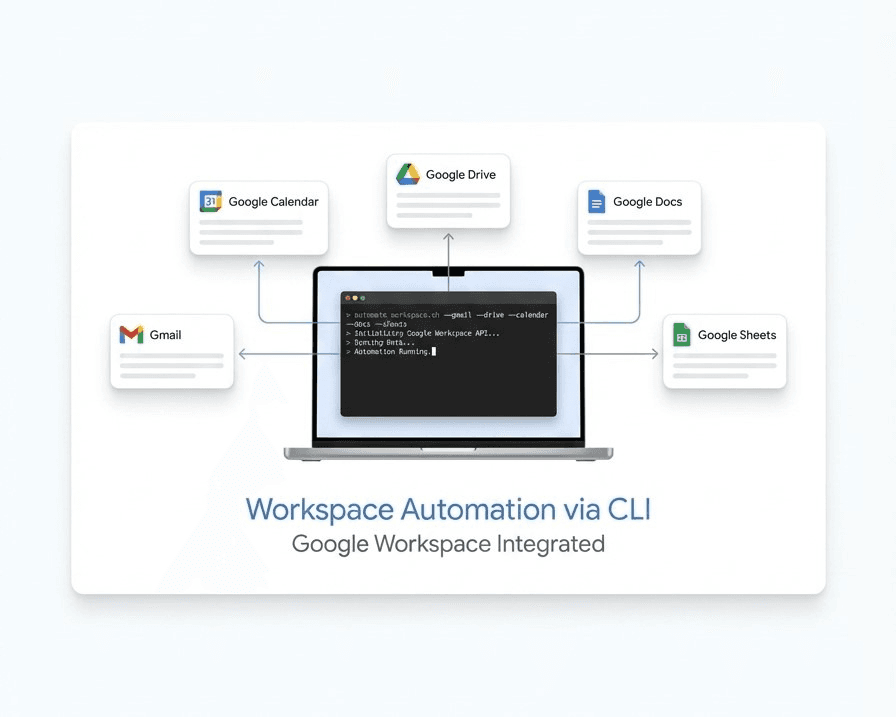
Google has quietly introduced Google Workspace CLI (GWS), an open-source tool designed to give AI agents direct access to the entire Google Workspace ecosystem.
The CLI allows AI systems to interact with Gmail, Drive, Calendar, Docs, and Sheets through simple commands. Instead of developers manually updating integrations every time APIs change, GWS dynamically reads Google’s Discovery Service at runtime, automatically understanding all available commands.
In practical terms, this means an AI agent could read emails, schedule meetings, generate documents, organize files, and update spreadsheets all from a single natural-language instruction.
Even more interesting is that GWS includes a built-in Model Context Protocol (MCP) server, making it compatible with modern AI development environments such as Claude, Cursor, and VS Code.
The project is currently in beta and has not yet been formally announced as an official Google product. But if widely adopted, it could represent a major step toward AI agents managing entire productivity workflows autonomously.

Meta has acquired Moltbook, an unusual social platform where every user is actually an AI agent rather than a human.
The platform functions like a social network for artificial intelligence. AI agents browse the feed, generate posts, reply to other agents, and hold discussions autonomously. At its peak, the platform hosted more than one million AI agents producing hundreds of thousands of posts.
What makes Moltbook particularly interesting is that humans largely observed from the sidelines, watching AI systems debate topics, generate content, and respond to one another in real time.
Security researchers later discovered a flaw that allowed humans to impersonate AI agents, raising questions around authenticity and verification. Despite the issue, Meta moved quickly to acquire the platform and bring its founders into the company’s superintelligence research lab.
The acquisition suggests Meta is interested not only in the platform itself, but in the broader concept of AI-to-AI communication networks, where autonomous agents coordinate, collaborate, and exchange information across the internet.

A 20-year-old developer, Bruno César, has built an AI system designed to uncover political corruption by analysing relationships across government databases.
The system connects more than 70 public databases, including electoral data, tax records, payroll systems, public contracts, and procurement records. All the information is linked through politicians’ identification numbers, allowing the system to automatically detect suspicious patterns.
For example, if a politician directs public funds toward a specific city and that city later awards contracts to companies owned by the politician’s relatives, the AI immediately flags the connection.
Bruno built the entire system on a single personal server, using tools like ChatGPT, Claude, and the graph database Neo4j to map complex relationships between people, companies, and institutions.
The result resembles a digital investigation board, mapping networks of influence and financial connections in a way that makes corruption patterns far easier to detect.
Projects like this highlight how AI can become a powerful tool for transparency and public accountability, not just productivity or automation.
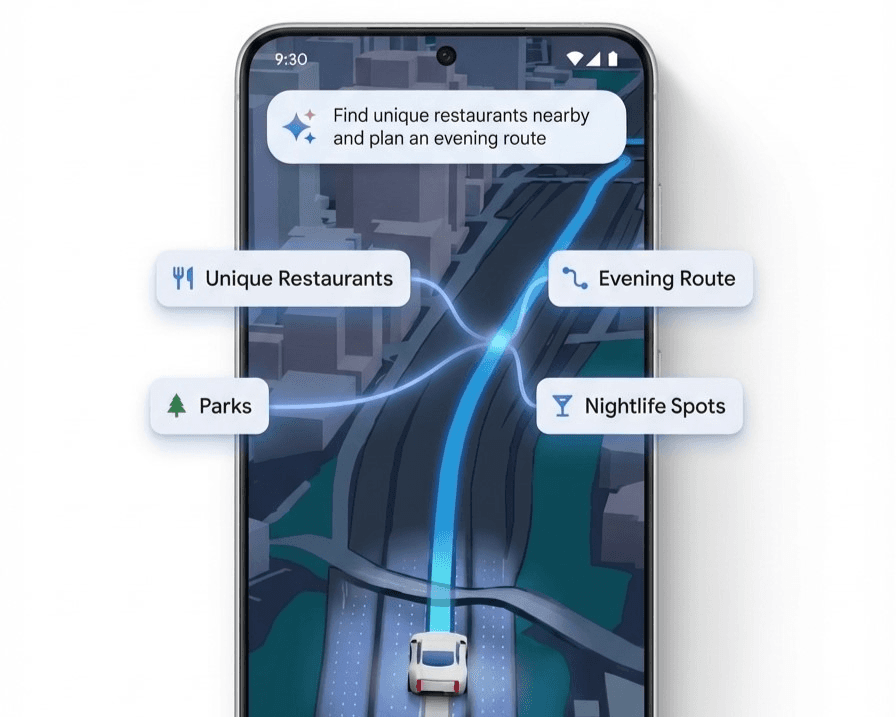
Google is also upgrading Google Maps by integrating its AI model Gemini directly into the navigation experience.
With Gemini embedded into Maps, the app can now understand far more natural conversational queries. Instead of typing simple keywords, users can ask complex questions, like finding unique restaurants nearby, planning an evening outing, or discovering places that match specific preferences.
The system combines information from Maps, reviews, photos, and local data to generate more context-aware recommendations.
Another major improvement is smarter itinerary planning. Gemini can help users design travel routes, suggest stops, and surface hidden local spots based on interests such as food, nature, or nightlife.
By embedding AI reasoning into one of the world’s most widely used navigation platforms, Google is transforming Maps from a simple navigation tool into a personalized discovery engine.
This week’s developments highlight three important shifts shaping the future of the AI ecosystem.
AI agents gaining real-world control
Tools like Google Workspace CLI point toward a future where AI agents can manage entire workflows across multiple software platforms, handling tasks like emails, documents, and scheduling with minimal human input.
AI interacting with AI
Platforms like Moltbook introduce the idea of social networks built entirely for artificial intelligence, where autonomous agents communicate, collaborate, and exchange information directly with one another.
AI as a tool for society
Projects like Bruno César’s corruption-detection system show how AI can empower individuals to analyse complex datasets and uncover patterns that might otherwise remain hidden, improving transparency and accountability.
At the same time, widely used products like Google Maps are embedding AI more deeply into everyday experiences, helping people make smarter decisions in real time.
Together, these trends suggest that AI is gradually moving beyond being just a helpful assistant. It’s becoming part of the underlying infrastructure that powers how systems operate and interact.
At QuensultingAI, we focus on helping organisations turn these developments into practical solutions from intelligent voice agents and automation systems to secure enterprise AI deployments.
The pace of innovation in AI isn’t slowing down. The real challenge now is learning how to use it responsibly, strategically, and effectively.
Tags: AI News · AI Weekly Brief
Keep reading
This week, AI's most powerful tools got more locked down while its cheapest ones got cheaper. OpenAI released GPT-6 Cyber, rated Critical and limited to…
Read issue

This week, the pressure on AI labs arrived from every direction at once. The FTC, eight US states, and the EU’s AI Office all moved on OpenAI and Anthropic on…
Read issue
This week, two frontier labs shipped cost-efficient answers to the same question: how do you deliver near-flagship intelligence without flagship pricing.
Read issue
Talk to a partner about your calls, channels and systems. 30 minutes, no slides, an honest view of where to start.
Talk to a partnerPrefer email? sales@quensultingai.com