Key takeaway: Indian real estate, particularly residential sales, runs on high call volume, repetitive inquiry handling, and speed-to-respond. Conversational AI addresses all three simultaneously. This guide covers how it works, what it costs, and what results to expect.
Three things define the real estate sales environment in India:
Volume. A mid-size residential project running performance marketing will generate hundreds of enquiries per day. Each enquiry requires the same initial conversation: What are you looking for? What is your budget? What is your timeline? Are you looking for an investment or end-use? Do you need home loan assistance?
Repetition. The same twenty questions get asked by the same twenty types of prospects. The answers change; the questions do not.
Speed sensitivity. Real estate leads that are not contacted within 15 minutes convert at a fraction of the rate of leads contacted immediately. Every minute of delay is a measurable loss.
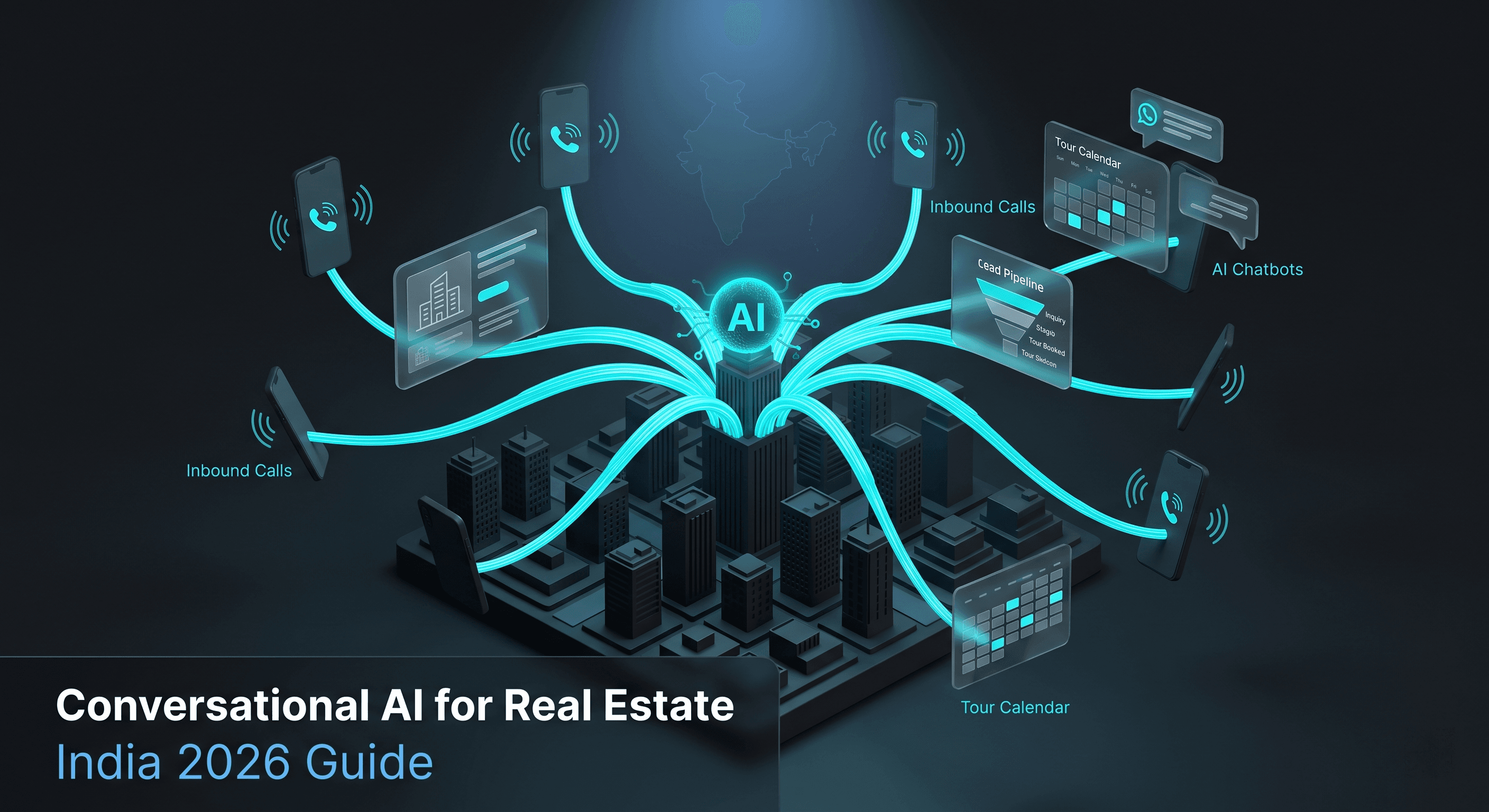
Conversational AI is built for exactly this combination. QuensultingAI builds real estate automation on voice platforms like Retell, Vapi, or Dograh, WhatsApp via Meta Business API, and n8n workflows that sync every conversation to your CRM.
The three conversation channels in real estate AI
A complete real estate conversational AI system operates across three channels simultaneously:
Channel 1: Inbound voice. When a prospect calls your listed number, the AI answers immediately, 24/7. It handles the initial qualification conversation, answers property questions from a knowledge base, and either schedules a site visit or escalates to a human agent when needed.
Channel 2: Outbound voice. When a digital lead comes in (website form, Housing.com, MagicBricks, 99acres), the AI places an outbound callback within 60 seconds. Same qualification conversation, outbound rather than inbound.
Channel 3: WhatsApp. For prospects who prefer text, or as a follow-up channel for calls that were not answered, the AI chatbot handles enquiries, shares property brochures, and books site visits via WhatsApp.
Voice AI for inbound and outbound qualification
The voice AI qualification conversation for real estate is designed around a specific outcome: determining whether a lead is worth a human agent's time, and if so, booking a site visit or discovery call with that agent.
A well-designed real estate voice qualification covers:
Property type preference (residential, commercial, plot)
Purchase timeline (ready to buy, three to six months, exploring)
End-use vs. investment intent
Home loan requirement (this is a strong intent signal)
Availability for site visit (and booking one, live on the call)
The entire conversation takes three to five minutes. At the end, the lead is either disqualified (wrong budget, wrong geography, wrong timeline) or moved into the qualified pipeline with a site visit booked.
WhatsApp chatbot for property enquiries
WhatsApp is where most Indian real estate prospects prefer to communicate after the initial call. A real estate WhatsApp AI chatbot handles:
Brochure sharing: Automatically sends the relevant project brochure based on the prospect's stated interest
Floor plan requests: Delivers specific configuration floor plans based on the prospect's preference
Price list requests: Shares current pricing, optionally configured to require a name and number first for warm leads
Site visit scheduling: Books site visits directly from WhatsApp with a calendar integration
Follow-up sequences: Sends structured follow-ups at one day, three days, and seven days for leads who have not yet visited
EMI calculator integration: Sends a loan EMI estimate based on the prospect's stated budget
This removes an enormous amount of repetitive manual work from your sales team. The "please send me the brochure" and "what are the payment plans" conversations that every agent handles dozens of times per day can run automatically.
CRM automation: the intelligence layer
The voice and WhatsApp conversations generate data. The CRM integration is what turns that data into sales intelligence.
After every conversation, voice or WhatsApp, the system automatically:
Creates or updates the CRM record with all qualification data
Moves the lead to the correct pipeline stage
Assigns to the right agent (by geography, configuration, or availability)
Tags urgency (site visit booked vs. nurture vs. disqualified)
Creates a follow-up task for the assigned agent with conversation summary
Triggers email or WhatsApp nurture sequences based on qualification outcome
The result is a CRM that reflects the current state of every lead, without any manual data entry from the sales team.
The full tech stack for real estate AI
A complete Indian real estate conversational AI system typically uses:
Component
Tool
Purpose
Voice AI Agent
Retell, Vapi, or Dograh
Inbound and outbound voice conversations
Telephony
Plivo, Twilio, or Exotel
Indian number provisioning, call routing
WhatsApp
Meta Business API
WhatsApp chatbot and follow-up
Automation
n8n
All workflow orchestration
CRM
HubSpot, Zoho, or CRM of choice
Lead management and pipeline
Calendar
Google Calendar or Calendly
Site visit booking
Realistic cost breakdown
A full real estate conversational AI system at QuensultingAI:
Implementation: Rs. 1.5L to Rs. 4L depending on complexity (number of projects, CRM, existing systems)
Voice AI: approximately $0.10 to $0.15 per minute of conversation depending on platform
Telephony: Rs. 0.80 to Rs. 1.50 per minute for Indian calls
For a project generating 200 qualified leads per month at four minutes of AI conversation each: approximately Rs. 8,000 to Rs. 12,000 per month in voice AI costs. Compare to the cost of a single salesperson spending those hours on manual calls.
What to implement first
For a real estate company starting with AI automation, the priority order is:
Tags: Real Estate AI · Conversational AI · Voice AI India · Lead Qualification · AI Chatbot · PropTech India
FAQ
Frequently asked questions
Can the AI handle queries about specific projects?
Yes. The AI is given a knowledge base about your specific projects: locations, configurations, pricing, amenities, RERA registration. It answers project-specific questions from that knowledge base.
What if a prospect speaks only in Hindi?
Modern voice platforms handle Hindi and Hindi-English code-switching well. For regional languages, additional model configuration is available.
Can I monitor the AI's conversations?
Yes. All calls are recorded and transcribed. A quality review dashboard is available.
Does it integrate with Housing.com, MagicBricks, or 99acres lead forms?
Yes. We build webhook integrations for all major Indian real estate portals.
Five AI voice agent options ranked for Indian real estate teams who need faster lead response, site visit scheduling, and CRM-connected follow-up across phone and WhatsApp.
Indian fintech teams lose conversions in the gap between form submit and first callback. AI voicebots close that gap with instant qualification and CRM updates.
Read article
Ready to put this into practice?
Talk to a partner about your calls, channels and systems. 30 minutes, no slides, an honest view of where to start.