
QuensultingAI
Content & Insights
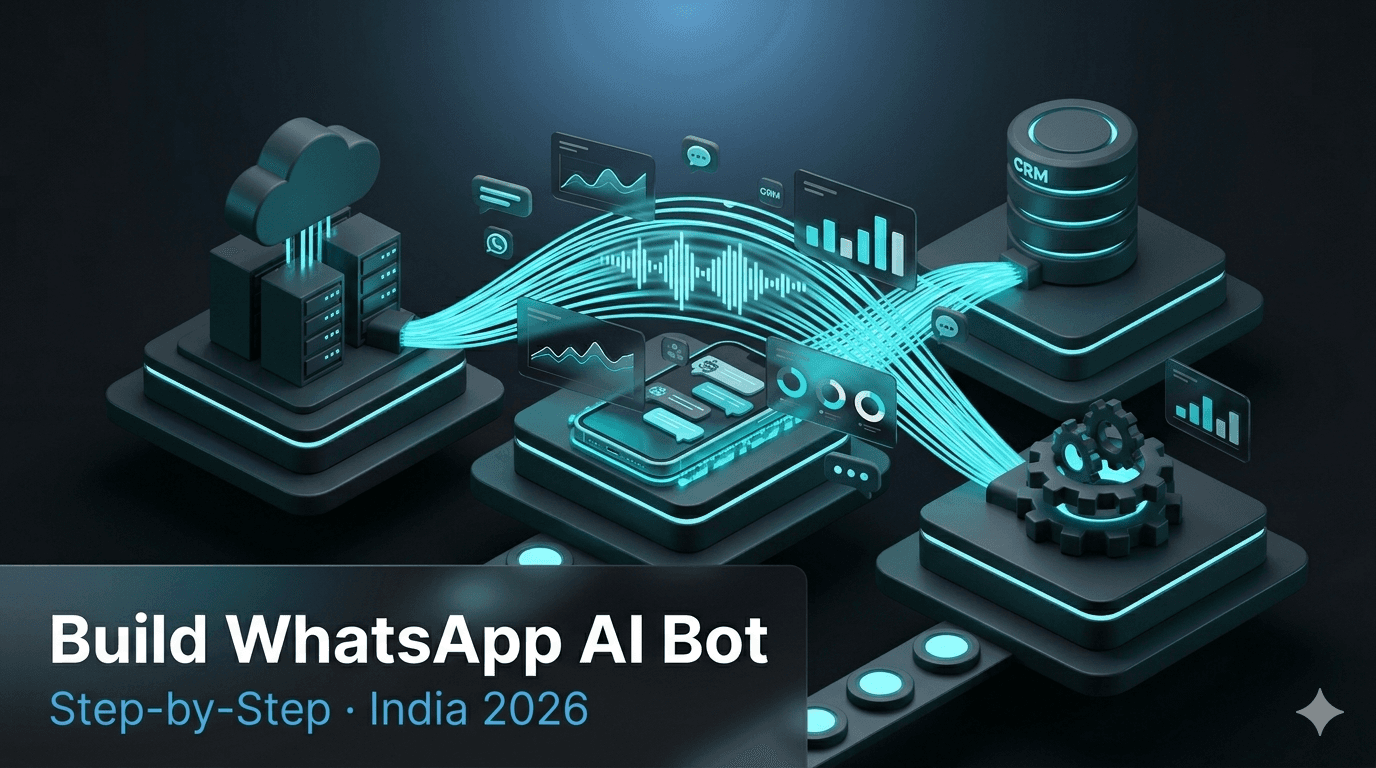
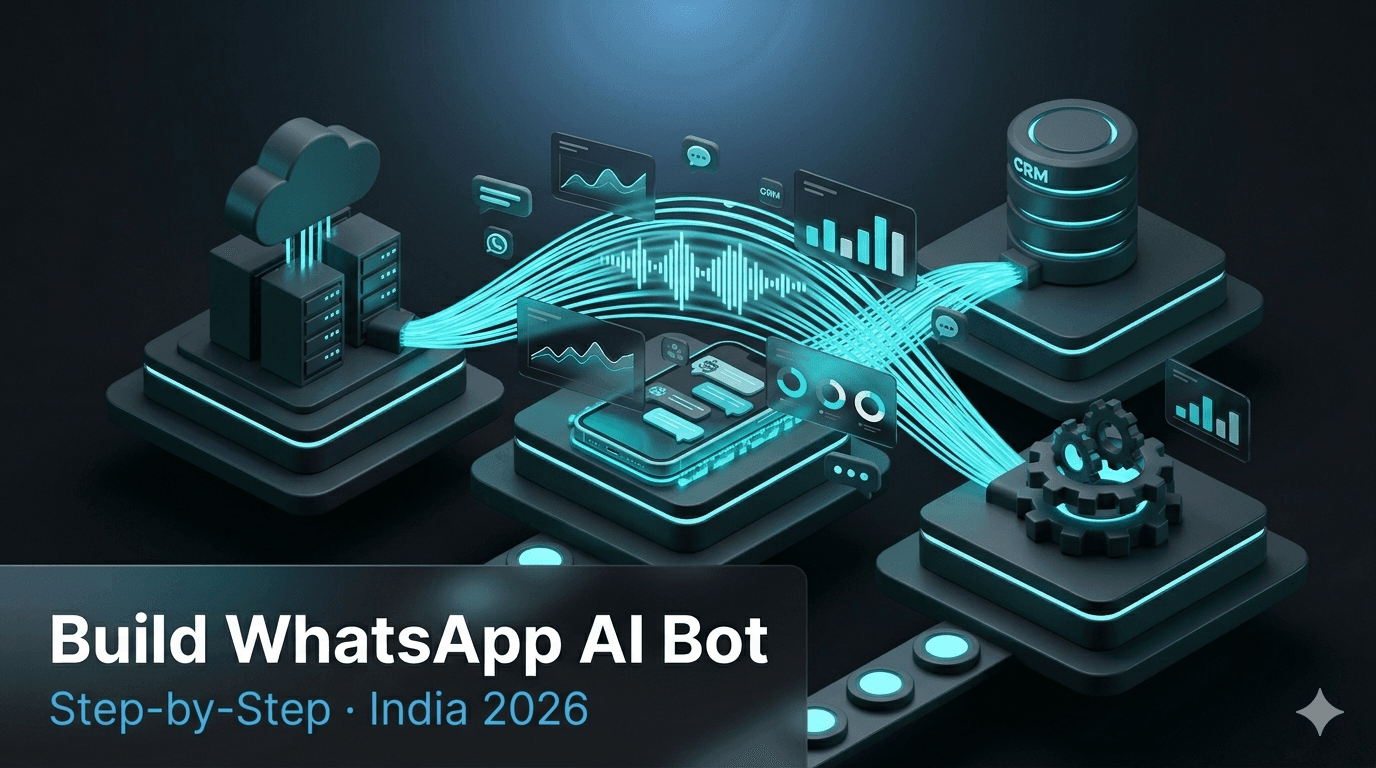
WhatsApp Chatbot for Business India — Complete Guide 2026
Everything Indian businesses need to know about WhatsApp chatbots in 2026: official Business API, AI vs rule-based bots, realistic costs, and how to choose a partner.
With 500M+ active users in India, WhatsApp is not a nice-to-have channel—it is often the primary way customers reach you. This guide explains what a WhatsApp Business chatbot is, how the official API works, what AI adds, and what you should budget.
1. What is a WhatsApp Business chatbot?
A WhatsApp chatbot is software that replies to customer messages on WhatsApp automatically. It can be:
- Rule / keyword based — fast to launch, brittle when users type variations.
- AI-powered — understands intent, handles mixed Hindi–English (Hinglish), and can integrate with CRM and order systems.
You should separate WhatsApp Business App (manual, one phone) from the WhatsApp Business Platform (API) (scalable, automation, templates).
2. Official API vs unofficial tools
Unofficial “grey” tools that automate personal WhatsApp accounts carry ban risk and poor deliverability. For production use, prefer:
- Official WhatsApp Business Platform access via a BSP or Meta-approved path
- Approved message templates for outbound notifications
- Clear opt-in and compliance with Meta commerce policies
3. What Indian businesses use WhatsApp bots for
- Lead capture and qualification (real estate, BFSI, edtech)
- Order status and delivery updates
- Appointment booking and reminders
- L1 support FAQs and ticket creation
- Payment reminders and UPI links (within policy)
4. AI vs rule-based — decision guide
| Need | Rule-based | AI |
|---|---|---|
| Fixed menu flows | Often enough | Optional |
| Mixed language, typos | Weak | Strong |
| CRM lookups & tools | Hard | Feasible with integration |
| Cost | Lower upfront | Higher setup, better containment |
5. Cost snapshot (indicative)
Costs vary by BSP, volume, and integrations. Typical buckets:
- Implementation: from about ₹30,000–₹1,50,000+ depending on flows and integrations
- Meta / BSP conversation charges: model changes—validate with your BSP
- Maintenance & optimisation: ongoing tuning for templates, intents, and analytics
6. Getting started (practical)
- Confirm use cases and success metrics (deflection, bookings, CSAT).
- Choose official API onboarding with your BSP.
- Design flows (sales vs support vs transactional).
- Integrate CRM / orders / calendar as needed.
- Pilot, measure, iterate weekly.
7. Choosing a partner in India
Look for: official API experience, AI quality (not just keywords), integration depth, transparent pricing, and clear handover to your team.
At QuensultingAI, we build WhatsApp automation alongside voice programs on Retell AI, with India-based delivery and global client experience.
Explore our WhatsApp AI Bot page · Talk to us
Why this topic matters in production
Teams usually do not fail because the model is weak. They fail because ownership, escalation behavior, and integration quality are undefined when live traffic arrives. For WhatsApp automation, the production question is simple: when automation cannot complete an intent, does it route to the right human with enough context to act immediately? If this handoff contract is weak, quality drops even when volume appears healthy.
A strong operating model defines what should be automated, what should be escalated, and what data must be captured for every interaction. This keeps outcomes measurable and improves trust across revenue, support, and operations leaders for India operations with global delivery patterns.
Architecture and data contracts
Production systems should treat conversations as events that map to business records. Each successful or failed interaction should update CRM, ticketing, or campaign objects with structured dispositions and timestamps. Required fields, optional fields, and fallback defaults must be documented before launch.
Integration reliability is equally important. API latency, partial failures, and malformed payloads are expected in real systems. A durable design includes retries, queueing, and explicit fallback paths such as callback scheduling or escalation ticket creation.
90-day rollout framework
Days 1-30: launch narrow, high-volume intents with baseline KPI tracking.
Days 31-60: improve failure clusters, handoff quality, and data freshness.
Days 61-90: expand to adjacent intents only after governance gates are met.
This sequence protects quality while creating measurable progress. Expansion should pause when quality indicators regress.
KPI model and QA operations
Track intent-level outcomes rather than vanity totals: qualified outcomes, handoff acceptance, completion quality, and system-of-record freshness. Add weekly transcript sampling by intent and language cohort. Aggregate averages can hide severe quality failures in minority but business-critical workflows.
Quality reviews should be cross-functional: implementation owners, RevOps, support, and analytics operators. Every major change should have rollback criteria and before/after KPI comparison.
Common execution mistakes
- Over-automating sensitive intents in phase one.
- Ignoring data contracts and downstream field quality.
- Handoff without context or ownership.
- Mixing multiple campaign objectives into one score.
- Scaling before governance is stable.
Practical checklist
- Define top intents and exclusion intents before launch.
- Enforce structured dispositions in every completed flow.
- Keep escalation routes explicit and staffed.
- Maintain references and policy links for claims and guidance.
- Re-review failures weekly and publish change notes.
Related links
Ready to Get Started?
Let's discuss how voice AI can transform your business. Free consultation available.